
Squeezed by Cost of Living, Indonesia's Middle Class Relies on "Side Hustles"
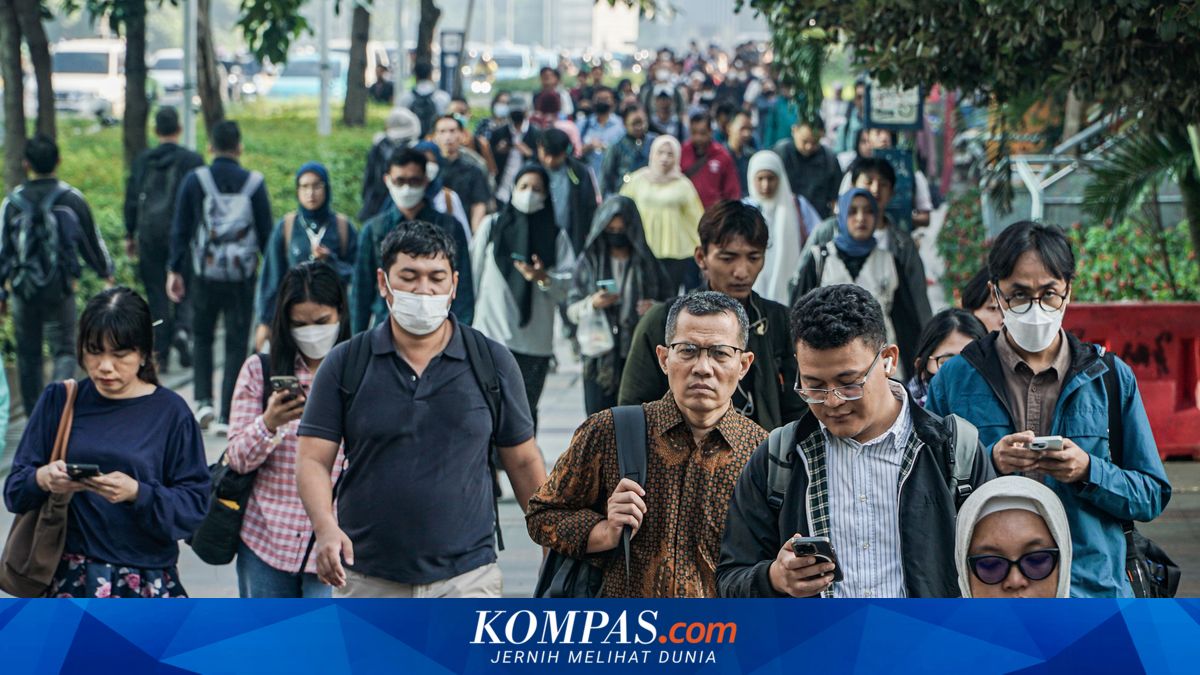
Indonesia’s middle class is undergoing a significant transformation. The latest Katadata Indonesia Middle Class Insight (KIMCI) 2026 research portrays this group not only as an economic driver but also as one facing structural pressures while actively adapting. This report, released by the Katadata Insight Center (KIC), was compiled through a national survey of 1,000 respondents from the fourth quarter of 2025 to the first quarter of 2026. Co-founder and CEO of Katadata Indonesia, Metta Dharmasaputra, hopes that the research findings will serve as a reference for understanding the middle class’s condition. “Hopefully, in its second year, KIMCI can become a benchmark for understanding the landscape of the middle class in Indonesia,” Metta said in a written statement on Thursday (16/4/2026). One of the main findings in KIMCI 2026 is the shrinking size of the middle class. This decline occurs amid the group’s still dominant role in the economy. In 2024, this group contributed 81.5% of total household consumption, while household consumption accounted for 58.8% of Indonesia’s GDP. The KIMCI report states that the middle class is the backbone of the economy, the engine of consumption, a supporter of stability, and key to future growth. KIMCI 2026 describes the middle class situation as a “silent alarm” reflecting economic pressures that are not always visible but are genuinely felt. These pressures stem from a combination of rising living costs, income uncertainty, and increasing basic needs. The report notes that the middle class is not only struggling to rise but also to avoid falling. The four aspects are interconnected and show how the middle class’s financial space is increasingly limited. The research results also indicate significant changes in consumption patterns. The middle class is now increasing the proportion of spending on basic needs, such as food and household items, while spending on durable goods and services has declined. “The decline in consumption in these categories reflects economic pressures causing a decrease in the middle class’s purchasing power,” states the finding in the KIMCI report.