
SPPG in Sumba and Tasikmalaya Boosts Child Nutrition and Village Economy
The National Nutrition Agency’s (BGN) efforts to tighten quality standards for Nutrition Programme Service Units (SPPG) are showing results in several regions. In Southwest Sumba, East Nusa Tenggara, and Tasikmalaya, West Java, SPPG not only functions as a community kitchen but also drives improvements in child nutrition and strengthens the local economy.
At SPPG Kadi Wano in Wewewa Timur sub-district, Southwest Sumba, the Free Nutritious Meals (MBG) programme has proven to boost students’ learning enthusiasm. The manager of SPPG Kadi Wano, Edwin Putra Kadege, said many children previously arrived at school without breakfast due to their parents’ economic limitations.
“Many children come to school without breakfast because of their parents’ economic constraints. Teachers report that the children are now much more enthusiastic about school, even though their homes are very far away,” Edwin stated.
These findings align with the results of a study by the Research Institute of Socio-Economic Development (RISED) on the initial impact of the MBG programme, released in February 2026. RISED Director M. Fajar Rachmadi noted that the programme has a positive effect on children’s health and psychological conditions.
“About half of the 1,800 parent respondents stated that their children are less frequently ill and more cheerful. 50 percent of parents see their children as more cheerful, and 48 percent assess that their children are less often sick after receiving MBG,” Fajar said.
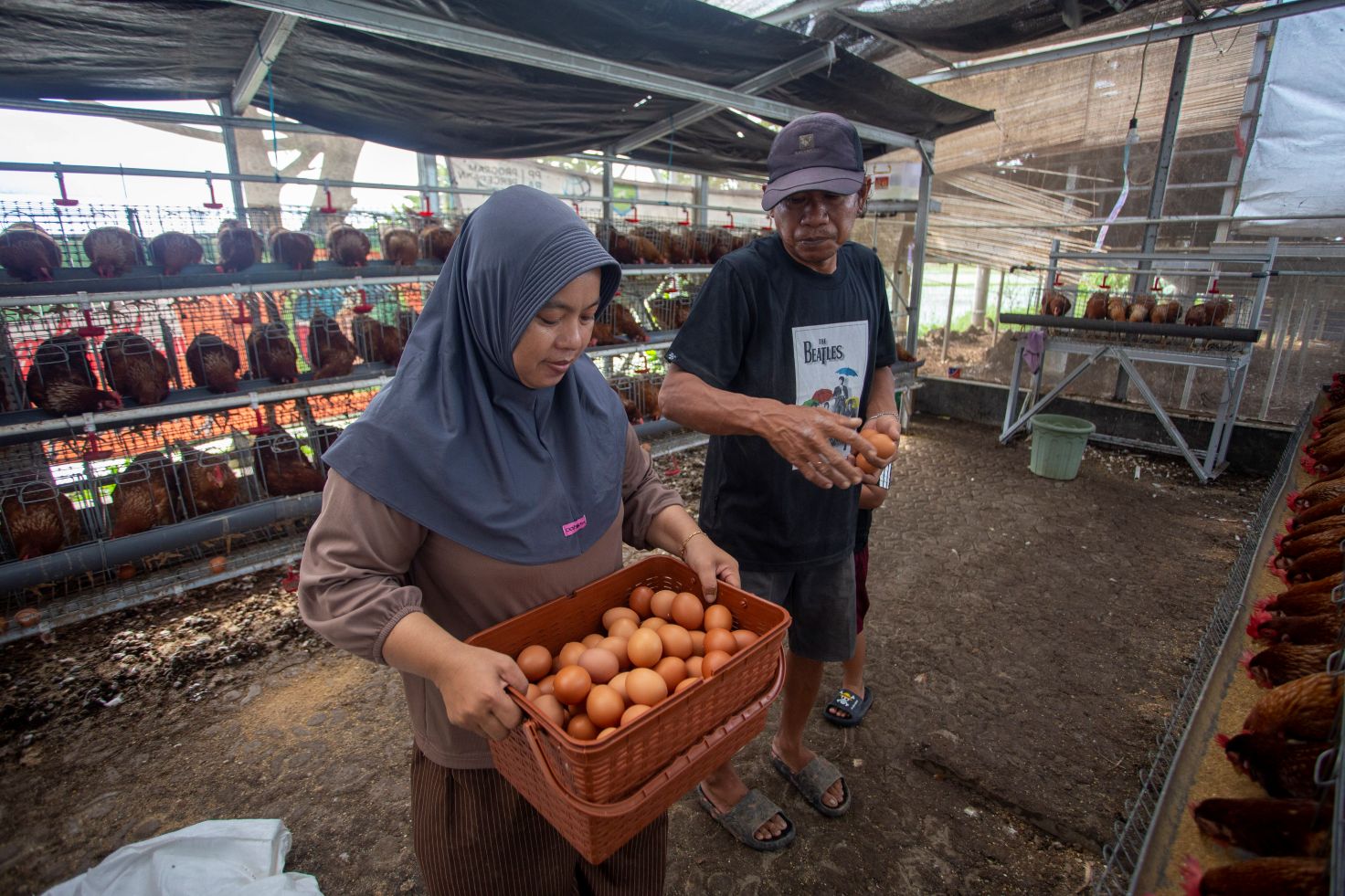
In addition to improving nutrition, SPPG also plays a role in strengthening the local economy. SPPG Kadi Wano, which serves around 2,000 students in 15 schools, partners with local farming groups as the main suppliers of food ingredients. This scheme provides farmers with market certainty for their harvests.
A similar situation occurs at SPPG Cibuntu in Taraju sub-district, Tasikmalaya Regency. This SPPG meets about 85 percent of its food needs from local sources by involving farmers, market traders, and youth organisations.
SPPG Cibuntu partner Tino Rirantino said the programme’s presence is driving changes in farmers’ planting patterns in the area.
“SPPG is a strategic bridge. We facilitate farmers so that their produce has a clear market and provides a positive contribution to the welfare of village residents,” Tino stated.
According to him, farmers who previously relied on supplies from outside the region are now starting to independently plant commodities like fruits to be absorbed by SPPG.
Good SPPG management is also determined by discipline in maintaining food quality and kitchen hygiene. In addition, managers are required to adjust the nutritional composition to the children’s age and local tastes so that the food can be optimally consumed.
Food distribution involving teachers is also seen as helping to ensure every child receives attention. In Tasikmalaya, SPPG Cibuntu has even developed a corporate social responsibility (CSR) programme in the form of assistance for school facilities and infrastructure for orphaned children.
With these various achievements, SPPG is assessed not only to contribute to fulfilling children’s nutrition but also to become a driver of the economy and society at the village level.