
Special Staff Pigai Monitors Free Nutritious Meal Programme in Bali, Ensures Children's Nutritional Rights Are Met
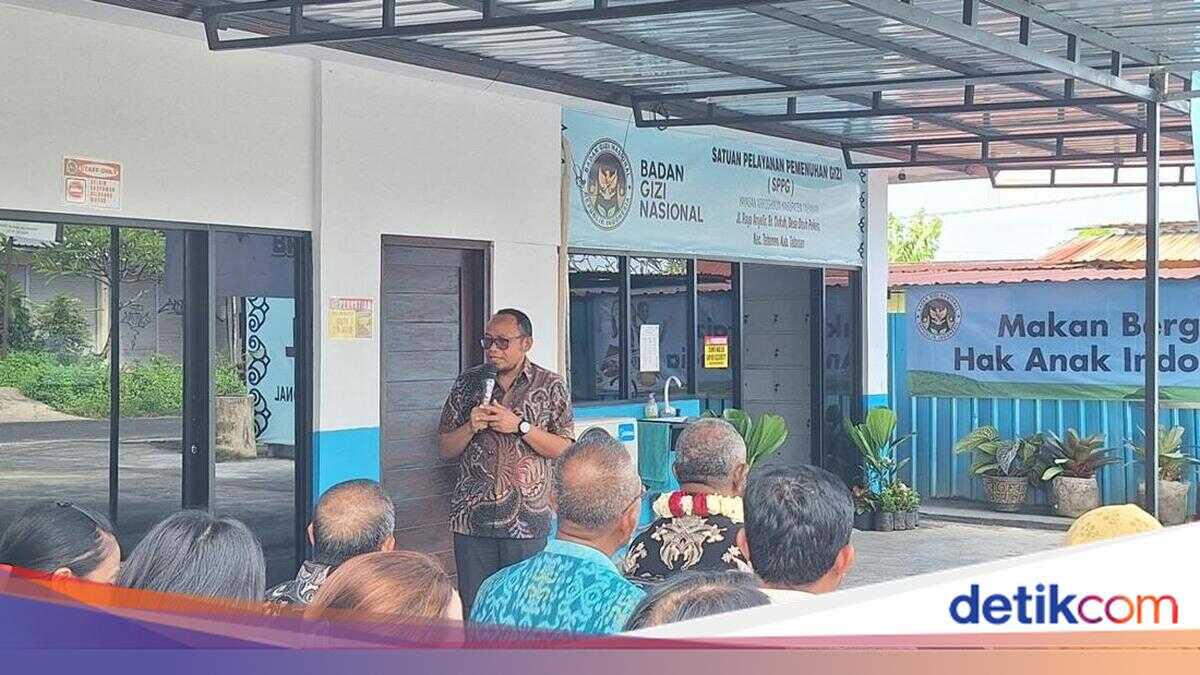
The Special Staff of the Minister of Human Rights, together with officials from the Ministry of Human Rights regional office for Bali Province, carried out a monitoring visit to the Free Nutritious Meal Programme (MBG) at the Nutrition Fulfilment Service Unit (SPPG) Dauh Peken 5, Tabanan Regency, on Tuesday (17 February).
The visit was conducted to verify the readiness of supporting facilities for the programme as part of fulfilling the right to nutritious food for children, in accordance with the principles of respect, advancement, enforcement, protection and fulfilment of human rights.
During the visit, SPPG officers also received encouragement to carry out their service duties with discipline, dedication and a strong sense of responsibility.
Special Staff to the Minister of Human Rights for Digital Transformation and Media Communication, Thomas Harming Suwarta, said the Ministry’s presence in the community was aimed at ensuring human rights values are concretely implemented on the ground and at supporting the optimal execution of duties at the SPPG.
“We want to reaffirm that the fulfilment of the right to nutritious food is a fundamental right of every child. The Free Nutritious Meal Programme is one form of the state’s effort to guarantee that right, and it therefore needs to be supported by proper and standards-compliant facilities. The SPPG officers must also recognise how noble their task is — preparing Indonesian children who are well-fed, healthy and intelligent. As the President always says, he wants Indonesian children to smile,” Thomas said in a written statement on Wednesday (18 February 2026).
Thomas emphasised the strategic role of the SPPG as the frontline in ensuring children receive nutritious meals, noting it is no easy task and must therefore be carried out with high motivation and discipline at every level.
“Incidents that have occurred in several locations must serve as a wake-up call so that every SPPG officer fully recognises how strategic and noble their duties are, which is why they need to be supported by high motivation, disciplined work patterns and a full sense of responsibility. The same applies to the partner organisations managing these kitchens. The success of this programme depends heavily on the performance of the SPPG in the field,” Thomas said.
To ensure prime service quality at every SPPG, Thomas continued, multilayered supervision is needed — from the procurement of raw materials, the arrival of goods at the kitchen, preparation processes, cooking, packaging, delivery, through to the moment the food arrives at schools.
“We are optimistic that following recent incidents, efforts to improve the quality of kitchen services will be intensified. Going forward, service at the SPPG must continue to receive serious attention so that the goals and targets of the MBG programme can be successfully achieved,” Thomas said.
Thomas said he had heard many positive stories from SPPG managers about the impact of the MBG programme on schoolchildren, including improved school attendance, greater focus among pupils, a strengthened sense of togetherness and family values, as well as knock-on effects related to job absorption for communities around the kitchens.
“The job absorption is very real because, beyond the National Nutrition Agency employees, there are workers recruited from the communities surrounding the SPPG. For example, the SPPG we visited employs around 47 local residents at daily wages of Rp120,000 to Rp125,000 per day,” Thomas said.
Meanwhile, the Head of SPPG Dauh Peken 5, Rafi Afrizal, expressed his appreciation for the Ministry of Human Rights’ visit for the purpose of monitoring and strengthening service quality.
“We welcome this visit as a form of attention and oversight regarding the readiness of supporting facilities for the Free Nutritious Meal Programme at the SPPG, so that our service can improve further,” Rafi said.
During the visit, the Special Staff to the Minister of Human Rights and accompanying officials conducted a direct inspection of kitchen conditions, facility adequacy, room layout and the cleanliness of the SPPG environment as part of efforts to ensure the readiness of supporting facilities for the implementation of the Free Nutritious Meal Programme.
The monitoring visit is expected to strengthen synergy between the central government and local implementers in supporting the fulfilment of the right to nutritious food as part of meeting human rights obligations.