
Special Economic Zone Investment Realisation Reaches Rp366 Trillion, Driving Regional Economic Growth
Special Economic Zones (SEZs) continue to demonstrate significant contributions in driving investment, exports and job creation across various regions in Indonesia. To date, total investment realisation in these zones has reached approximately Rp366 trillion.
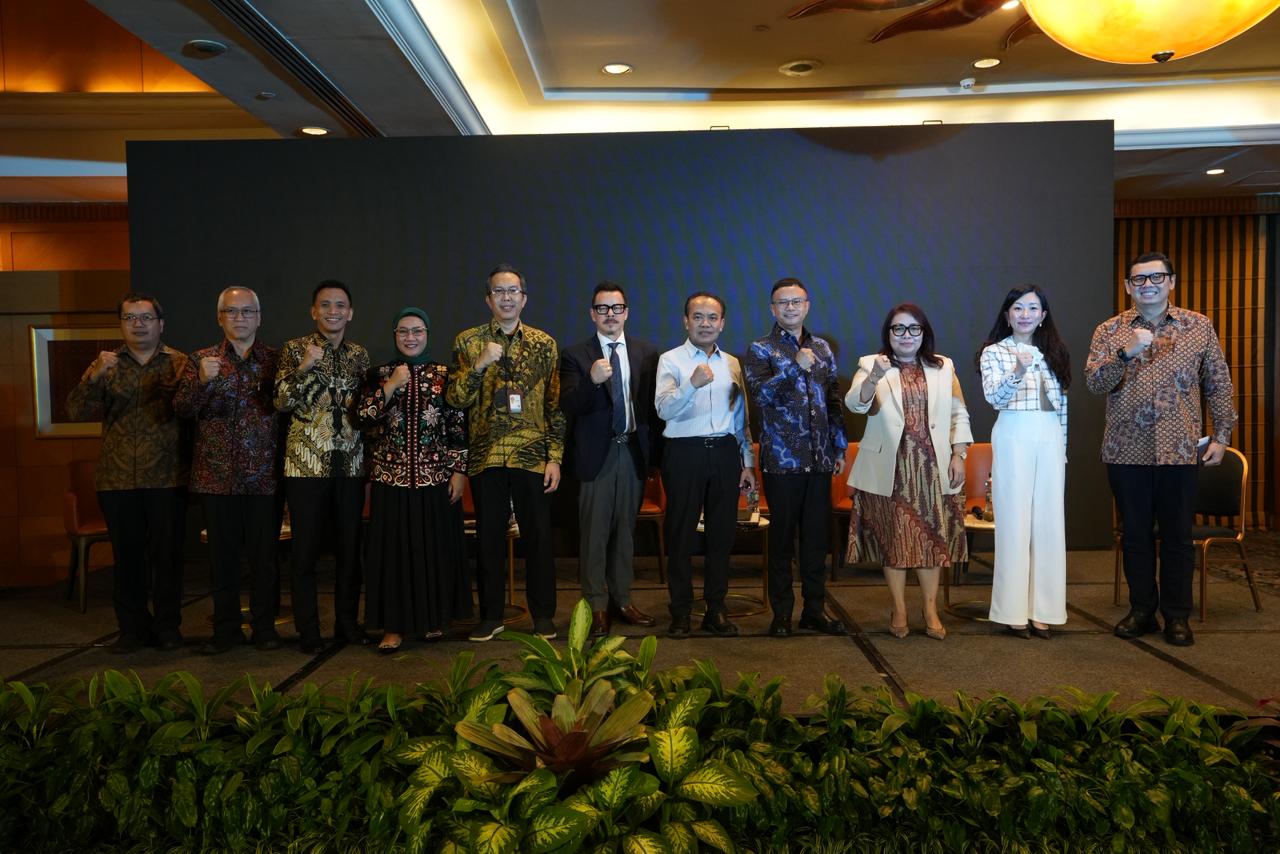
This achievement was announced at an Iftar Media Gathering organised by the Secretariat General of the National SEZ Council at the Aryaduta Hotel in Menteng, Jakarta, on Thursday, 12 March. The event, themed “Strengthening Synergy and Collaboration”, served as a communication forum between government and media to present developments in SEZ policy and achievements in Indonesia.
The Secretary of the Coordinating Ministry for Economic Affairs and Chair of the National SEZ Council Implementation Team, Susiwijono Moegiarso, stated that Indonesia’s current macroeconomic conditions remain solid. “Generally, Indonesia’s macroeconomic indicators are still quite good. Starting from data released by the Central Statistics Agency to inflation which cyclically does experience increases,” said Susiwijono. He added that several other economic indicators also show positive trends. “Yesterday’s PMI rose quite significantly, above 53, the highest in recent months. Retail indicators, consumer confidence indices and several purchasing power indicators also remain quite good. So our macro conditions today remain very solid and strong,” he said.
IMPACT OF SEZES
Meanwhile, Acting Secretary General of the National SEZ Council, Rizal Edwin Manansang, outlined the impact of SEZs on regional economies, including comparisons of economic indicators between areas with SEZs and those without.
Throughout 2025, investment realisation across 25 SEZs reached Rp82.6 trillion, or approximately 98% of the set target. Labour absorption also exceeded targets, reaching 88,541 people. “This achievement demonstrates that SEZs continue to develop as an important instrument in driving investment and job creation across various regions,” said Rizal. He added that research by Prospera and the Institute for Economic and Social Research (LPEM) at the University of Indonesia showed that regions with SEZs are able to attract investments up to 77% higher compared to non-SEZ regions.
BATANG INDUSTRIAL SEZ
At the event, several SEZ managers also presented development programmes for their respective zones. The Industropolis Batang SEZ, for instance, focuses on strengthening human resources through various workforce training programmes. The Director of Marketing and Development at Industropolis Batang SEZ, Indri Septa Respati, stated that training programmes include sewing skills for the shoe industry, design and printing, and English language training. “These training programmes are not only aimed at workers in Industropolis Batang SEZ, but also at prospective workers so that labour needs in the zone can be met in a balanced manner,” she said. Since 2022 to 2025, over 1,800 participants have participated in these training programmes. Industropolis Batang SEZ has also partnered with 29 vocational secondary schools to promote the transformation of vocational education in Batang Regency.
NONGSA SEZ
Meanwhile, the Chief Executive of PT Taman Resor Internet (Tamarin) as manager of Nongsa SEZ, Mike Wiluan, announced that the zone focuses on developing digital talent through the Infinite Learning vocational training programme. “This programme collaborates with global partners such as Apple Developer Academy, RMIT University, Red Hat and IBM, and by the fourth quarter of 2025 has been followed by more than 8,000 participants,” said Mike. He added that Infinite Studios in Nongsa SEZ has produced over 20 films on an international scale and is currently working on 10 animation projects involving approximately 160 workers.
GRESIK SEZ
Meanwhile, External Relations and Special Economic Zone Director at Gresik SEZ, Roro Ayu Yayuk Dwi Hastuti, stated that the zone contributes to improving community welfare through various corporate social responsibility (CSR) programmes. “This contribution is reflected in the increase in the Human Development Index of Gresik Regency, which rose from 77.30 in 2021 to 79.69 in 2025,” she said. She added that the unemployment rate in Gresik has also been reduced from 8% to 5.47% over the past five years.
SANUR SEZ
Sanur SEZ, represented by Vice President Corporate Planning & Strategic Delivery Unit, Ade Saputra, explained that Sanur SEZ has two main focuses: healthcare and tourism sectors. “The presence of Sanur SEZ is expected to enhance the competitiveness of domestic healthcare services so that it can compete with hospitals abroad,” he said. Currently, there are four factors driving Indonesian citizens to seek treatment overseas: diagnostic accuracy, doctor expertise, technology and cost. “Therefore, Sanur SEZ will adopt the concepts of Top Notch Brands, Best Technology and Medicines, Medical and Wellness Expertise and Seamless Experience in developing healthcare services in the zone,” explained Ade.