
Spatial Planning Poses Challenges for Investment, Apindo: Legal Certainty and Synergy Needed...
Legal certainty is one of the primary requirements for creating a conducive investment climate and promoting sustainable economic development, particularly regarding the dynamics of converting paddy fields into industrial areas.
In 2026, the Indonesian government will tighten legal certainty to balance industrial needs and food security through Government Regulation No. 4 of 2026 on Controlling the Conversion of Paddy Fields.
The aim is to accelerate the determination of the Protected Paddy Land Map (LSD), where 87% of Basic Paddy Land (LBS) is targeted to become Sustainable Food Agriculture Land (LP2B).
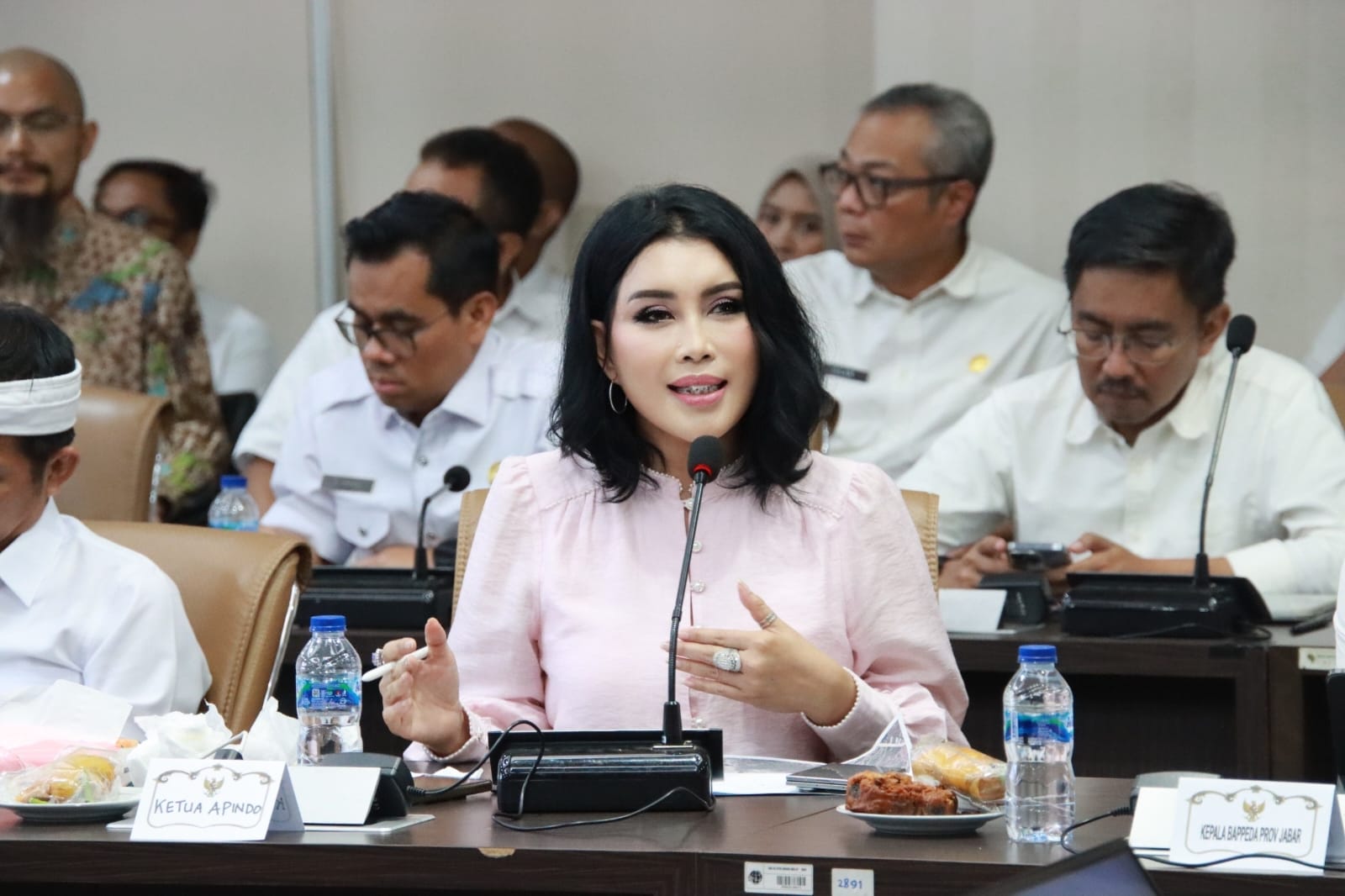
This issue was highlighted and discussed in the Coordination Meeting on the Scope of 87% LBS Becoming LP2B with the Director General of Spatial Planning of the Ministry of ATR/BPN, the Head of the West Java Provincial Agency, as well as regional heads and businesspeople at the Directorate General of Spatial Planning Building of the Ministry of ATR/BPN on Wednesday (29/4/2026).
From a business perspective, the Indonesian Employers Association (Apindo) of West Java voiced concerns over the sudden change in land designation from industrial to agricultural in several areas.
This creates legal and investment uncertainty, particularly for companies that have already acquired land or are in the process of finalising purchases, as the change in land status prevents further processing of permits.
“For example, an investor who has invested capital in Cirebon. The investor has purchased the land, but due to the change in land designation status, the ongoing permitting process cannot be continued,” said Chair of Apindo West Java, Ning Wahyu Astutik, after attending the coordination meeting.
According to Ning, this change in land designation creates legal uncertainty for investors, financial losses, time delays, and business planning uncertainties.
“What burdens my mind is that this change requires time, thus causing many job creations to be delayed. On the other hand, the President has asked Apindo to play an active role in creating as many jobs as possible, including in labour-intensive industrial sectors. Therefore, we request the acceleration of the spatial planning reorganisation process, so that companies that have acquired land or are in the process of finalising land purchases can immediately proceed to the next permitting stages,” Ning explained.
As is known, Government Regulation No. 4 of 2026 impacts sudden changes in land status, originally designated for industry becoming agricultural land, thus creating legal uncertainty and an unfavourable investment climate.
Ning Wahyu expressed appreciation for the West Java Governor’s attention to the dynamics occurring. According to him, this forum is a significant step and a strategic space to discuss spatial planning policy dynamics that directly impact the business world in West Java, while strengthening dialogue between government and business actors in formulating implementable and fair policies.
“Apindo West Java appreciates the West Java Governor who has invited, as well as the Director General of Spatial Planning, agency heads, and regional heads for the attention given to the issue of land designation changes and their impact on businesspeople through the organisation of this coordination meeting,” he said.
“In principle, Apindo supports the spatial planning reorganisation. However, he emphasised that the implementation of such policies should not cause confusion or obstacles for the business world,” he stressed.
Ning Wahyu committed to continuing synergy with the government in maintaining balance between efforts to protect sustainable agricultural land and the needs for industrial area development, as well as promoting policies that favour economic sustainability and job creation.
“With Apindo’s involvement, I hope businesspeople understand that this is currently being resolved, so businesspeople should not be too anxious. We also request responsive support from Regents and Mayors so that this issue does not drag on, thus maintaining business conduciveness and enabling job creation,” he stated.
In response, the Director General of Spatial Planning of the Ministry of ATR/BPN emphasised the importance of synergy between central government, local government, and stakeholders, including the business world.
In his direction, the Director General of Spatial Planning encouraged active involvement of Apindo in the preparation and adjustment process of spatial planning in each region.
On the other hand, West Java Governor Dedi Mulyadi emphasised the important role of the provincial government in aligning land data differences between the province and regencies/cities.
Dedi stressed that data accuracy is the main foundation in determining spatial planning policies. He also stated that the LBS verification process is targeted to be completed within two weeks and will be part of the revision of the West Java Regional Spatial Plan (RTRW).(*)