
Spanish King Felipe VI Acknowledges Colonial-Era Human Rights Violations
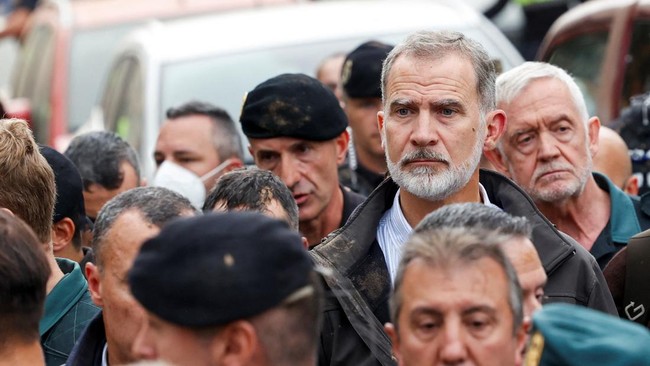
Spanish King Felipe VI has acknowledged human rights violations that occurred during his country’s colonial period, in a statement issued on Monday, 16 March 2026. The admission is noteworthy given that the Spanish monarchy has never previously issued a formal apology to its former colonies.
During its heyday between the sixteenth and eighteenth centuries, Spain controlled one of the world’s largest empires, spanning territories across five continents, including most of Central and South America. During this period, forced labour, land expropriation, and violence against indigenous peoples were documented.
Felipe VI stated that Spanish colonial law was fundamentally designed to provide protection. However, in practice, many deviations occurred that resulted in violations.
“Colonial law aimed to protect. But in reality, things did not unfold as originally intended, and numerous violations occurred,” Felipe said during a visit to the archaeological museum in Madrid, according to Reuters.
He also emphasised the importance of viewing history objectively. “When we study certain matters based on modern-day criteria and our values, clearly we cannot feel proud. But we must learn from this, in context, without excessive judgment. We must draw lessons through objective and rigorous analysis,” he added.
During the visit, Felipe VI attended an exhibition about indigenous women in Mexico and was accompanied by Mexico’s ambassador to Spain, Quirino Ordaz.
Diplomatic relations between Spain and Mexico remain strained by tensions over colonial legacy. In 2019, then-Mexican President Andrés Manuel López Obrador pressed the Spanish government and the late Pope Francis to apologise to indigenous peoples for violations committed during Spain’s conquest.
However, Spain has not issued a formal apology to date. Furthermore, current Mexican President Claudia Sheinbaum did not invite the Spanish King to her inauguration ceremony following this rejection. This move drew criticism from Spanish Prime Minister Pedro Sánchez, who described it as an “unacceptable” action.