
Spain challenges Trump, affirms stance against going to war
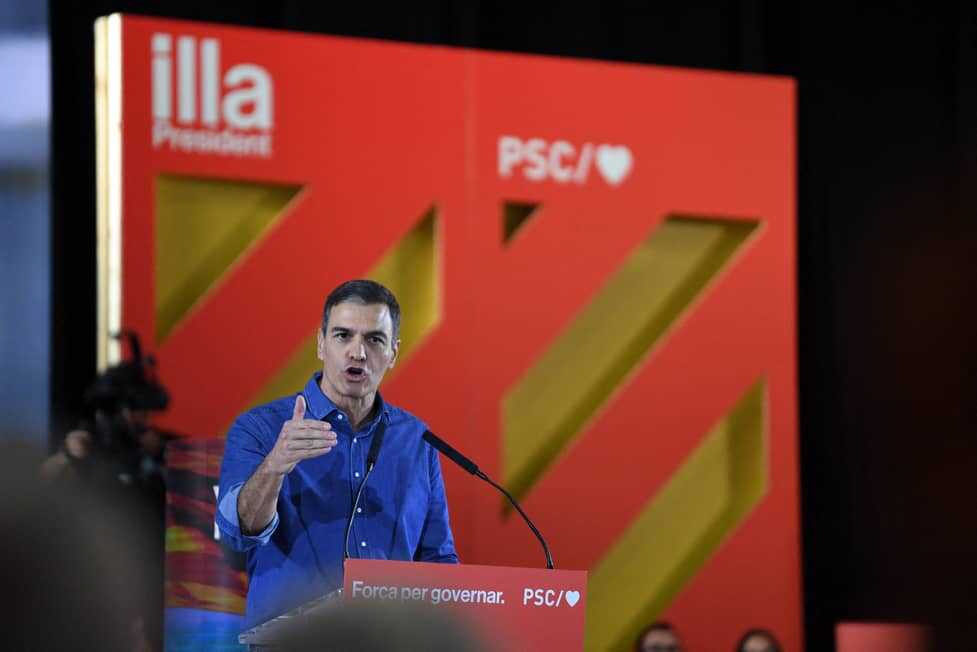
Diplomatic tensions intensified after Spain openly rejected the US-Israel strike on Iran and challenged the trade threat from US President Donald Trump. Prime Minister Pedro Sánchez asserted a stance of ‘no to war’. Madrid had almost become the EU’s sole voice openly questioning the legality of the military operation. That stance was reinforced by the decision to refuse the use of Spanish military bases to support the operation. The response from Washington was sharp. Trump threatened to cut trade with Spain, saying, ‘We will cut all trade with Spain. We do not wish to have relations with Spain’, while appearing alongside German Chancellor Friedrich Merz who gave no overt response.
Yet Madrid did not alter its position. In a nationally televised address, Sánchez distilled his government’s stance into four words, ‘no to the war’. He stressed that this stance was not support for Tehran, but a plea to Iran, Israel, and the United States to stop the fighting. ‘Twenty-three years ago, another US administration dragged us into a war in the Middle East. It triggered the largest wave of insecurity this continent has known since the fall of the Berlin Wall,’ Sánchez said, recalling past experiences. He warned that the current conflict risks playing out as a game of Russian roulette with millions of lives at stake. He also delivered a sharp rebuke to leaders he said had failed to meet their responsibilities.
‘It is unacceptable that leaders who cannot fulfill their duties try to mask their failures with the smoke of war,’ he asserted. To date, Trump had not issued an official response to the speech. However, several European figures have voiced their positions. Teresa Ribera, the Spanish-born European Commission Vice-President, expressed support for Madrid and warned that Washington’s threats could destabilise global stability.
‘The tensions arising from dealing with third parties, be they UK Prime Minister Keir Starmer, French President Emmanuel Macron, or Pedro Sánchez, are deeply unsettling to the public, peace, cooperation, and also the economy,’ she said.
Meanwhile, sources in Paris and Madrid say French President Emmanuel Macron plans to contact Sánchez as a show of solidarity. In earlier statements, Macron also questioned the legality of the strike, saying it was carried out beyond international law, and that Paris could not endorse it. Germany’s stance is seen as more cautious. Although Merz did not openly criticise Spain, he also did not directly defend it. He noted that Berlin and Madrid remain in negotiations over increasing Spain’s contributions to NATO, a sensitive issue in Washington’s eyes. When asked by reporters, Merz said he discussed the matter privately with Trump and reminded that Spain is a member of the European Union that cannot be treated separately. ‘I do not want to escalate or prolong the public debate,’ he said. His remarks sparked disappointment in Madrid. Spain’s Foreign Minister said he was surprised. ‘I cannot imagine Chancellor Merkel or Olaf Scholz making statements like that,’ he commented. Several Spanish government sources even said Merz’s stance was unbecoming of a European leader who defends the unity of its partners. By choosing not to confront Trump openly, Merz is now seen as being in a difficult position amid the strain between Washington and Madrid. (Sky News/E-4)
IN the dynamic of global politics in 2026, Pedro Sánchez’s statement again drew world attention. TENSIONS in the Middle East reached a new boiling point at the start of 2026. The diplomatic relationship between Madrid and Washington hit a low in March 2026. Venezuela and the United States agreed to cooperate to develop the mining sector. Reform legislation is being prepared to attract the world's mining giants. U.S. President Donald Trump's special envoy, Steve Witkoff, claimed Iran possesses 460 kilograms of uranium enriched to 60% or enough to make 11 nuclear bombs. Israel's military strike against strategic Iranian targets on 28 February 2026 was described as a spark that fell on tinder. Trump said Washington would cut trade ties with Spain due to the country’s refusal to allow the use of its military bases. Asia-Pacific stock indices fell amid the escalation of the US-Israel war with Iran. The closure of the Hormuz Strait raised fears of a global energy crisis.