
Sovereign Strategies Amid Global Green Transition Egoism
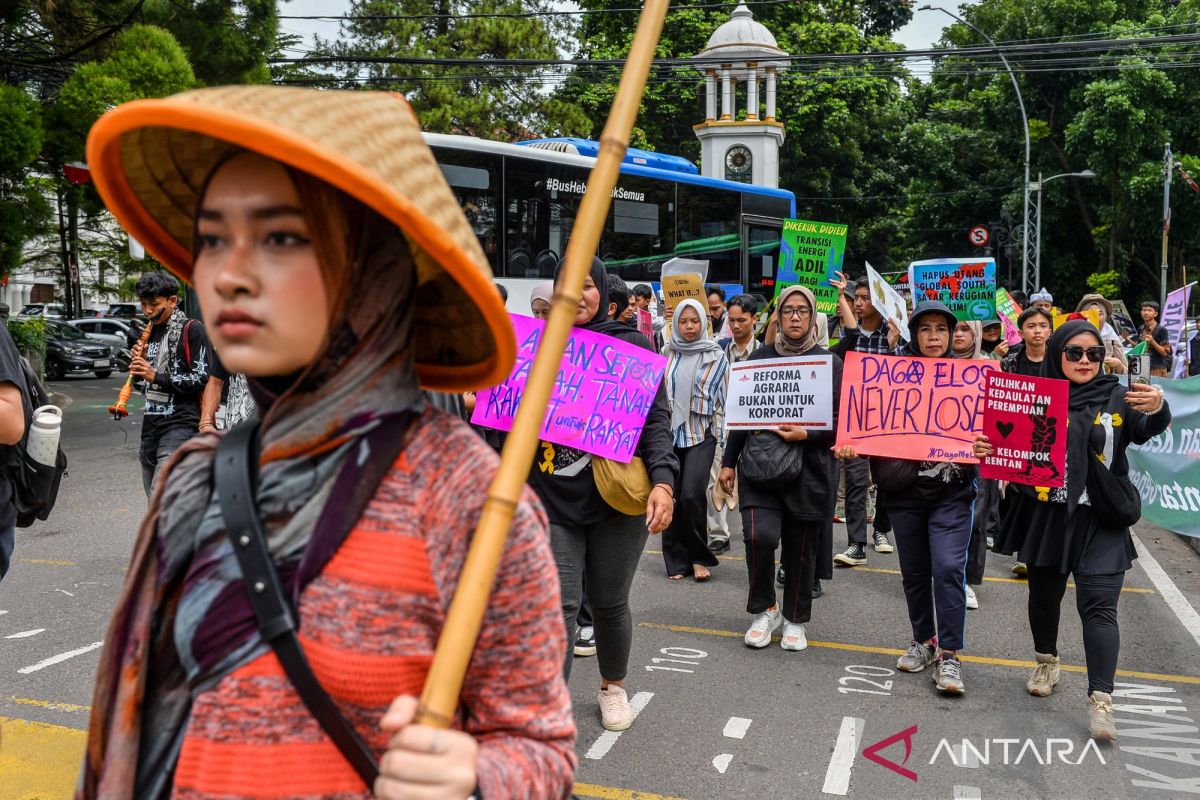
Pushing for the phase-out of fossil fuels without ensuring equivalent replacement infrastructure is like asking a nation to leap without confirming there’s a bridge on the other side.
There is a profound irony playing out in the world today.
On one hand, almost all countries agree the planet is in trouble. Weather is increasingly unpredictable, global temperatures keep hitting new records, and the threat of climate crisis is no longer a future warning but a present reality.
On the other hand, as the world calls for accelerated energy transition, a new race emerges to control resources, technology, and markets. It seems saving the Earth remains entangled in power struggles.
For years, developing nations have been urged to abandon fossil fuels. The language used sounds noble, speaking of shared responsibility, planetary safety, and future generations. It’s hard to refuse such ideas.
But when it comes to sharing costs, technology transfer, and growth space, idealism suddenly turns into cold calculations. That’s where the problem lies.
The global green transition is not yet a joint justice project. It’s becoming a new arena of competition where major nations scramble to secure their place in the future industry.
The United States has bolstered domestic green industry incentives through subsidy schemes favouring local production and specific trade partners.
The European Union has implemented the Carbon Border Adjustment Mechanism (CBAM), a policy pushing production standards towards low-emission industries.
Meanwhile, China maintains dominance in critical mineral processing supply chains and battery manufacturing, the foundation of the global clean energy economy.
Each acts for different reasons, but the direction is similar: none want to fall behind in the green economy race.
The question is simple: if everyone is busy securing their own interests, who is truly considering just transition for developing nations?
The International Energy Agency’s (IEA) 2025 World Energy Investment report paints an undeniable picture. Amid projected global energy investment of $3.3 trillion in 2025, with $2.2 trillion flowing into clean energy, the gap remains stark for developing countries.
The IEA estimates private finance for clean energy transition in developing nations outside China needs to rise to $0.9-1.1 trillion annually by the early 2030s. This contrasts sharply with current funding of around $135 billion per year.
This vast discrepancy underscores a simple truth: the global energy transition is no longer just about emission reduction ambitions, but about who has access to the capital to make it happen.
Global climate discussions often get bogged down in emission targets, forgetting that in many developing countries, energy is not just an environmental issue. It’s about keeping kitchens boiling, factories running, and millions employed.
This is where idealism must meet reality. Pushing for fossil fuel phase-out without ensuring equivalent replacement infrastructure is like asking a nation to leap without a bridge.
The risks extend beyond economic slowdown. It could lead to widespread price pressures, energy inflation or ‘greenflation’, weakened purchasing power, and social unrest.
This is not theoretical seminar talk. It’s about electricity prices, production costs, food prices, and household economic resilience.
The stakes for Indonesia