
Southeast Asia's energy system under strain from Middle East tensions
analysis Asia
Southeast Asia’s energy system under strain from war on Iran
Rising tensions in the Middle East have exposed Southeast Asia’s growing reliance on imported energy and are testing the region’s economic resilience, say experts.
BANGKOK: The latest military escalation involving Iran is unfolding thousands of kilometres from Southeast Asia. But for a region that depends heavily on imported oil and gas, the economic effects could arrive quickly, testing energy security, inflation control and long term planning, say experts.
Instability in the Persian Gulf, sparked by targeted air strikes by Israel and the United States on Iran since Feb 28, is disrupting shipping routes and unsettling markets, with policymakers facing renewed questions about how secure the region’s energy supplies really are.
If the fighting drags on, it could push up electricity prices and fuel costs across Southeast Asia, and shape long-term decisions about the region’s energy mix.
“The conflict provides a powerful demonstration of the risks of relying on imported fossil fuels,” Indra Overland, head of the Centre for Energy Research at the Norwegian Institute of International Affairs, told CNA.
Broad upheaval in shipping and aviation routes have stretched into a second week; thousands of flights have been cancelled, including at major hubs such as Dubai, Doha and Abu Dhabi, affecting passenger and cargo transport across Asia, Europe and the Middle East.
Critically for Asia’s energy supplies, missile and drone attacks have targeted oil facilities, refineries and storage sites in Saudi Arabia, the United Arab Emirates and other Gulf states, prompting output cuts or shutdowns at key facilities, such as a major Saudi Aramco oil refinery.
“The shutdown (of refineries) will last for as long as shipping is halted. Flows will not resume until there is a clear resumption and assurance of safety of passage in the Strait,” said Pang Lu Ming, a senior gas and LNG analyst at Rystad Energy.
He added: “If the risk of vessel damage and loss is too high for shippers to bear, the disruption and subsequent supply reduction will be further lengthened.”
Nearly a third of Asia’s liquefied natural gas (LNG) imports and about 60 per cent of its crude oil move through one narrow shipping route: the Strait of Hormuz, a narrow sea passage separating the Arabian Peninsula and Iran.
Last year, an average of 20 million barrels per day of crude oil and oil products were shipped daily, making it one of the world’s most critical oil transit chokepoints, according to the International Energy Agency (IEA). Last year, almost 90 percent of the total volumes exported via the Strait of Hormuz was bound for Asia.
Disruptions to flows have huge consequences for world oil markets; prices surged above US$100 a barrel on Monday (Mar 9), well above the levels seen for most of the past two years, when prices generally hovered between US$70 and US$85.
The price topped at nearly US$120 a barrel before snapping back to below US$90 on Tuesday after US President Donald Trump suggested the conflict could be nearing an end.
Southeast Asia sits directly downstream of the risk, given how heavily it depends on energy shipments passing through the Gulf.
LONG LINES FOR PETROL, CUTTING BACK AIR CONDITIONING
But not all Southeast Asian countries face the same level of exposure to higher costs and blockages to supply. Some rely heavily on Middle Eastern oil or LNG, while others have limited reserves or fragile public finances.
“The most immediate, near-term risk for Southeast Asian countries is the risk of physical supply disruptions,” said Sam Reynolds, a researcher on Asia’s LNG and gas for the Institute for Energy Economics and Financial Analysis (IEEFA).
“But all countries also face a more indirect, immediate risk of higher costs in global commodity markets.”
Over the past decade, Southeast Asia has grown more reliant on imported fossil fuels. Domestic oil and gas production has declined in several countries even as energy demand has risen.
Governments have expanded LNG import terminals and increased crude imports, tying their power systems and transport networks more closely to global markets. That deeper integration has supported growth, but it has also increased exposure to geopolitical shocks.
The Philippines sources 96 per cent of its oil from the Persian Gulf, while Vietnam and Thailand buy roughly 87 per cent and 74 per cent from that region, respectively.
During this latest conflict, that reliance is already being felt through various regional economies. Southeast Asian countries are trying to find ways to cushion strong price increases while making sure that local demand is met.
Governments in the Philippines and Thailand have both been searching for ways to conserve fuel; public officials were ordered to use less air conditioning and reduce travel, for instance.
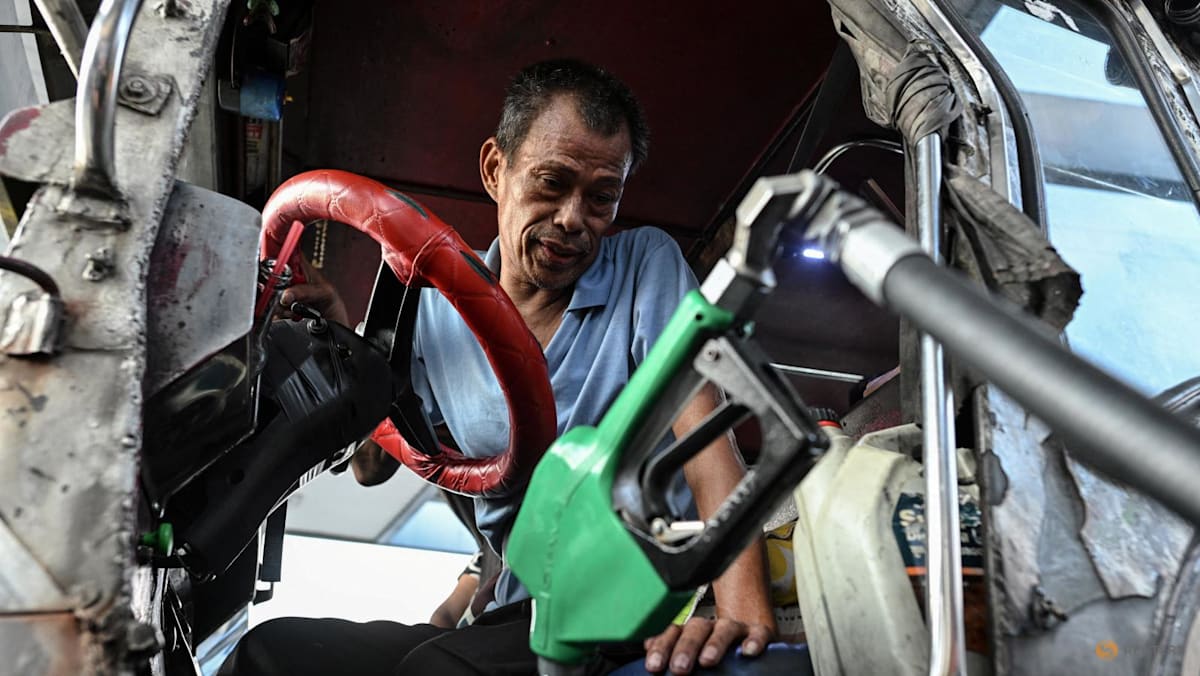
Myanmar’s authorities have imposed alternate-day driving rules and queues have appeared at petrol stations as fuel costs have climbed. Laos has seen similar pressure at filling stations, while Cambodia is also heavily reliant on imported fuels from other Southeast Asian countries, such as Thailand, Vietnam and Singapore.
“The decision by these exporting countries to reduce exports of petroleum products will put the importing countries under a higher degree of stress,” said Alloysius Joko Purwanto, an energy economist at the Economic Research Institute for ASEAN and East Asia (ERIA).
ERIA studies suggest that most Southeast Asian countries can hold oil and gas reserves equivalent to 20 to 50 days of demand.
As a result, they are trying to diversify their sources and extend their reserves of oil and gas products to meet domestic demand and prepare for a prolonged crisis, Purwanto said.
Thailand has more than 60 days of cover, Indonesia has no more than 21 to 25 days while Vietnam has less than 20 days of supply. This, Reynolds said, means that extended disruptions to oil flows could impact physical su