
Southeast Asia in a Cold Sweat: Fuel Rationing Begins, Workers Urged to Work from Home
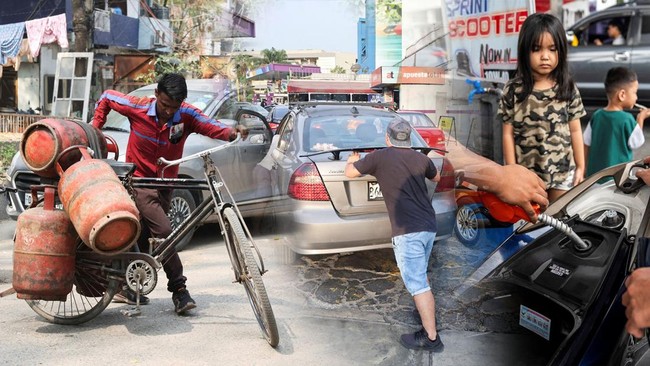
Southeast Asia in a Cold Sweat: Fuel Rationing Begins, Workers Urged to Work from Home
Jakarta, CNBC Indonesia - The world is increasingly shaken. The war raging between the United States (US), Israel, and Iran has brought the global energy crisis to the forefront.
The war, which has lasted for one month, has held up world oil supplies in the Middle East. The Strait of Hormuz, a shipping route for about 20% of the world’s oil, remains closed and only slightly open to a few countries not considered enemies by Iran.
Oil prices have boiled over, breaching the US$100 per barrel level. As a result, fuel prices have skyrocketed, forcing several countries to think creatively to address the oil shortage that is already being felt.
Several policies have already been taken by Southeast Asian countries to circumvent the situation. Some are merely issuing fuel-saving advisories, but others have taken extreme steps by declaring a national energy emergency.
Malaysia
Malaysian Prime Minister Anwar Ibrahim, in a special announcement on Thursday (26/3/2026), said the government is forced to make temporary adjustments to the quota for subsidized fuel oil (BBM) to safeguard the country’s fiscal resilience.
This step was taken after the fuel subsidy burden surged dramatically in a short time. Anwar explained that the subsidy value had sharply increased from the original 700 million ringgit (Rp2.96 trillion) to 3.2 billion ringgit (Rp13.55 trillion) due to the spike in global crude oil prices.
“Insyaallah, I will outline the country’s strategic steps to enhance preparedness in facing the global energy crisis arising from the conflict in West Asia, with a firm, structured approach focused on the interests of the people and national resilience,” said Anwar.
In the latest policy, effective from 1 April onwards, the Malaysian government has decided to adjust the monthly quota for the Budi Madani RON95 subsidy programme (Budi95). The quota, previously 300 litres per month, is now cut to 200 litres per month for private vehicle users.
The government explained that this step is a necessary form of fiscal discipline to prevent the national budget from collapsing. Despite the quota reduction, Anwar assured that the retail price of RON95 petrol will be maintained at the subsidized level to protect the purchasing power of the wider public.
“The decision to maintain the RON95 petrol price at 1.99 ringgit (Rp8,431) per litre is a carefully considered step to avoid burdening the people, even as global crude oil prices surge,” said Ibrahim.
Anwar added that around 90% of Malaysians will not be significantly affected by this quota adjustment.
Based on government data, the majority of users only consume around 100 to 200 litres of petrol per month, so the 200-litre figure is deemed sufficient for the daily needs of most citizens.
“Every ringgit saved will be channelled back to the people through initiatives like Sumbangan Tunai Rahmah (STR) and Sumbangan Asas Rahmah (SARA), in addition to improving clinic and hospital facilities, repairing roads, and strengthening infrastructure,” stated Ibrahim.
In addition to the quota adjustment for the general public, the Malaysian government continues to provide special exemptions for crucial sectors. E-hailing drivers and logistics riders still receive a subsidized quota of 800 litres per month to ensure smooth urban mobility and maintain stability in transport service prices.
Anwar also reminded the public to start saving energy and tightening expenditures amid global uncertainties. He mentioned that neighbouring ASEAN countries are already feeling severe economic pressure due to this energy crisis.
“Losses amounting to tens of billions of ringgit that the government has borne over decades must be recovered so they can be reinvested for the people’s welfare. I am not against the rich, but we must be fair to vulnerable groups who need it,” concluded Ibrahim.
Philippines
Philippine President Ferdinand R. Marcos Jr. has officially announced a national energy emergency status in response to threats of fuel supply disruptions due to the escalation of conflict in the Middle East region.
The declaration was established through Executive Order (EO) Number 110, signed on Tuesday (24/3/2026), considering the Philippines’ position as a country highly dependent on imports of petroleum products.
Citing the official Philippine News Agency (PNA), the Philippine government has identified that the heating up of the geopolitical situation in the Middle East, particularly the potential closure of the strategic Strait of Hormuz route, could trigger disruptions in global oil production and transportation.
This condition is assessed as having a high potential to cause a domestic fuel supply crisis as well as price volatility that threatens the country’s economic stability.
“As a net importer of petroleum products, the Philippines remains highly dependent on external fuel supply sources and is therefore vulnerable to disruptions in global oil production and transportation,” states the Executive Order Number 110 document, citing PNA, Tuesday (24/3/2026).
Furthermore, the Philippine Energy Minister has recommended to the President that the current situation presents a danger threatening energy supply resilience at a critical level.
Therefore, the establishment of this emergency status provides a legal basis for the government to execute swift and coordinated measures to protect the economy and the public.
In response, President Marcos has instructed the formation of a special committee to oversee the implementation of the Unified Package Framework for Livelihoods, Industries, Food, and Transportation (UPLIFT).
The committee is given full mandate to closely monitor the distribution of fuel, food, medicines, and