
Southeast Asia businesses brace for higher costs and slower expansion amid Middle East conflict
High transport costs, slow hiring: Southeast Asia businesses brace for impact amid Middle East war
For sectors such as manufacturing, logistics and construction, where energy forms a bulk of operating expenditure, uncertainty can translate into tighter margins and more cautious expansion plans, say businesses and experts.
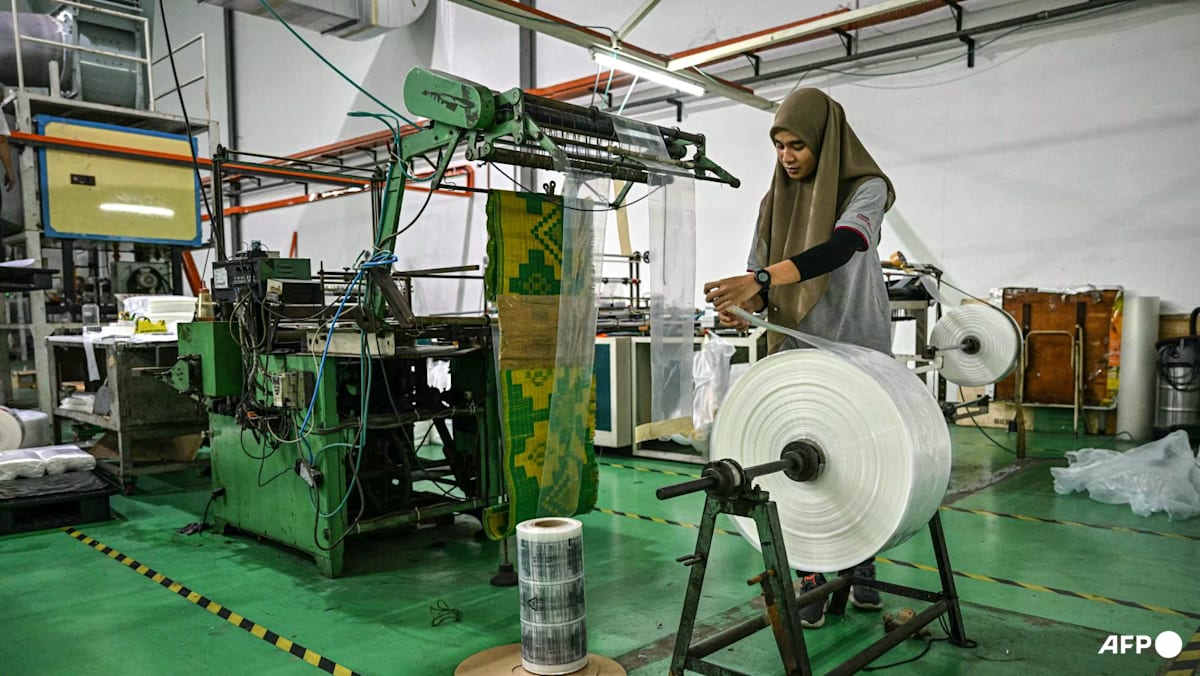
SINGAPORE: For Roy Ang who runs a plastic bag manufacturing business in Johor, the impact of the Middle East conflict is already showing up in his cost sheets.
Polyethylene resin - a petroleum-based raw material used to produce plastic bags for his food and medical clients across Malaysia and Singapore - has jumped by US$110 to US$150.
It has jumped from a range of US$1,050 to US$1,120 prior to the war to between US$1,160 and US$1,270 per metric tonne, a 10 to 13 per cent rise in recent weeks.
Some major producers are holding back quotations until May or “until further notice” as oil prices climb while others have cut production altogether and are selectively supplying to long-term customers.
Resin prices tend to increase for a few months and then stabilise at a higher baseline, of about 10 per cent to 25 per cent higher than previously.
“These increases would inevitably eat into margins as well as higher prices for customers,” Ang, 50, told CNA.
“What we are facing right now is suppliers holding back on pricing and stock allocation so even with enough cash flow, we might not get the stock.”
With raw materials taking up 60 per cent to 75 per cent of his business’ cost structure, Ang expects to raise prices for his customers, who are mainly in F&B, medical equipment production and cargo and electronics sectors, to a minimum of 5 per cent to 10 per cent.
Escalating tensions in the Middle East have pushed global oil prices higher, raising fears of supply disruptions through key shipping routes such as the Strait of Hormuz, which handles about a quarter of the world’s seaborne oil trade.
For businesses across Southeast Asia, the immediate concern is not only higher input costs but also heightened uncertainty.
Oil prices have fluctuated wildly as traders struggle to gauge the war’s impact, nearly doubling since the start of the conflict. Brent crude futures, the international crude benchmark, opened at US$106.13 a barrel on Monday morning (Mar 16), a peak since June 2022.
Energy markets have also reacted as prices of liquified natural gas - of which about 90 per cent from Qatar and the United Arab Emirates are shipped to Asia - are 80 per cent higher than before the conflict.
“Unpredictable fluctuations make it difficult for businesses to plan operating budgets, set prices and make investment decisions,” said Malaysian Employers Federation president Syed Hussain Syed Husman.
“Companies face challenges in forecasting production costs, managing long-term supply contracts and managing competitiveness in export markets.”
For sectors such as manufacturing, logistics and construction, where energy forms a bulk of operating expenditure, that uncertainty can translate into tighter margins and more cautious expansion plans.
“The prevailing approach among SMEs (Small and medium-sized enterprises) is one of careful cost management and close monitoring of developments,” said Chin Chee Seong, president of the SME Association of Malaysia.
HIGHER TRANSPORTATION COSTS, LOGISTIC CHARGES IF CONFLICT PERSISTS
For now, the direct impact on operating costs for Malaysian SMEs remains “relatively limited”, Chin added.
Many companies are adopting a cautious “wait-and-monitor” approach instead of reacting immediately,
“One key reason for this is that domestic fuel prices in Malaysia remain stabilised by government subsidies,” he added, pointing to Prime Minister Anwar Ibrahim’s recent remarks that subsidised RON95 petrol prices could be maintained for the next one or two months.
However, Chin warned that if oil prices remain elevated, the impact could gradually seep into businesses through higher transport costs, logistics charges, insurance premiums and rising prices for petroleum-based raw materials.
“Rising global fuel prices increase the cost of freight, warehousing and last-mile delivery, which are essential components of modern production and retail supply chains,” he said.
In Indonesia, logistics operators are already seeing heightened cost pressures.
“Within the first 10 days of the war, we have seen about a 25 per cent increase in container shipping rates,” said Mahendra Rianto, the chairman of Indonesia’s Logistics Association.
Transport dominates logistics expenses for Indonesian businesses, accounting for around 40 per cent of total logistics cost, he said. Fuel alone could represent 30 per cent to 50 per cent of transport costs.
In a statement on Mar 10, Indonesia’s Logistics and Forwarders Association warned that international logistics costs “could rise 20 (per cent) to 40 per cent in the short term” if disruptions in key shipping routes persist.
The impact of the price shocks varies across the region, said senior ASEAN economist at OCBC bank Lavanya Venkateswaran.
Thailand, Philippines and Vietnam are most exposed to sustained high energy prices as large net energy importers, she said.
“The absence of retail fuel subsidies in Singapore and the Philippines implies more direct pass through of higher global oil prices onto retail fuel prices,” Venkateswaran added.
Some businesses are already bracing for higher transport costs.
Winston Wang, who runs a dim sum wholesale business in Singapore with a factory in Vietnam, expects logistics costs in and out of Singapore and Vietnam to increase around 20 per cent to 30 per cent.
Syed Hussain of the Malaysian Employers Federation said that businesses are also seeing hiring slowdowns as energy cost volatility influences business planning, hiring decisions and investment behaviour.
BUSINESSES ADOPTING A MIXED APPROACH
Across Southeast Asia, companies are walking a tightrope between absorbing higher costs and passing them on to customers, said ind