
South Sumatra’s Export Sector Warns of Long-Term Impacts of War in the Middle East
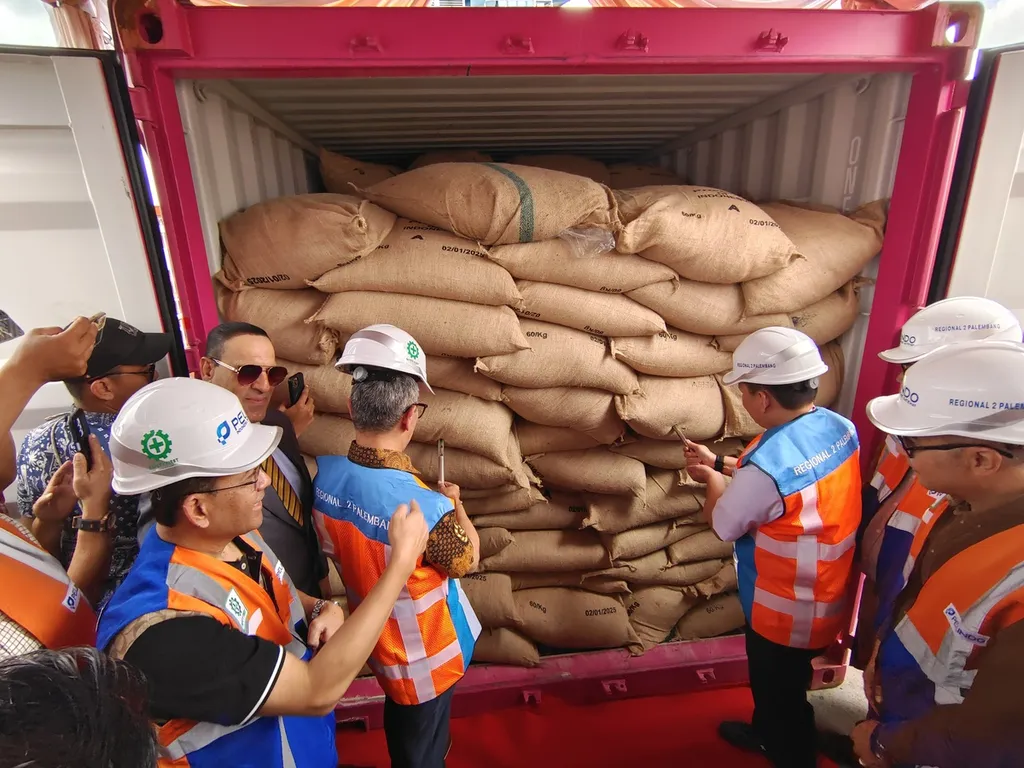
At present, the war in the Middle East has not yet affected export activity from South Sumatra. However, South Sumatra remains vigilant to the potential impacts of the conflict as it continues to widen.
The export world of South Sumatra has not been directly affected by the war taking place in the Middle East. This is because the Middle East is not a primary destination for exports from South Sumatra.
Head of the Foreign Trade Division at the South Sumatra Provincial Department of Trade, Ika Oktavianti, said in Palembang on Tuesday 3 March 2026 that the war in the Middle East has not yet had a direct impact on export activities of South Sumatra’s commodities. As of now, the request to issue Certificates of Origin (SKA) for exports to the Middle East remains normal.
“If we look at the period from when the war began on Saturday 28 February 2026 to today, the processing of SKA applications for exports to the Middle East remains normal. That indicates that buyers in the Middle East continue to process imports of commodities from South Sumatra. The commodities from South Sumatra most commonly demanded by buyers in the Middle East are rubber, which is requested monthly, and wood-based products (medium-density fibreboard/MDF), which are requested every three months.”
Furthermore, Oktavianti noted that the Middle East is not a primary destination for South Sumatra’s exports. In 2025, there were six countries among the 94 export destinations that were the main destinations for South Sumatra’s commodities. Those six countries were China, India, Vietnam, Malaysia, the United States, and South Korea.
Conversely, the Middle Eastern country that is a main destination for South Sumatra’s exports is Saudi Arabia. However, the volume and value of exports to Saudi Arabia ranked only 19th among the 94 export destinations.
“Because of that factor, the war in the Middle East has not yet affected the export activities of South Sumatra’s commodities,” said Oktavianti.
However, Oktavianti stressed that they do not ignore the broader impacts that could be caused by the war in the Middle East. Those broader impacts could arise if the war persists. “For now, we are still awaiting developments from the war. Certainly, if it becomes more widespread, we will prepare strategies to minimise its impact on Sumatra’s economy as a whole, not just on export activities,” she added.
So far, export activity has been one of the supports of Sumatra’s economy. In 2025, the total export volume from Sumatra reached 55.29 million tonnes, with a total value of US$6.72 billion.
The total number of commodity types exported from Sumatra reached 83. However, six commodities were the mainstays, including coal, rubber, pulp and paper, oils and fats including palm oil, wood products, and coconuts.
The Head of the South Sumatra Chapter of the Indonesian Employers Association (Apindo), Sumarjono Saragih, said that the war in the Middle East should not be viewed in isolation. Regional and national governments must treat it as geopolitics and geo-economics with potential global effects. Even though the war is in the Middle East, its political and economic impacts can be felt worldwide, including in Indonesia.
Earlier, the Ukraine–Russia war also had an impact. It affected global wheat availability, pushing up wheat prices, including in Indonesia. This is because Ukraine is a major global wheat producer and exporter.
For the Middle East war, the impacts are expected to be far greater than those of Ukraine–Russia. This is because the conflict involves the United States, the world’s largest economy by GDP. Consequently, any economic disruption involving the US could disturb the global economic ecosystem.
On the other hand, the war in the Middle East has seen the Strait of Hormuz closed by Iran. As a result, logistics routes that typically pass through the Strait of Hormuz must reroute further afield. Logistical costs would rise accordingly, potentially driving commodity prices higher.
This phenomenon would hit the Sumatra economy and Indonesia hard, given their heavy reliance on imported raw materials. For instance, Sumatra’s exports largely come from agriculture and plantation sectors, such as rubber and palm oil.
The production of agricultural and plantation commodities requires fertilisers, most of which are imported. “If fertiliser imports are disrupted and prices rise sharply, that could jeopardise export activities and Sumatra’s economy,” said Saragih.
In addition, Saragih noted that at least 20 percent of global oil supplies are transported through the Strait of Hormuz. If the war continues, oil production and distribution could be disrupted to the point of stoppage.
That situation would inevitably trigger a domino effect of higher global fuel prices, including in Indonesia. “If fuel prices rise, all prices of basic goods would rise. This would not only burden households but also the business sector, including exporters.”
At present, travel for people has also been affected by the Middle East war, as international intercontinental flights transiting through Doha, Qatar were temporarily halted. This is not only hindering personal travel but also business travel. Some business negotiation and investment plans have been delayed.
In Indonesia, Bali is a region that has felt the direct impact of the disruption to international air travel, given its heavy reliance on tourism. Some investment plans in Indonesia may also be affected.
South Sumatra and Indonesia must not ignore the broad impacts of the war in the Middle East. Local and central governments must