
South Sulawesi Becomes Strategic Gateway for 2026 Lebaran Transport
JAKARTA — During the mudik (holiday migration) season, the direction of travel always moves eastward. On Indonesia’s map, one junction appears to pulse faster than others: South Sulawesi. There, millions of steps will meet, pass one another, and then move again, towards home villages, towards family, towards the longing accumulated over a year.
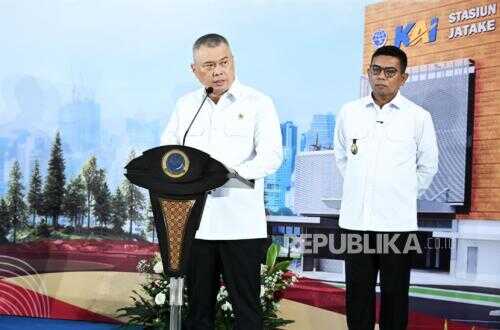
Transport Minister Dudy Purwagandhi understands this pulse well. As the 2026 Lebaran transport season approaches, he has emphasised the strategic role of South Sulawesi as the primary gateway to eastern Indonesia. A role that is not merely a matter of geographical location, but rather a major junction in the national transport system. For this reason, he believes, thorough preparation and close collaboration between central and regional governments are necessary.
Coordination has been undertaken jointly with South Sulawesi Governor Andi Sudirman Sulaiman. This step is not without reason. Based on surveys by the Transport Policy Agency (BKT), South Sulawesi is among the favourite origin and destination provinces for migrants this year. From this region, an estimated 3.92 million people, approximately 2.7 per cent of total national movement, are projected to travel. As a destination area, the figure is even larger: 5.36 million people, or 3.40 per cent of national movement, are predicted to flow in.
At the heart of this movement, Makassar will become the main stage. Sultan Hasanuddin Airport is projected to rank in the top five busiest airports nationally, both as a departure and arrival point. Approximately 508,000 people are projected to fly from this airport, whilst over 627,000 passengers are expected to land there. At sea, Soekarno-Hatta Port in Makassar becomes the second busiest port nationally for origins and destinations, with hundreds of thousands of passengers moving through its berths.
This surge certainly demands anticipation. Traffic management, the arrangement of vehicle entry and exit, and the provision of feeder transport services are primary concerns. The Transport Ministry is also rolling out the Free Mudik programme again to reduce the congestion of private vehicles. South Sulawesi features among the shipping routes, with routes including Batulicin–Makassar, Balikpapan–Parepare, Siwa–Tobaku, and Tobaku–Siwa.
However, the mudik flow is not only about airports and ports. On main thoroughfares, another pulse requires vigilance: spill-over markets that invite congestion, such as in Pallangga (Gowa), Mandai (Maros), and Tompo (Barru), as well as several traditional markets in Makassar. After Lebaran, tourist destinations such as Puncak Malino, Tanjung Bira, and Pantai Losari are projected to be crowded with visitors from H+1 (the first day after Lebaran).
The Transport Minister is also encouraging the optimisation of mosques as stopping points. In South Sulawesi, there are 307 mosques with potential to be utilised as supporting rest areas, with parking facilities, clean water, sanitation, and temporary rest spaces. Because mudik is not only about moving quickly, but also about stopping briefly with safety.