
South Korea and Indonesia: Reviving an Old Partnership?
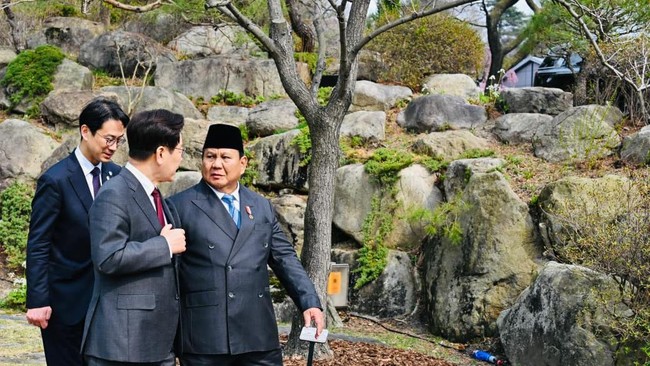
The state visit by Indonesian President Prabowo Subianto to Seoul on 1 April 2026 is far from a routine diplomatic agenda for heads of state.
The signing of, among others, 16 Memorandums of Understanding (MOUs) between South Korea and Indonesia, along with the upgrading of bilateral relations to Special Comprehensive Strategic Partnership status, sends a strong signal that these two countries are repositioning themselves relative to each other amid increasingly unpredictable global upheavals.
The question is, why now? And what is truly driving the two nations to embrace each other more closely than before?
Global shocks may be the catalyst. The world in 2026 is not the same as it was a decade ago. The trade rivalry between the United States and China continues to simmer, global supply chains are being aggressively politicised, and the multilateral liberal order that has underpinned international cooperation for decades is now fraying from multiple sides.
In this context, the World Economic Forum (2025) notes that the ASEAN region is no longer merely responding to great power competition but is proactively building what is termed strategic multi-alignment, namely managing dual partnerships calculatively to maximise geopolitical and economic leverage.
South Korea is feeling the same pressures. A report from Mineral Economics published by Springer in November 2025 records that Seoul relies on imports for up to 95.5 percent of critical minerals that form the foundation of its semiconductor, electric vehicle battery, and defence industries.
When China expanded its export controls in October 2025 and directly pressured companies like Samsung Electronics and LG Energy Solution, South Korea realised that diversifying supply chains is no longer an option but a strategic necessity. Indonesia, which according to the IEA Global Critical Minerals Outlook 2025 holds about a third of the world’s nickel reserves, has become an indispensable partner.
The 16 MOUs signed cover an extraordinarily broad spectrum, from renewable energy, nuclear power plants, hydrogen, Energy Storage Systems (ESS), to carbon capture and storage (CCS). There are also agreements in minerals, battery distribution, offshore plants, and data centres.
It does not stop there; the two countries also agreed to cooperation in intellectual property protection, forest and land fire management (karhutla), digital policy and artificial intelligence (AI), AI technology for health and human resource development, as well as financial cooperation between the Bank of Korea and Danantara.
Additionally, the establishment of the Korea-Indonesia Joint Committee of ICT Cooperation opens the door for Korean ICT companies to enter the Indonesian market in a more structured manner, along with cooperation between the forestry ministries of both countries on climate change, clean water, and biodiversity issues.
This series of agreements is not merely a diplomatic laundry list. Each item reflects real, complementary needs. South Korea requires assured supplies of critical minerals, a large market for technology expansion, and partners in the clean energy transition. Indonesia needs technology, capital, and access to advanced industrial ecosystems to realise its downstreaming ambitions.
As written in a ScienceDirect journal (2023) on ASEAN-Korea economic integration, one of Korea’s structural weaknesses in ASEAN has been its over-reliance on Vietnam as a single partner. Indonesia, with a population of 280 million and a burgeoning digital economy, is the most logical candidate to balance that strategic portfolio.
In an era of uncertainty like the present, Prabowo’s visit to Seoul is part of a larger pattern. Previously, President Lee Jae-myung also visited Singapore in March 2026, where the two countries launched the Korea-Singapore AI Alliance.
The Diplomat (March 2026) notes that Lee views the era of global turbulence not as a crisis but as an opportunity for South Korea to play a more active role as a strategic middle power.
Within the framework of the ASEAN-ROK Comprehensive Strategic Partnership launched in 2025 with the Plan of Action 2026-2030, Seoul is now building a more balanced and deeper foundation for ASEAN partnerships, no longer relying solely on one or two specific countries.
For Indonesia itself, this partnership also has no less strategic dimensions of interest. With Danantara as the state investment vehicle managing hundreds of billions of dollars in assets, the MOU on financial cooperation with the Bank of Korea opens up new and significant financing channels.
Meanwhile, the MOUs on digital development, AI, and next-generation infrastructure respond to Indonesia’s urgency not to fall behind in the global technology transformation race.
However, optimism must be tempered with clear thinking. A study on IK-CEPA negotiations (Ismail & Mulyaman, 2018) once noted that implementation barriers in Indonesia-Korea relations often emerge long after the political spotlight fades, at more technical and bureaucratic levels. This pattern is not necessarily going to change automatically just because the partnership status is upgraded one level.
The ODI (Overseas Development Institute, January 2026) also warns that mineral-producing countries are now increasingly assertive in demanding value-added processing and genuine technology transfer as prerequisites, rather than mere conventional cooperation commitments.
Whether the MOUs in the minerals sector this time come with concrete downstreaming clauses, or whether they remain in a grey exploratory framework? This is a question that must