
South Kalimantan Provincial Government Strengthens Water Governance to Address Climate Change Impacts
The El Niño phenomenon, La Niña, and weather anomalies have disrupted planting season patterns, triggering extreme droughts on one side and recurrent flooding on the other, including tidal flooding in coastal and tidal swamp areas.
Banjarmasin (ANTARA) - The South Kalimantan Provincial Government is strengthening water governance as a strategic step to address the increasingly evident impacts of climate change, particularly on the agricultural sector, flood control, and the sustainability of food production in the region.
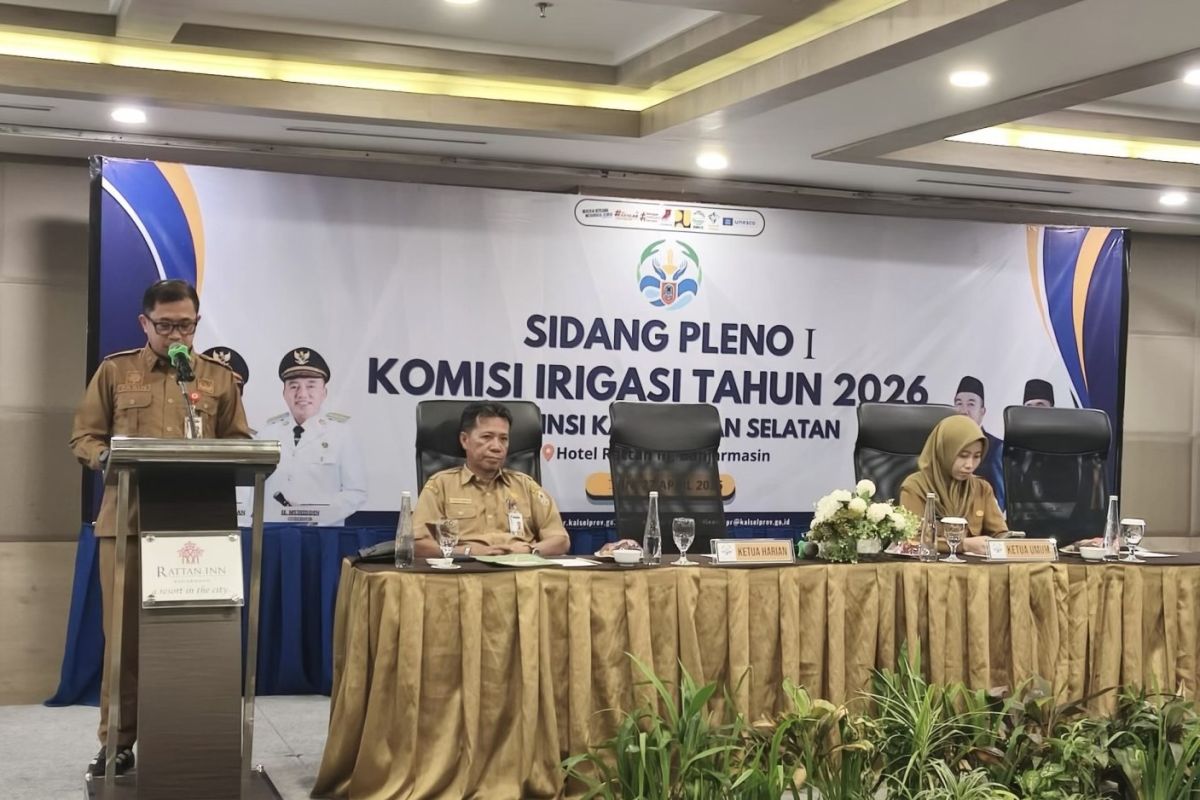
Head of the South Kalimantan Public Works and Public Housing Department (Dinas PUPR), Yasin Toyib, in Banjarmasin on Thursday, stated that these efforts involve cross-sectoral collaboration from the Kalimantan III Regional River Basin Office, Bappeda, Dinas PUPR, Agriculture Department, BMKG, district/city irrigation commissions, to the Association of Water User Farmers (P3A) to formulate concrete steps in maintaining water management stability.
He conveyed that climate change is now directly impacting the agricultural sector, thus requiring a rapid response based on measured and implementable field policies.
“The El Niño phenomenon, La Niña, and weather anomalies have disrupted planting season patterns, triggering extreme droughts on one side and recurrent flooding on the other, including tidal flooding in coastal and tidal swamp areas,” he said as the Daily Chairman of the South Kalimantan Irrigation Commission.
“Strengthening water governance must be carried out in an integrated manner from upstream to downstream to anticipate fluctuations in water discharge while ensuring water availability for the agricultural sector and community needs,” he added.
He also urged the Kalimantan III Regional River Basin Office to strengthen flood control through river normalisation, water gate management, and improved connectivity of irrigation networks to support more effective water distribution.
On the other hand, Yasin requested that the South Kalimantan Agriculture and Food Security Department adjust production strategies through climate data-based planting calendars, the use of drought-resistant varieties, and the optimisation of water utilisation in agricultural lands.
He mentioned that the 2026 dry season is predicted to last six to seven months, peaking in August, thus requiring anticipatory measures such as rainwater harvesting, planting pattern adjustments, and strengthening early warning systems based on BMKG analysis.
In addition to droughts, flooding remains a major issue in several areas of South Kalimantan, impacting agricultural productivity, while handling is deemed suboptimal due to weak coordination between central and regional governments.
Through this formulation, he said, stakeholders have agreed to enhance cross-sectoral coordination, active involvement of P3A in irrigation management, utilisation of BMKG data in planning, and the preparation of an integrated flood control masterplan.
“The results of the formulation will be submitted to the South Kalimantan Governor for follow-up as a strategic policy in strengthening water and food resilience amid ongoing pressures from climate change,” said Herry.