
South Jakarta Residents Complain of Padel Court Noise Exceeding 55 dB Limit
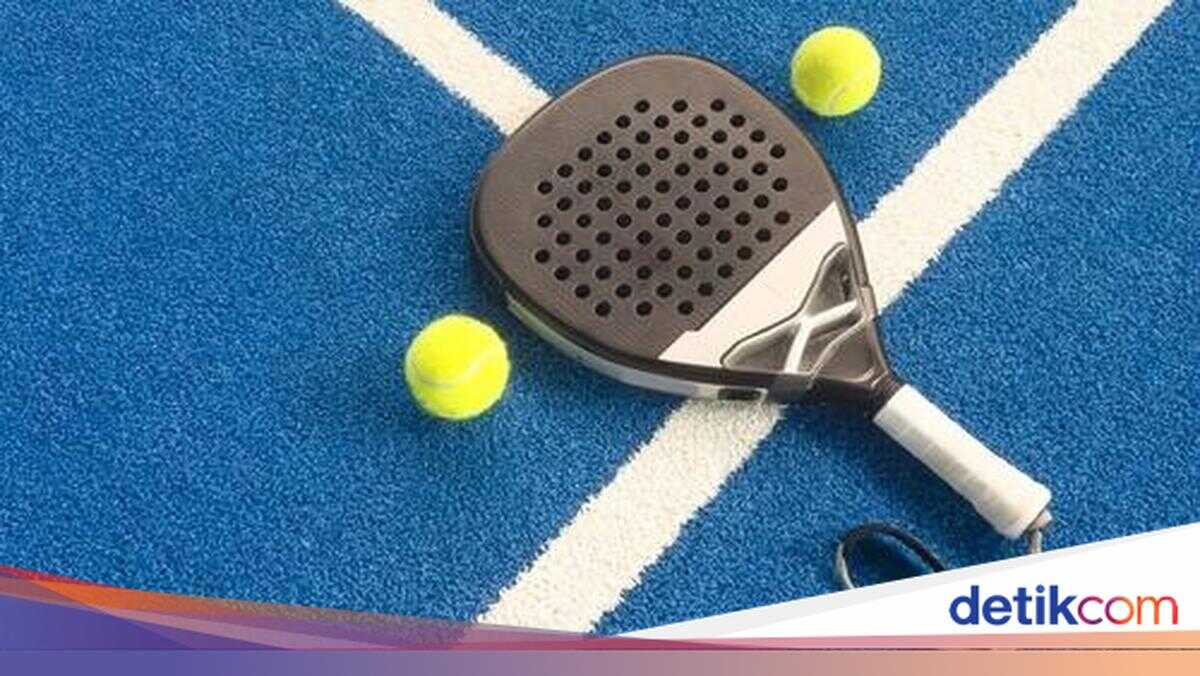
Residents in Haji Nawi, Cilandak, South Jakarta have lodged complaints about a padel court in their neighbourhood. Research indicates that padel as a sport is classified as noisy — significantly louder than tennis.
The research paper, titled ‘A Summary of the Research Paper: A Noise Assessment of Padel’, was written by Martin Higgins and published in the MW Acoustic Consultants journal. The study is a summary of a research project designed to measure noise generated by padel activities, using tennis as a benchmark.
The paper examined a standard padel court measuring 10 by 20 metres, typically semi-enclosed with glass barriers at each end and wire fencing along the sides. Tennis courts, by comparison, are larger — usually around 28 by 11 metres — and typically unenclosed.
Padel uses rackets of solid construction, usually made from plastic or resin, with balls similar to tennis balls but with lower internal pressure. The design and rules of padel encourage the ball to remain in play, resulting in longer rallies and more intense impact sounds.
“When measured 5 metres from the side of the court at the net line, a typical padel match produces an average LAeq (average noise level) and LAMax (peak noise level) 6 decibels higher than tennis — equivalent to a significant increase,” wrote Higgins, as cited on Thursday, 19 February 2026.
“Conversely, when measured 5 metres from the end of the court at the baseline, noise levels for padel and tennis are almost identical,” he continued.
The research also showed that noise levels at the side of the court are approximately 12 dB higher than at the glass-enclosed ends, equivalent to more than double the perceived noise.
Furthermore, the sound character of padel is far more “impulsive” than tennis. The study found that padel racket strikes occur roughly every 4 seconds, compared with tennis racket strikes every 6 seconds. Padel rackets produce a sharp, high-frequency “cracking” sound, with noisy impacts throughout play.
“During a 5-minute period of club-level play, padel produced an average of 88 distinct impact sounds, whilst tennis produced only 50,” the paper stated.
The research recommended that padel court design needs careful consideration, particularly with regard to noise-sensitive neighbours.
Noise Regulations
Indonesia already has regulations governing noise levels, including Minister of Environment Decree No. 48 of 1996. Article 1 stipulates that noise must have a maximum threshold to prevent disturbance.
The regulation sets noise standards in decibels (dB). For residential areas, the maximum permissible noise level is 55 dBA — roughly equivalent to a quiet office atmosphere with normal conversation or a washing machine during a regular cycle, not during the spin dry phase.
Padel court noise levels far exceed this threshold. Data from the French Tennis Federation (FFT) and independent acoustic research in Europe, such as the Leroy and Kaiser study from SGS Belgium, confirm average levels of 89–91 dB(A) with peaks reaching up to 102 dB(A).
Governor’s Response
Jakarta Governor Pramono Anung has already spoken publicly about the complaints. He said he would summon facility operators and relevant stakeholders to discuss the matter.
Pramono stated the summons would be issued shortly to ensure all permits and padel business operations comply with prevailing regulations.
“Next week I will invite all stakeholders specifically related to padel permits. I have asked them to present their case,” Pramono told reporters at Jakarta City Hall.
He stressed that if violations are found or operations are not in accordance with permits and are disturbing the public, the DKI Jakarta provincial government will not hesitate to take firm action.