
South Jakarta City Government Targets Capture of 5 Tonnes of Plecostomus Fish at Setu Babakan
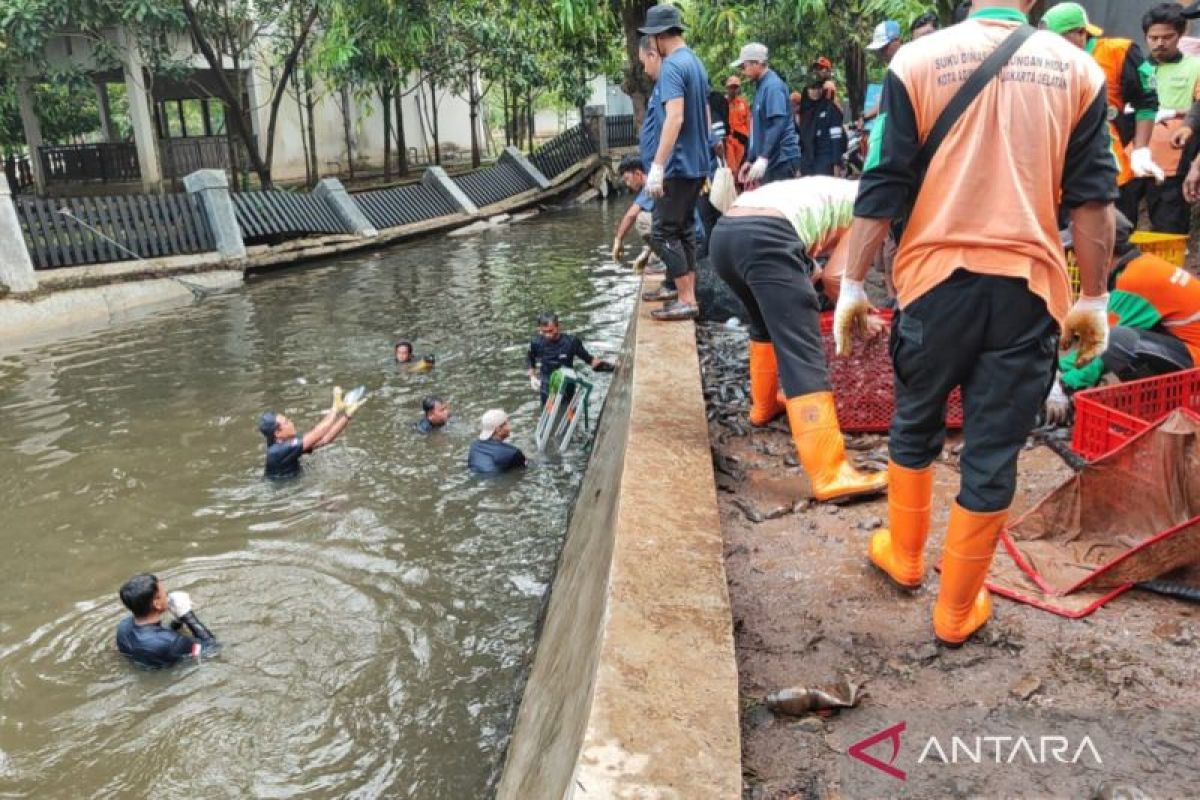
Jakarta (ANTARA) - The South Jakarta City Government (Pemkot Jaksel) is targeting the capture of five tonnes of plecostomus fish in a population control activity in the Setu Babakan area, Jagakarsa.
“Praise be to God, this morning we are at Setu Babakan. In just over an hour, we have already obtained approximately 300 kilograms of plecostomus fish. Our target for today is five tonnes,” said South Jakarta Mayor Muhammad Anwar during the plecostomus fish capture event at Setu Babakan, Jakarta, on Friday.
He stated that the activity is a follow-up to the instructions from Jakarta Governor Pramono Anung to maintain the balance of the aquatic ecosystem.
According to him, the capture is being carried out on a large scale because studies indicate a high population of plecostomus fish in Setu Babakan. Additionally, the fish is considered to have the potential to damage the aquatic ecosystem.
“Hopefully, with this activity, the existing ecosystem will improve, and the water and environmental quality will also get better,” Anwar said.
He mentioned that similar activities are not only being conducted at Setu Babakan but also at several other points in South Jakarta. However, the current main focus is on that area because the population is the highest there.
“All areas are participating, but the largest is here. Study results show that there are many plecostomus fish in Setu Babakan, and it has been proven—in one hour, we have already caught 300 kilograms,” Anwar explained.
He also assured that the capture will be carried out continuously until the plecostomus fish population can be significantly reduced.
“This activity is not just for today, but will continue until they are completely gone, because this fish can produce up to 800 eggs in a single spawn,” Anwar said.
“This fish is a predator that eats the eggs of other fish. The water can also be affected. It can survive in extremely dirty water, so it poses quite a danger to the ecosystem,” Anwar explained.
In implementing the activity, Pemkot Jaksel involves various elements, from the Food Security, Maritime Affairs, and Agriculture Sub-Department (KPKP), sub-districts, villages, to the Civil Service Police Unit (Satpol PP).
“Everyone is involved, including the rainbow troops. We analyse which locations have the most fish, then carry out the capture to maximise results and have an impact on the community,” Anwar revealed.
Furthermore, he urged the public to be more selective in choosing food, following the circulation of information that plecostomus fish can be used as ingredients for processed foods, such as siomay.
“The public must be more selective in buying snacks. We are concerned that if the origin is unknown, the impact could be felt in the long term,” Anwar added.