
Sorry Indonesia! The Title of World's Pepper King Has Been Taken by Vietnam
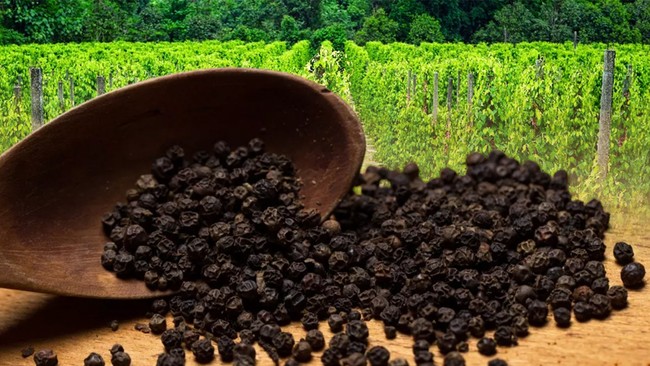
In almost every modern kitchen, black pepper is present quietly. It is sprinkled over steak, added to soup broths, infused into sauces, and then fades from attention.
Vietnam now stands as the world’s largest pepper exporter. The country once controlled around 55% of the global pepper supply. In 2022, Vietnam was projected to export 220,000 tonnes of pepper worth US$962 million.
In the first 11 months of that year alone, shipments had already exceeded 212,000 tonnes to more than 80 countries and regions.
This means that when restaurants in Europe fill their pepper grinders, or food factories in America mix packaged seasonings, the raw material is likely to come from Vietnamese plantations.
According to Hanfimex, Vietnam’s superiority stems from a rare combination that few competitors possess. The humid tropical climate provides ideal conditions for pepper plants.
Fertile soils in regions such as Gia Lai, Dak Lak, and Ba Ria Vung Tau support high productivity.
The Phu Quoc area is even known for its distinctive pepper aroma. While other countries rely on seasons, Vietnam has built a more consistent supply. In global trade, stability is often more valuable than sheer volume.
They also move quickly on the industrial side. Pepper is harvested, dried, cleaned, sorted, and then processed to export standards. Large buyers seek uniform sizes, measured moisture content, low residues, and on-time deliveries.
Vietnam adapts to these needs. Therefore, Vietnamese pepper is not just an agricultural commodity, but a food manufacturing product with clear specifications.
The next factor comes from trade diplomacy. Vietnam’s free trade agreements with the European Union provide much lighter tariff access compared to several regional competitors. When tariffs drop, the final price becomes more competitive.
In the spice business with tight margins, small differences can determine large contracts. This helps Vietnam expand its market to Europe, the United States, the Middle East, and even India.
According to the World Bank’s WITS, in 2023 for the category of crushed or ground pepper, this dominance remains evident.
Vietnam recorded exports of US$171.6 million with a volume of 29.8 million kilograms. The gap is vast from India in second place, which recorded US$38.8 million. The European Union, Germany, and the United States follow below. These figures provide a simple picture: Vietnam is not just a major player, but the gravitational centre of the global processed pepper market.
So where does Indonesia stand? In the same category, Indonesia recorded exports of around US$5.59 million with a volume of 1.03 million kilograms in 2023. Indonesia still features on the global pepper trade map, but the scale of its business is far below Vietnam’s.
Long before Vietnam ascended to the throne, Indonesia was once one of the world’s pepper powerhouses. For centuries during the spice trade era, the Nusantara region was a primary global supplier of pepper alongside India.
From the 16th to 18th centuries, pepper from Banten, Lampung, and Sumatra became a highly sought-after commodity by European nations. High demand for spices even drove large-scale trading expeditions to Southeast Asia.
During the era of the Dutch East India Company, trade in Nusantara pepper became even more dominant. The Dutch trading company controlled the spice distribution routes and made pepper one of its main commodities.
Entering the 19th century, Indonesia’s position remained strong even as the prestige of pepper began to be challenged by other commodities like coffee, sugar, and rubber. However, in the 20th century, this dominance gradually faded with the emergence of new competitors such as Vietnam and Brazil.
Yet historically, Nusantara was once one of the spice sources that made European ships sail for months to the east. Now the stage has shifted.
This gap arises from several classic issues such as plantation productivity, post-harvest quality, fragmentation of small farmers, weak downstream integration, and inconsistent export standards. The global market does not buy historical nostalgia for spices. They buy consistent quality in every container, reasonable prices, and predictable supply.