
SOEs Prepare KAI Assets for Flats in Densely Populated Areas
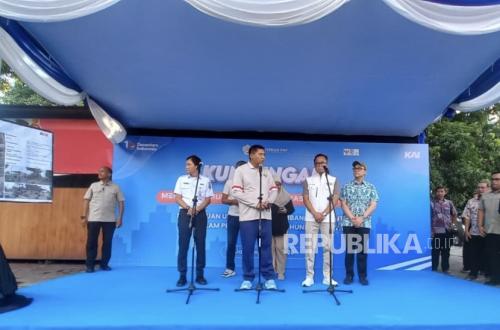
The government is beginning to direct state-owned enterprise assets to speed up the construction of public housing in densely populated urban areas. Land owned by PT Kereta Api Indonesia (KAI) at Jakarta Kota Station is being prepared as a site for building rusun.
Head of the State-Owned Enterprises Regulatory Agency Dony Oskaria stated that the government is reviewing the readiness of the land for the project. “We just reviewed the readiness of the land that we will use for building houses, MBR and MBT, and insya Allah, hopefully, we will determine it soon,” Dony said after inspecting KAI’s land assets at Jakarta Kota Station, Jakarta, on Sunday (5/4/2026).
Dony emphasised that the SOE Regulatory Agency supports the optimisation of state assets for the government’s three million houses programme. He said that mapping SOE assets will be focused on areas with high population density so that the benefits are directly felt by the community.
“The SOE Regulatory Agency really wants to provide more benefits to the community, of course, through cooperation with the Ministry of PKP. This shows inter-ministerial synergy so that the government’s programme can be realised faster and better,” Dony said.
KAI President Director Bobby Rasyidin stated that the company is open to utilising land in the Kemukus Road area, around Jakarta Kota Station. The location is considered strategic for housing development.
“Commercially, this is quite promising; it’s far enough from the railway tracks, so we see potential here, and looking ahead, the prospective residents in the next 10-15 years will also grow very rapidly. This is actually Indonesia’s future housing,” Bobby said.
The government aims for cross-SOE and ministerial synergy to accelerate the provision of decent housing, especially for low- and middle-income communities in urban areas.