
Soedeson Challenges ICW to Reveal Countries That Seize Assets Without Criminal Conviction
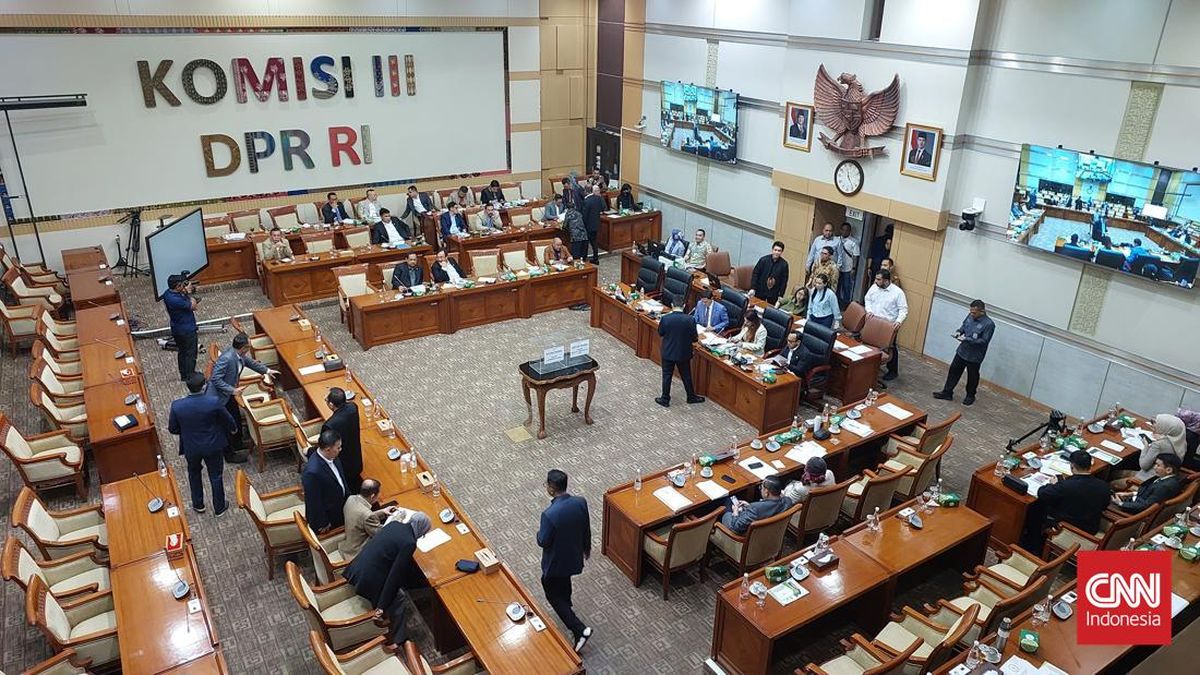
Golkar Party MP and member of the House of Representatives Commission III, Soedeson Tandra, has challenged the Indonesia Corruption Watch (ICW) to reveal countries that can seize assets without a criminal conviction or non-conviction based (NCB) asset forfeiture.
“We are open to input from ICW. Give it to us. What are the examples of countries? He mentioned hundreds, right? No need for hundreds, just five countries that have implemented this law and succeeded,” Soedeson said when contacted on Friday (10/4).
Soedeson stressed that his side is not rejecting the proposal for asset seizure through civil lawsuits. He admitted that he is merely cautioning that the mechanism for asset forfeiture regulated in the draft Asset Forfeiture Bill must be handled carefully.
According to Soedeson, the discussion of the draft Asset Forfeiture Bill in Commission III of the House of Representatives is actually a form of support for anti-corruption efforts.
“But any anti-corruption measures must not violate the Constitution and other laws, right?” he said.
The MP from the Papua electoral district explained that Indonesia has so far adhered to a criminal law system based on the person (in persona), not the object (in rem). Only through the draft Asset Forfeiture Bill will the in rem principle be applied.
“Well, we must be careful because property itself has its own laws, right? There are many collisions that occur,” Soedeson said.
He, for instance, questioned whether the state can seize proceeds of crime that have legally been transferred to another person. Because the Constitution also regulates the protection of citizens’ property rights.
“Third parties are also protected by law, right? So the question is, should the state’s interests or citizens’ interests be protected?” he stated.
In a hearing for public input (RDPU) discussing the continuation of the draft Asset Forfeiture Bill in Commission III, Soedeson had previously cautioned that several provisions in the bill could clash with the constitution.
Referring to Article 6 of the Basic Law on Judicial Power, for example, he said that a person cannot be declared guilty without a valid court decision.
“This is an issue that has been on my mind from the start. Because asset forfeiture focuses on in rem, on the object. Whereas our character is civil law, ‘whosoever’, in persona,” Soedeson said in his statement on Thursday (9/4).
In response, ICW researcher Yassar Aulia highlighted Soedeson’s view that the draft Asset Forfeiture Bill focuses on in rem (object) without criminal conviction, not in persona (person).
“In fact, the in rem approach or non-conviction based forfeiture in anti-corruption efforts has been adopted by many countries whose quality of human rights guarantees is far better than Indonesia’s,” he explained.