
Social welfare beneficiaries in South Jakarta predominantly from surrounding areas
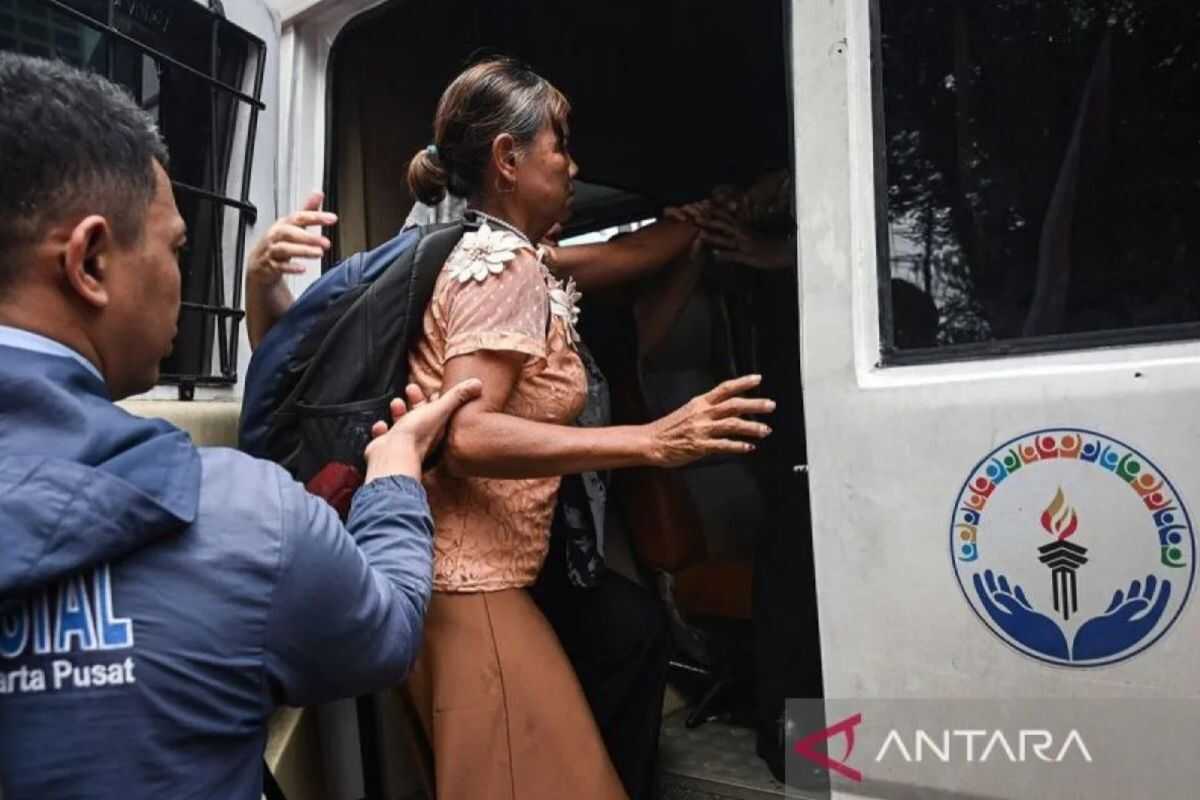
Jakarta (ANTARA) – South Jakarta’s Social Welfare Bureau (Suku Dinas Sosial) has stated that individuals requiring social welfare services (PPKS) in South Jakarta are predominantly from Jakarta’s surrounding buffer regions due to the area’s status as a municipal border zone.
“South Jakarta is a border region with several surrounding areas, such as Tangerang, Depok, and Bekasi, resulting in quite high mobility of PPKS,” said Bernard Tambunan, Head of South Jakarta’s Social Welfare Bureau, when contacted in Jakarta on Monday.
He noted that when conducting outreach at high-risk locations, his office employs an approach involving appeals and assessments to determine each individual’s background, including whether they have family in Jakarta or are migrants.
Should assessment results indicate that the individual is destitute and requires further intervention, South Jakarta’s Social Welfare Bureau refers them to social welfare institutions for rehabilitation.
Furthermore, Bernard stated that increased public activity during Ramadan and Eid is often accompanied by a rise in PPKS in public spaces, necessitating more intensive supervision during these periods.
“Usually, the number of individuals requiring social welfare services increases towards the holy month of Ramadan, through to the Eid holiday and homecoming period,” Bernard said.
“On a monthly basis, it fluctuates. But what we need to anticipate is the period before Ramadan, during Eid, and after the holiday exodus,” Bernard added.
Meanwhile, South Jakarta’s Social Welfare Bureau has secured 16 PPKS during the early period of Ramadan 1447 Hijriah.
Of the 16 individuals apprehended, beggars and vagrants dominated the outreach results, with five persons in each category. The officers also secured three individuals classified as destitute, one person with mental disability, one elderly destitute person, and one person in a non-PPKS category.
When compared with Ramadan 2025, this figure remains significantly lower than the 114 individuals secured in March 2025.