
Social Minister Receives Mental Health Activists, Reveals Allegations of Inhumane Practices in Care Homes
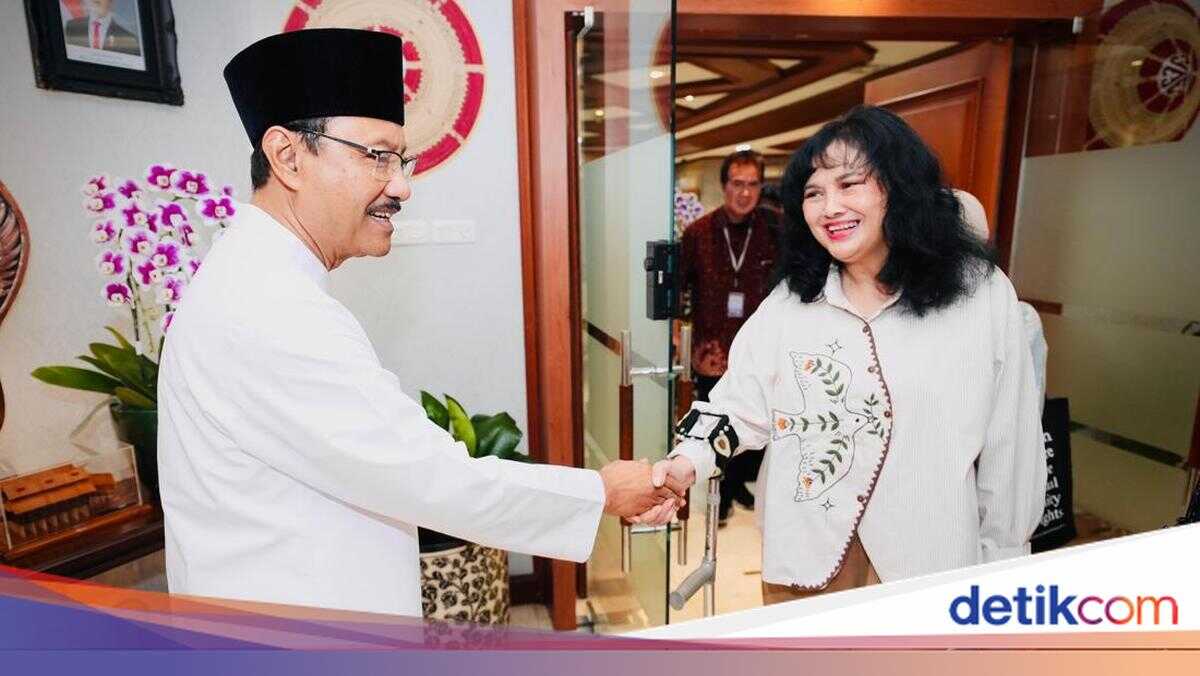
Indonesia’s Minister of Social Affairs (Mensos), Saifullah Yusuf, together with Deputy Minister of Social Affairs Agus Jabo Priyono, received activists from Himpunan Jiwa Sehat, Yenny Rosa Damayanti, at the Ministry of Social Affairs office.
The meeting discussed findings of alleged inhumane practices against people with mental disabilities in several social care homes.
Yenny attended alongside victims with mental disabilities who provided direct testimony about conditions that she said had long escaped public attention.
In her presentation, Yenny reported findings of approximately 20,000 social care facilities, with the majority located on Java Island, suspected of practising inhumane methods.
“In several places, we found residents chained and shackled. Food was substandard. Some were bathed only once a month using detergent soap,” Yenny stated on Friday (27 February 2026).
She argued the conditions represented a grave irony, as spaces intended for recovery had instead become sites of suffering. Yenny also highlighted the levying of fees on residents’ families, ranging from Rp250,000 to Rp2.5 million monthly, despite services falling far below standard.
“Some care homes continue charging fees, but the treatment is inhumane,” she said.
Yenny added that her organisation had submitted reports consistently since 2016 but had not received adequate responses previously.
“We have reported many times since 2016. Our hope is that now there will be concrete action,” she stated.
She urged swift measures as a means of addressing violence and practices that degraded human dignity.
“Most urgent: stop all forms of violence and inhumane practice. After that, the state must regulate, protect, and restore the victims,” Yenny said.
Responding to the report, Gus Ipul stressed the importance of synergy between society and government, and the need for evidence-based policy.
“We must work together. Every step must be evidence-based so our actions are well-targeted and impactful,” said Gus Ipul.
Gus Ipul also noted that the Ministry of Social Affairs had begun a re-registration process for Social Welfare Institutions (LKS) since last year as part of comprehensive reform of the social care system. He welcomed Yenny’s visit bringing facts and direct testimony from victims.
“I am grateful that Ibu Yenny came bringing data, facts, and testimony. This strengthens us to act,” said Gus Ipul.
Additionally, Gus Ipul reaffirmed his commitment to protecting vulnerable groups often rendered invisible.
“We want to ensure they no longer live in neglect. They must receive protection, recovery, and have their dignity restored as human beings,” he said.
As follow-up, Gus Ipul outlined four strategic measures to be strengthened by the Ministry:
All Social Welfare Institutions must be formally registered.
Accreditation processes must be strengthened according to standards, accompanied by improved assessment instruments.
Supervision must be increased with open public participation.
Enforcement of sanctions must be clarified and strengthened against violations.
The meeting represented an initial step towards strengthening collaboration so that handling of social care homes does not end with reports but results in concrete action.
“The state must not merely listen. The state must be present and act,” said Gus Ipul.