
Social Minister Gus Ipul Supports Proposal for Inmates to Receive PBI
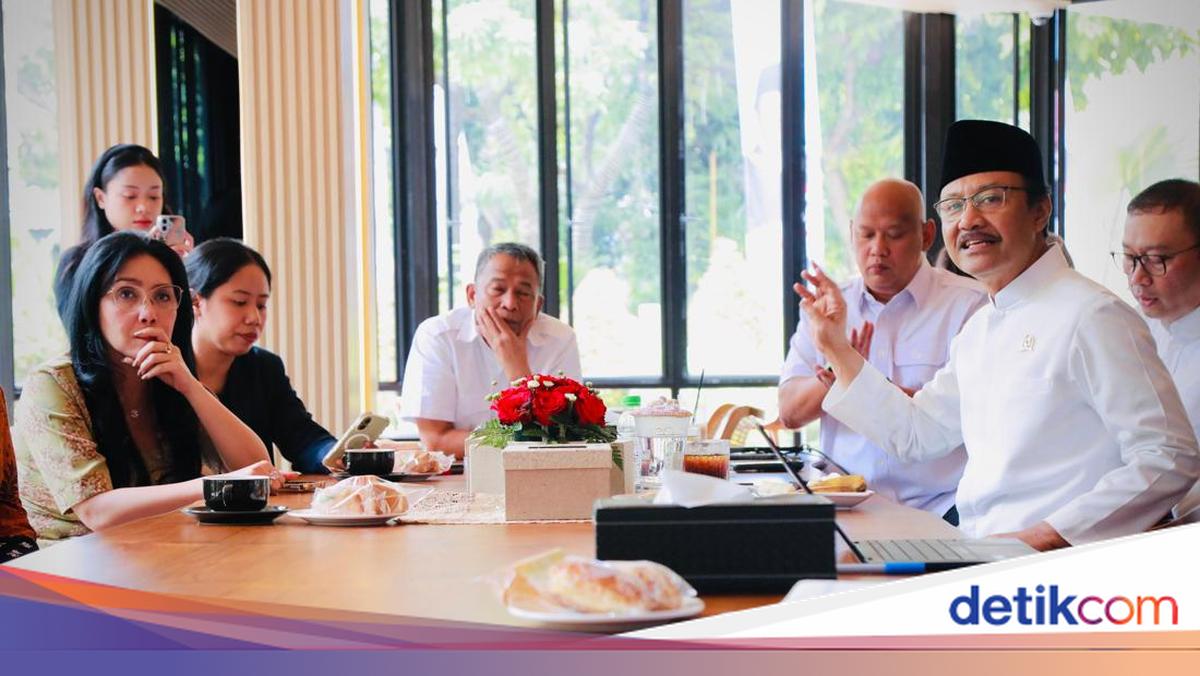
Social Minister Saifullah Yusuf (Gus Ipul) supports the proposal for social protection for prison inmates (WBP) through the Penerima Bantuan Iuran (PBI) scheme. According to him, this step aligns with the mandate of Article 34 of the 1945 Constitution.
Gus Ipul conveyed this during a visit from DPR member Reike Diah Pitaloka along with the Chair of the Special Health Care and Rehabilitation Working Group of the Directorate General of Corrections, Dr Hetty Widiastuti, at the Ministry of Social Affairs office in Central Jakarta on Friday (27/3). The meeting discussed social protection for WBP.
“This is in line with Article 34 of the 1945 Constitution. The poor and neglected children are cared for by the state,” said Gus Ipul in a written statement on Friday (27/3/2027).
Gus Ipul explained that the Ministry of Social Affairs implements this mandate through social protection, rehabilitation, and empowerment for Social Welfare Service Recipients (PPKS). The assistance provided includes the Family Hope Programme (PKH), staple food aid, and PBI.
He mentioned that there are 12 vulnerable groups or Social ATENSI Service Recipients (PAS) that are targeted for assistance, such as the poor, neglected children, people with disabilities, neglected elderly, disaster victims, and former prison inmates.
Currently, out of a total of 275,513 inmates, 112,882 people have been registered as PBI recipients. The Ministry of Social Affairs will coordinate with the BPS for data verification and economic decile checks for the WBP.
In addition to PBI, the Ministry of Social Affairs also opens opportunities for other social assistance for WBP who meet the criteria.
“So anyone who meets the criteria can receive social assistance as protection. Social assistance is temporary in nature, so they can rise to become independent families. So social assistance is actually only temporary,” he said.
After protection, the Ministry of Social Affairs will continue with social rehabilitation according to each individual’s needs through residential services at the ministry’s centres in various regions.
“Well, for social rehabilitation, the government has residential services through the centres we have; that is residential service,” he added.
Meanwhile, for healthy aid recipients in productive ages, they will be directed to social empowerment programmes, such as business assistance, training, and market access.
“In empowerment, there is business assistance, training assistance, market creation assistance, assistance that is actually more abundant,” he said.
Gus Ipul emphasised the importance of using the National Single Social Economic Data (DTSEN) as a shared reference across institutions so that assistance programmes are more targeted and sustainable.
“Our data must be the same. The data held by Ms Rieke and ours must also be the same,” he explained.
He assured that the Ministry of Social Affairs is ready to follow up on the social protection plan for WBP.
“Insya Allah, this information will be followed up to provide protection for inmates,” he stated.
Meanwhile, Rieke assessed that social security is a right for WBP as well as an obligation of the state to fulfil it. She encouraged cross-party collaboration to realise this.
“We promise from the Directorate General of Corrections together with the Ministry of Social Affairs, insya Allah we will collaborate with Imipas (Ministry of Immigration and Corrections) to strive for the presence of social security, especially BPJS Penerima Bantuan Iuran for inmates throughout Indonesia,” Rieke revealed.