
Social Media Blocked: Psychologist Gives Tips for Parents on Communicating with Children
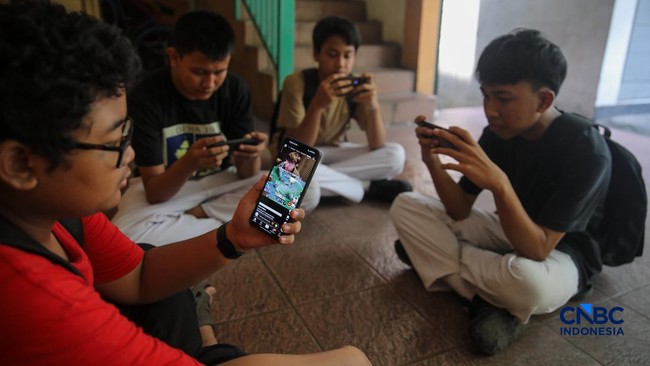
Children under the legal age are restricted from accessing social media. The Indonesian government has established the PP Tunas regulation, reinforced by Ministerial Regulation No. 9 of 2026.
Parents play a crucial role in ensuring their children remain protected in the digital realm. Ratih Zulhaqqi, a clinical child psychologist, stated that parents need to provide guidance and communicate with their children about social media restrictions.
“From a psychological perspective, protecting children in the digital world is not about completely prohibiting it, but about teaching children how to use technology safely and responsibly,” said Ratih to CNBC Indonesia on Friday (10/4/2026).
She explained that parents should build open communication. This allows children to share stories safely and feel heard, without judgement.
“This is extremely important so that children are willing to talk about any uncomfortable experiences they have in the digital world. If children feel safe, they will definitely share,” she said.
Parents should also create clear and consistent rules. Ratih reminded that effective restrictions are those agreed upon together, not unilaterally imposed.
Do not forget to implement the restrictions consistently and provide reasons why the rules must be applied. Give all that information in as much detail as possible.
“For example, screen time limits, how long, what kind of content, and when gadgets are not allowed, such as no gadgets before bed,” explained Ratih.
Supervision is still necessary, especially for younger children. She stated that supervision helps children learn to select appropriate content.
Regarding the effectiveness of PP Tunas, she opined that it can help reduce excessive exposure and provide a safe space for the development of children under 16, who are considered not yet mature in terms of regulation.
On the other hand, she warned that children still find ways to circumvent the restrictions to continue using social media. For instance, by using someone else’s account or falsifying their age.
“So if asked how effective it is, I can say it’s effective as a foundation. As a foundation and initial barrier, but not sufficient without accompanying education and parental involvement, of course,” she emphasised.