
Social Health Overlooked in the Budget
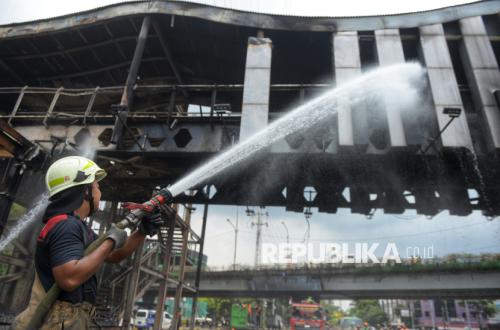
There is a cost that is becoming increasingly expensive in the life of this nation, but it is rarely truly accounted for in the state budget. That is the cost of damaged social relationships and trust. Examples of its effects include the 1998 riots and the August 2025 riots.
We can calculate the rupiah cost of building roads, schools, hospitals, ports, social assistance, and various welfare programmes. We can also read the large figures in budget documents. In the 2026 state budget (APBN), for instance, the health budget is allocated at Rp244 trillion. This budget is directed towards expanding access and equitable distribution of health services, including health protection for poor and vulnerable communities.
Those figures are certainly important. Behind the health budget numbers are the faces of citizens struggling against illness. There are poor families anxious about medical costs. There are mothers hoping the community health centre remains open when their child has a fever. There are patients who need medicine without having to choose between buying medicine or meeting kitchen needs. Therefore, the state must indeed be present in the matter of its people’s physical health. Hospitals must be easily accessible, community health centres must truly function, medicines must be available, and doctors and health workers must be sufficient. No poor and vulnerable citizens should feel abandoned alone when their body is ill.
Mental health is also beginning to receive serious attention. The Ministry of Health records that the Free Health Check Programme for the 2025–2026 period found indications of mental health issues in nearly 10 percent of around 7 million children who have undergone screening.
However, there is a question that needs to be asked honestly: what about social health?
If the body is ill, we know where to go. There are hospitals, community health centres, clinics, doctors, and medicines. If the soul is disturbed, there are beginning to be counselling services, psychologists, psychiatrists, and mental health campaigns. But when society begins to lose trust, when public spaces are filled with hatred, when citizens easily suspect each other, report each other, insult each other, and negate each other, who is responsible?
Which ministry guards it? What programme measures it? Which budget maintains it?
This is where social health often escapes the attention of development.
Yet, health does not only concern the body and mind. The WHO constitution affirms that health is a state of complete physical, mental, and social well-being, not merely the absence of disease. This means that humans are not fully healthy if they live in a society full of fear, hatred, suspicion, and enmity.
Social health speaks to the quality of communal life. Do citizens still trust each other? Do people still feel part of the community? Can differences still be accepted? Is criticism still heard as input? Is the law still felt as a protector, not a tool to suppress opponents? Does public space still have decorum?
Those questions rarely enter development speeches. We more often discuss economic growth, investment, inflation, poverty, and infrastructure. All of that is important. But a nation does not stand only on long roads and tall buildings. A nation also stands on trust, justice, empathy, and social brotherhood.
If a road is damaged, the potholes are visible. If a bridge collapses, the damage is clear. But when trust collapses, the damage works slowly. Citizens begin to suspect the state. Community groups distance themselves from each other. Criticism is seen as hatred. Support is seen as sycophancy. Neutrality is seen as cowardice. Differences are no longer read as normal, but as threats.
These days, those symptoms are easily found. Digital spaces are full of curses. People with different opinions are quickly labelled. Jokes can become legal matters. Criticism is often met with personal attacks. Legal channels, which should be paths to seek justice, sometimes feel turned into tools to pressure each other.
Legally, every citizen certainly has the right to seek justice. But socially, the habit of reporting each other, threatening each other, and shaming each other shows that something is fragile in our communal life.
That fragility must not be allowed to persist.
In Islam, leadership is an amanah (trust). The Prophet Muhammad (peace be upon him) said, “Each of you is a leader and each of you will be asked about those under his leadership.” In a narration from Sahih Muslim, it is also emphasised that a leader over society is a guardian and will be held accountable for his people.
This hadith does not only speak about family. It also speaks about the state. A leader is not merely a holder of authority. A leader is a guardian. He is not only responsible for programmes, budgets, buildings, roads, and performance reports. He is also responsible for the sense of security of his people, for the justice felt, for the brotherhood maintained, and for the trust that must not be betrayed.
Therefore, social health should be part of the state’s amanah.
The state is not enough to build physical infrastructure. The state also needs to build social infrastructure. That social infrastructure is named trust, dialogue, legal justice, sense of security, tolerance, and the ability of citizens to resolve conflicts without destroying each other.
Without social health, even good government programmes are easily suspected. Official data is doubted. Calls for participation are seen as image-building. Public policies are read with prejudice. Social compliance decreases. Citizens feel unheard, then choose to withdraw or fight in their own way.
At a certain point, what is damaged is not only the relationship between the people and the government, but also between people and people. Disappointed groups are easily ignited by provocation. Groups supporting the government become defensive and counter-attack. In the end, citizens face off against citizens. Yet the root of unity