
Social concern as the primary rationale for fatwa allowing dam slaughter in Indonesia
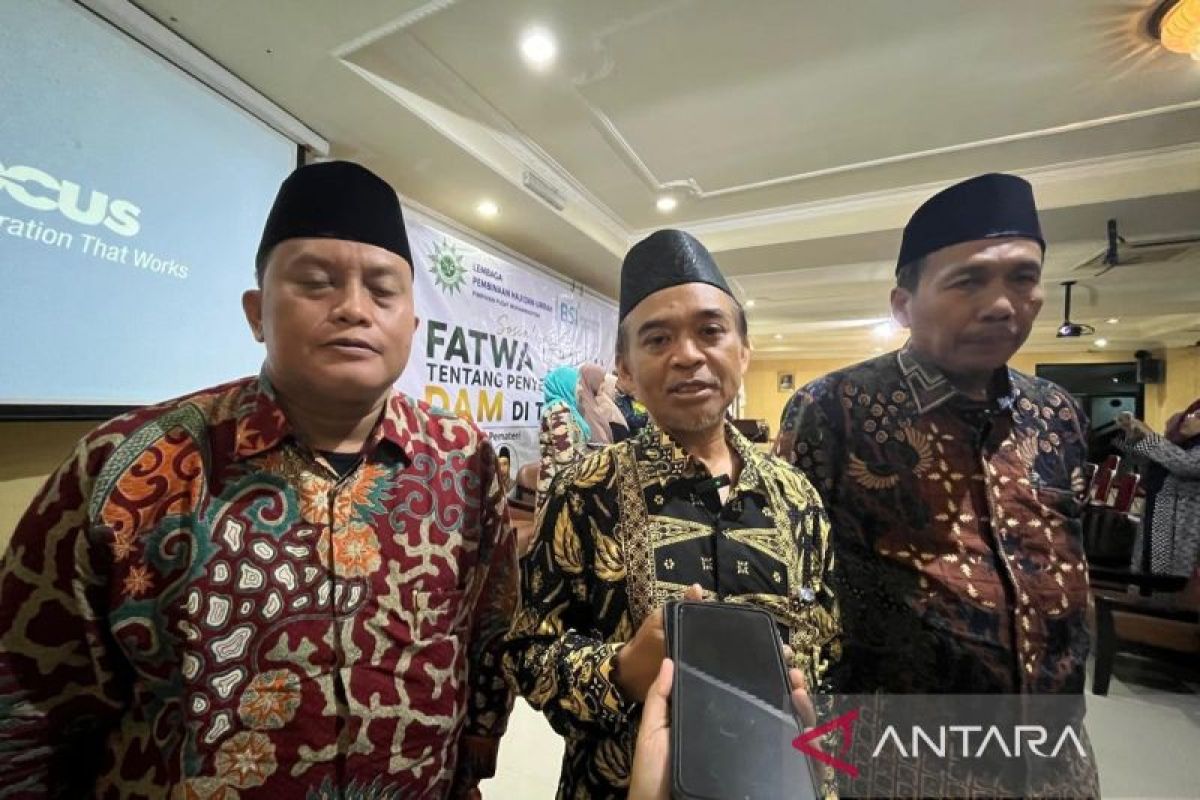
Jakarta (ANTARA) - The Majelis Tarjih and Tajdid of Muhammadiyah’s Central Leadership states that social concern is one of the primary rationales (’illat) in the fatwa permitting the slaughter of dam animals in Indonesia.
“In the development of discussions in the Majelis Tarjih, we see that the strongest rationale for dam slaughter is social concern. The most tangible message of piety in the context of qurban, dam, and hadyu is the message of social concern,” said Member of Majelis Tarjih and Tajdid Endang Mintarja in Jakarta on Tuesday.
Previously, Muhammadiyah’s Central Leadership through the Majelis Tarjih and Tajdid officially issued a fatwa allowing the slaughter of dam hajj animals in Indonesia. This policy aims to benefit the ummah, avoid waste, and ensure that dam meat is more useful and targeted appropriately.
Endang explained that this conclusion was reached through in-depth studies of Quranic verses, hadiths, and views of previous scholars. From this study, the understanding has strengthened that dam meat must be distributed to those who are entitled and in need.
“The benefits must be guaranteed, felt by everyone. Not just people there (in the Haram land),” said Endang.
According to him, the current factual conditions in Saudi Arabia show limitations in dam beneficiaries due to relatively high welfare levels. Even, meat distribution in that region is considered excessive.
In this context, the Saudi Arabian Government is said to welcome the idea of distributing dam outside its territory, including to Indonesia. This is seen as aligned with broader welfare objectives.
“This ijtihad not only has a strong sharia basis but also receives political support from the Indonesian and Saudi governments. There is a kind of ‘green light’ from both sides,” he said.
If carried out outside the Haram Land, including in Indonesia, it is invalid. This is based on Fatwa Number 41 of 2011 on the Slaughter of Dam Animals for Hajj Tamattu’ Outside the Haram Land.
This fatwa was established in Jakarta on 24 October 2011 CE/26 Dzulqaidah 1432 H, signed by Hasanuddin AF as chairman and KH Asrorun Niam Sholeh as secretary.
In response to the MUI fatwa, Endang said dialogue with that institution is still ongoing. He emphasised that the relationship between MUI and Islamic social organisations is equal, so each has independence in ijtihad.
“I think the relationship between MUI and Islamic social organisations is equal. So equal that ijtihads between one and another are independent of each other. In this case, Muhammadiyah still respects other differing opinions,” he said.
He affirmed that the fatwa issued by Majelis Tarjih and Tajdid Muhammadiyah remains based on sharia principles and does not deviate from the framework of classical scholarly thought.
“We assure that in issuing this fatwa at the same time, we also respect other opinions that do not align with the Majelis Tarjih and Tajdid fatwa,” said Endang.