
Social Assistance Digitalisation Expanded to 42 Regions
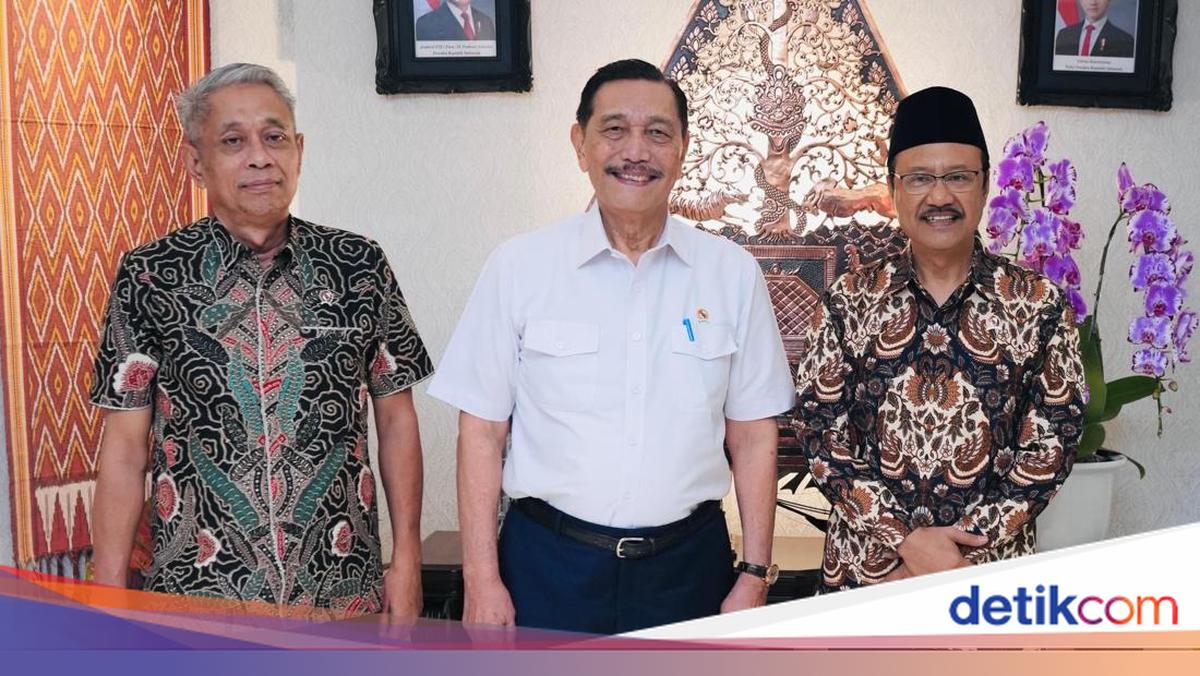
Perlinsos Digital is a portal for registering and appealing social assistance under the Family Hope Programme (PKH) and staple food aid, integrated across ministries and agencies. The system is currently being piloted before expansion to 42 districts starting 13 May 2026. This was stated by the Chairman of the National Economic Council (DEN), Luhut Binsar Pandjaitan, who also serves as Chairman of the Government Digital Transformation Acceleration Committee, alongside Social Minister Saifullah Yusuf (Gus Ipul) and Deputy Social Minister Agus Jabo Priyono at the Ministry of Social Affairs office in Jakarta today.
“This digitalisation is indeed very important so that decision-making processes are based on accurate data. We are grateful that ministries and agencies with around 27,000 applications are starting to connect,” said Luhut Binsar Pandjaitan in a written statement on Thursday (7/5/2026).
According to Luhut, the system utilises face recognition technology and AI to enhance validation of social assistance recipients. The technology was previously piloted in Banyuwangi.
“With the face recognition that we have implemented in Banyuwangi, it turns out to be very accurate,” Luhut stated.
He mentioned that President Prabowo Subianto is scheduled to directly review the programme’s implementation in Banyuwangi, Surabaya, and Bali in June, including checking the registration process and data appeal mechanisms for recipients.
“The President will review several locations; we propose around 8-9 June in Banyuwangi, Surabaya, and Bali. If all goes well with the 42 districts, the President will roll it out in October or November, at the latest this year I think it can run nationally,” Luhut explained.
Meanwhile, Social Minister Saifullah Yusuf, or Gus Ipul, stated that the system enables the government to map recipient profiles more comprehensively, including social conditions, assets, and biometric data of beneficiaries.
“With this social assistance digitalisation, we know more about the profiles of social assistance recipients. We not only know their assets or home ownership, but also their biometrics; we can know their faces. So, identification is more complete with social assistance digitalisation,” said Gus Ipul.
In addition, the government can identify the various types of assistance received by the community, whether from ministries and agencies, local governments, or non-governmental aid.
“Thus, we can know each year how much assistance the beneficiaries receive from both government and non-government sources,” Gus Ipul remarked.
He explained that the application is connected to various government databases from the Ministry of Social Affairs, Dukcapil, BPS, PLN, BKN, Korlantas, BPJS, ATR/BPN, and several other agencies. This data integration is expected to help the government measure the eligibility of beneficiaries while monitoring the process towards family independence.
“Thus, we can measure further whether the beneficiary families are still eligible or need time to become more independent families. There are many benefits from this social assistance digitalisation, mainly to make social assistance more on target,” Gus Ipul clarified.
Gus Ipul assured that underprivileged communities and the elderly not accustomed to using smartphones will still receive assistance through social companions, volunteers, and local governments down to the village and sub-district levels.
“Gradually, once they get used to it, insyaallah more and more people will utilise this social assistance digitalisation. It’s not perfect yet, but it must be started,” said Gus Ipul.
Meanwhile, Poverty Expert and Member of the National Economic Council (DEN) Arief Anshory Yusuf appreciated the government’s step to integrate various data across ministries and agencies to support more accurate social assistance distribution.
“I want to thank you, because in 70 years of Indonesian independence, this is the first time administrative data has been integrated,” he concluded.