
Social Assistance Data Errors in DTSEN: Government Opens Self-Correction Services
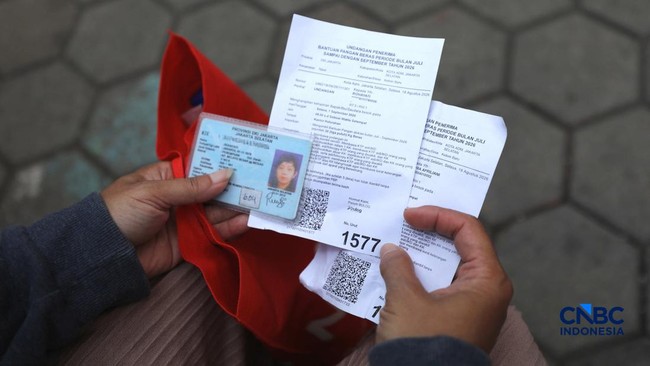
Minister of Social Affairs Saifullah Yusuf, also known as Gus Ipul, has requested that the public actively report any discrepancies found in social assistance (bansos) recipient data compared to actual field conditions.
The government is opening opportunities for data updates for citizens who find themselves misclassified within the National Socio-leconomic Single Data (DTSEN), whether they are eligible but not recorded (exclusion error) or ineligible but included (inclusion error).
According to Gus Ipul, data accuracy is key to ensuring that government assistance programmes are truly received by the entitled community. “Therefore, we request the public, if they find beneficiaries who are ineligible, or citizens who are actually eligible but have been excluded, that we can rectify this immediately,” Gus Ipul stated in a release, quoted on Tuesday (2/9/2026).
He explained that the government has provided various complaint and data update channels that can be utilised by the public. In addition to formal routes starting from neighbourhood (RT/RW) meetings, sub-districts, or villages, up to the Social Services through the Next Generation Social Welfare Information System (SIKS-NG) application, the public can also submit reports directly through digital channels.
“The channels are open via WhatsApp, through the Command Centre, via the Cek Bansos application, and through villages using the SIKS-NG application, where there are village data operators; we now have the digitalisation of social assistance,” he said.
Gus Ipul emphasised that the openness of these complaint channels is part of the government’s effort to improve the quality of social assistance recipient data. By involving the public directly, the government hopes that every complaint or finding in the field can be promptly addressed.
“So, if there are complaints, or whenever there are facts on the ground, we will immediately follow up and update the data,” he added.
He also expressed appreciation for the public who have been active in reporting inconsistencies in social assistance data. In his view, public participation is vital to improving the quality of social data, which serves as the basis for the distribution of various government assistance programmes.
“We certainly appreciate this and are opening it up for updates; God willing, our data will become increasingly accurate,” said Gus Ipul.
He noted that data updates must be carried out continuously because the socio-economic conditions of the population are constantly changing. Every day, there are citizens who are born, pass away, change their domicile, marry, or experience changes in their level of welfare.
“This update is important because data determines whether our programmes are on target and whether they reach those who are entitled,” he explained.
For information, the DTSEN is managed by the Central Bureau of Statistics (BPS) as the sole manager of national data. Meanwhile, the Ministry of Social Affairs, together with local governments, is tasked with assisting the data update process through the various channels provided.
Gus Ipul emphasised that the government, under the direction of President Prabowo Subianto, is committed to building an open and accurate social data system by involving public participation.
“The first principle is that the government wants to be transparent. Under the direction of President Prabowo, the government wants to involve the entire community so that we obtain accurate data. With the existence of this single data manager, which is BPS, it facilitates our consolidation,” he concluded.