
Social Affairs Minister warns public against welfare data fraud schemes
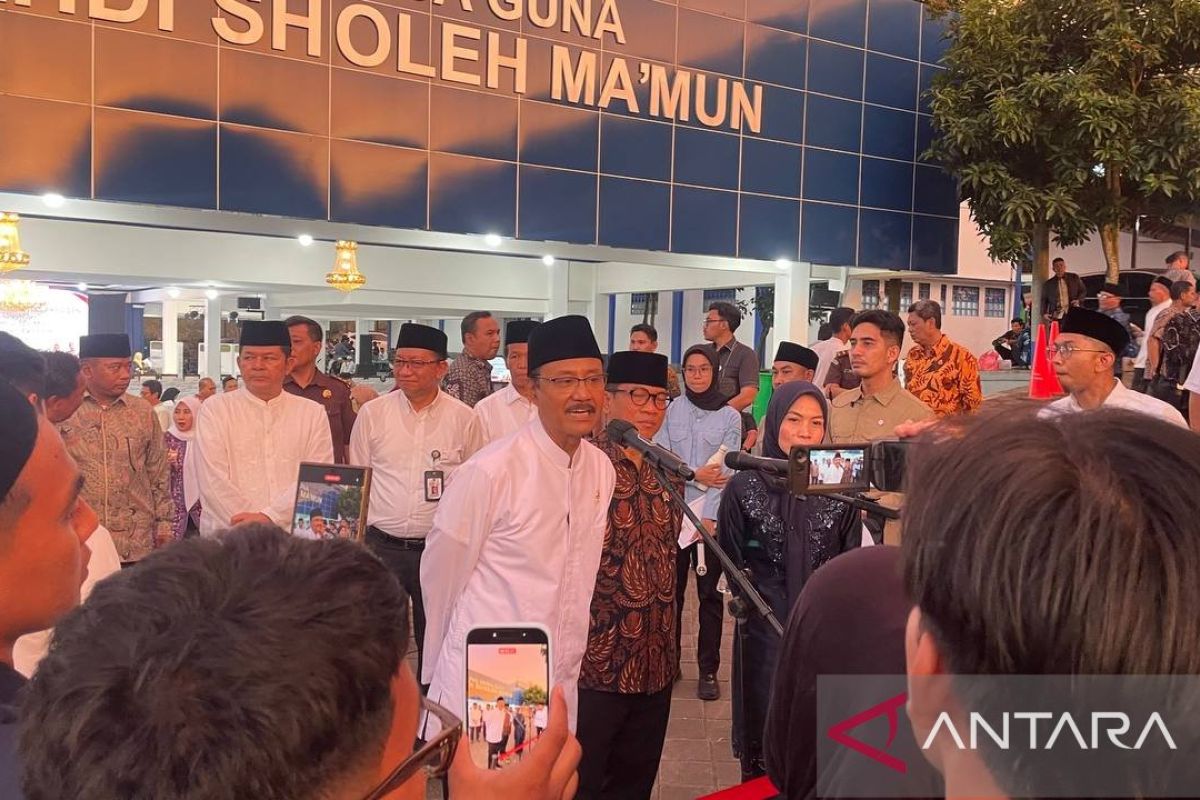
Serang — Indonesia’s Minister of Social Affairs, Saifullah Yusuf, has warned the public to remain vigilant against fraudulent practices by individuals who claim they can change welfare classification status (desil) to obtain social assistance benefits.
The Minister made this statement whilst attending a socialisation event for the National Unified Socio-Economic Data (DTSEN) at Pondok Pesantren Bai Mahdi Sholeh Ma’mun, Serang District, Banten, on Thursday.
“If anyone claims they can increase your desil classification, that is fraud. Only the Central Statistics Agency (BPS) can determine desil classifications — the minister cannot. So there is no need to believe in such manipulative schemes,” the Minister said.
He emphasised that the era of bribery and illegal levies related to welfare data should be over. Going forward, all agencies — including the Ministry of Social Affairs, the Ministry of Housing, the Ministry of Villages, and local government authorities — will use a single reference framework: the DTSEN.
Regarding data updating efforts, the Minister noted that village heads, neighbourhood association leaders, and village operators play a strategically important role in accordance with a Presidential Instruction (Inpres). He also appreciated the Minister of Villages for establishing ministerial regulations to guide data updating at village level.
“Our task under the Inpres is the same: to update data and then use it to distribute social assistance so that month by month and year by year, the data becomes increasingly accurate,” he said.
The Minister hopes that implementing this unified data system will eliminate sectoral ego conflicts between agencies. Through coordination between the Ministry of Social Affairs, the Ministry of Villages with its village support structures, and local government authorities such as the Social Affairs Office and the Serang Regent, poverty alleviation programmes are expected to be more precisely targeted.
“With correct data, we expect integrated programmes from central to village level so that the impact will be tangible for the community,” he concluded.