
Social Affairs Minister Praises Trenggalek's Commitment to Social Data
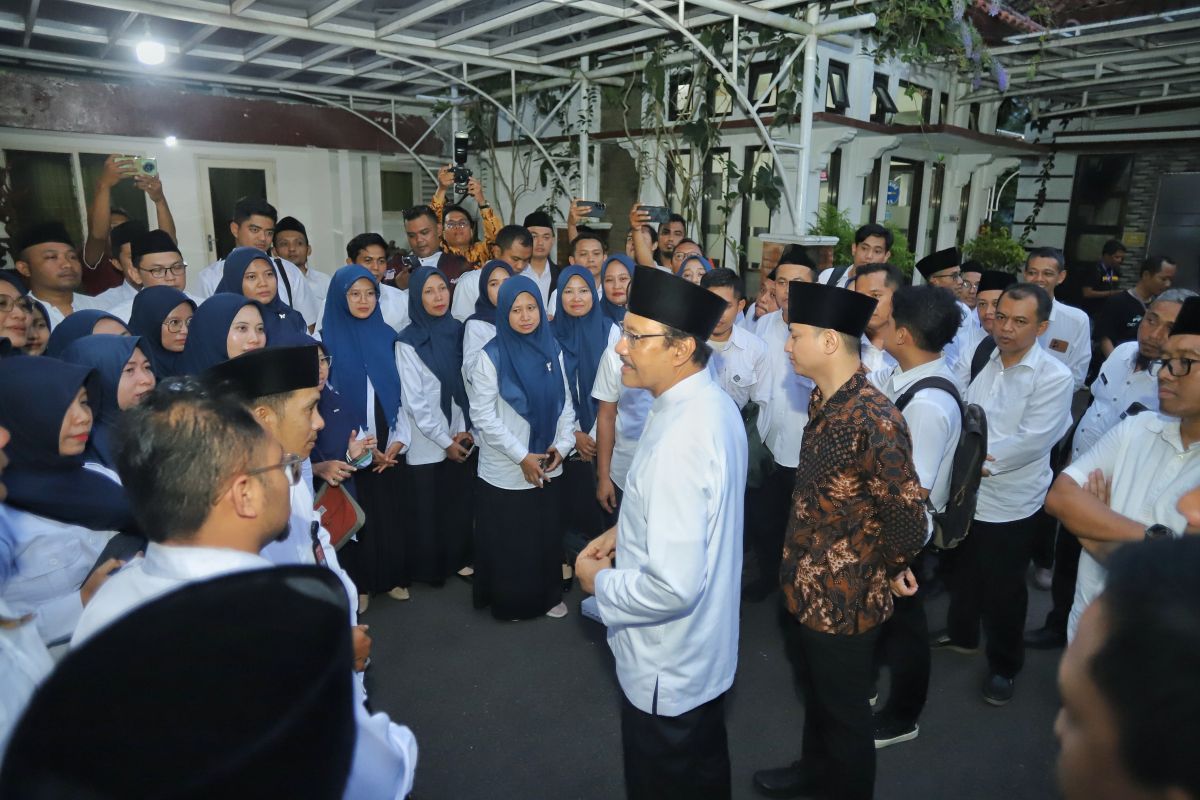
Trenggalek, East Java (ANTARA) - Social Affairs Minister Syaifullah Yusuf praised the commitment of the Trenggalek Regency Government, East Java, in managing social data during a working visit and socialisation of the National Single Social and Economic Data (DTSEN) on Sunday.
He assessed Trenggalek as one of the regions seriously building an integrated data collection system as a basis for distributing social assistance to ensure it reaches the right targets.
“Trenggalek Regency is among those that are very concerned about data records. They already have mechanisms and efforts; it’s just a matter of synchronising them with the central and provincial levels,” said Syaifullah Yusuf.
According to him, DTSEN serves as the national single database to support planning, programme evaluation, and strategic policy-making. This system also refers to the central government’s policy through Presidential Instruction Number 4 of 2025.
He emphasised that data updates must be carried out periodically because the social conditions of the community are dynamic.
“Every day there are changes, from births, deaths, movements, to changes in economic status. Therefore, tiered coordination is needed from the village to the central level,” he stated.
The Social Affairs Minister added that around 45% of social assistance recipient data, such as the Family Hope Programme (PKH), comes from verification and updates processes at the local level.
He also highlighted the importance of reaching “invisible people” or residents who are not yet recorded so they can receive social protection and empowerment.
“We want those who are not yet recorded to be embraced, so that government interventions truly have an impact,” he said.
Meanwhile, Trenggalek Regent Mochamad Nur Arifin expressed the region’s readiness to support the implementation of DTSEN by strengthening data integration down to the village level.
The regency government, he said, has prepared the GERTAK Post as a coordination centre for data collection together with the Central Statistics Agency (BPS), village apparatus, and village operators so that data can be updated in real time.
“The data is centralised, but collected from the regions. The challenge is how to ensure village data can be directly integrated with the central system,” he stated.
He added that the local government is also optimising population administration services to reach residents who are not yet recorded, including through the proactive KTP recording programme.
In addition, the Trenggalek Regency Government is carrying out temporary interventions through the National Zakat Agency (Baznas) for residents in need, while waiting for DTSEN data updates.