
Social Affairs Minister Calls on Nahdlatul Ulama Higher Education Institutions to Engage in Rakyat Schools
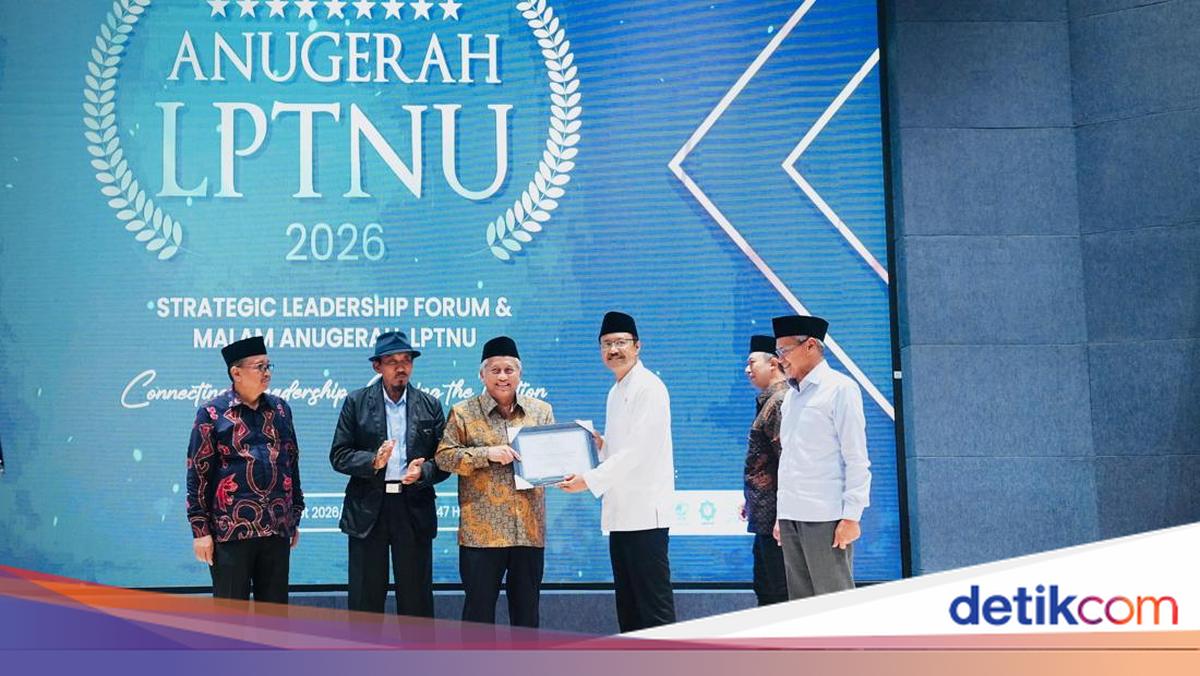
Social Affairs Minister Saifullah Yusuf, known as Gus Ipul, served as the keynote speaker at the Nahdlatul Ulama Higher Education Institution (LPTNU) 2026 Awards Evening, held at UNUSA in Surabaya on Tuesday, 10 March. The event recognised outstanding academics, institutions, staff, and students within Nahdlatul Ulama’s higher education network.
In his remarks, Gus Ipul highlighted that President Prabowo Subianto consistently emphasises ensuring government policies prioritise populations often overlooked by the system—termed “the invisible people.”
“We may pass by them every day, yet we do not truly see their circumstances. Not because they do not exist, but because we often do not know or realise they are experiencing considerable hardship,” Gus Ipul stated on Wednesday, 11 March 2026.
He noted this phenomenon occurs not only in rural areas but also in major cities. These individuals, he explained, warrant collective attention despite remaining unseen.
Many originate from disadvantaged families, where intergenerational poverty transmission frequently occurs. “Here lies the importance of data,” Gus Ipul noted. “Historically, each ministry, institution, and even local government maintains separate data systems, resulting in sectoral self-interest.”
Through Presidential Instruction Number 4, the government consolidated these diverse data streams into a unified system called the National Unified Socioeconomic Data (DTSEN). Over the past year, the Social Affairs Ministry, the Central Statistics Agency (BPS), other ministries and institutions, and local governments have worked to consolidate data so all programmes reference the same baseline.
With improved data, clearer role division between central government, regional authorities, and communities becomes possible.
Rakyat Schools represent one implementation of this unified data approach, fulfilling legislative mandates to systematically and sustainably support the poor. The government is also opening opportunities for private sector involvement in Rakyat School development.
“The ultimate objective is ensuring children from poor families become agents of change, rather than remaining trapped in the same poverty cycle,” Gus Ipul concluded.
The event distributed awards across three sessions across multiple categories, including influential Muslim scholars, lifetime achievement recognition, academics with influential scientific works in general and religious studies, academics with community engagement contributions, leading research institutions, outstanding support staff in education, high-achieving students, and Nahdlatul Ulama representatives.
The event also featured remarks from UNUSA Rector Prof. Dr. Tri Yogi Yuwono and LPTNU Chair Prof. Dr. Ainun Na’im. Professor Mohammad Nuh attended as a lifetime achievement award recipient.