
Social Affairs Minister Asks Blitar Regency to Remove Ineligible Residents from Social Aid Recipients
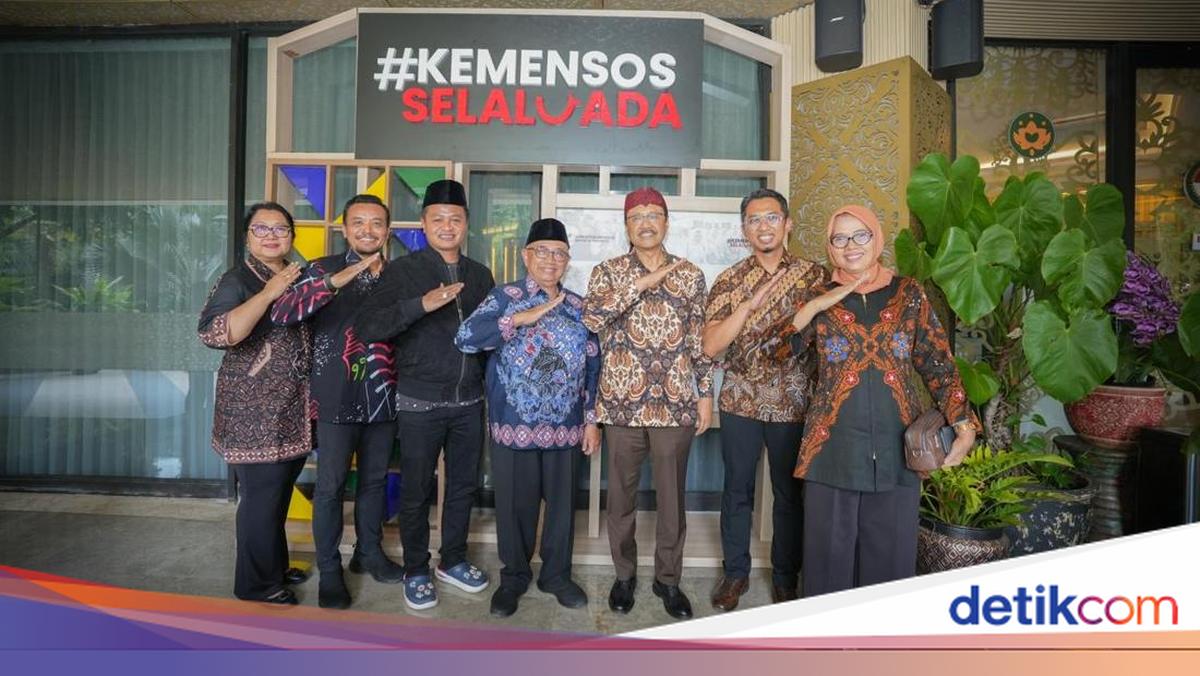
According to him, if the data is organised, social programmes will be easier to implement. This was stated by him during the opening of an audience at the Ministry of Social Affairs office today.
“So far, the homework has been on the data. So the data must be sorted out first,” said Gus Ipul in a written statement on Thursday (7/5/2026).
He explained that recipient data needs to be viewed from several layers, starting from national desiles, regional desiles, to local desiles. In this process, the Ministry of Social Affairs also involves the Central Statistics Agency (BPS) to determine desiles and identify which residents have already received programme interventions, including PBI JKN recipients from the central government.
Gus Ipul directly requested the regional heads, particularly Blitar Regent Rijanto, to directly know the data of residents receiving assistance from the Ministry of Social Affairs.
“Mr Regent must know the data and know which residents receive social aid, including PBI from the Ministry of Social Affairs. If, for example, there are those who are not eligible, just remove them,” he said.
Data updates, said Gus Ipul, can be done through formal channels and participation. In the formal channel, data starts from RT/RW, goes up to the village, then to the regent, social services, and connects with the Ministry of Social Affairs through SIKS-NG. He explained that with this method, the village, regency government, social services, and the Ministry of Social Affairs are on the same data channel.
Gus Ipul conveyed that targeted social aid does not only mean assistance is given to eligible people. For productive age recipients, assistance must also be accompanied by a graduation process so they can exit dependency on aid.
He also mentioned the number of aid recipients in Blitar Regency. In 2025, the total social assistance in Blitar Regency reached Rp 490.346.375.000 for 187.348 beneficiary families (KPM). This value is close to half a trillion rupiah.
“This is the time for us to act for others, especially for communities that truly need it,” said Gus Ipul.
Based on Blitar Regency social assistance data, for the Sembako programme, the first quarter 2026 realisation reached Rp 50.830.800.000 for 84.718 KPM. In 2025, the Sembako aid value reached Rp 160.289.400.000 for 93.470 KPM.
For the Family Hope Programme or PKH, the first quarter 2026 realisation reached Rp 30.063.800.000 for 40.406 KPM. In 2025, the PKH value reached Rp 127.386.875.000 for 49.158 KPM.
In addition, YAPI aid in Blitar Regency was recorded at Rp 4.771.200.000 for 3.359 recipients. Food assistance amounted to Rp 35.618.100.000 for 4.177 recipients. BLTS was recorded at Rp 162.280.800.000 for 180.312 KPM.
For PBI JK/PBI JKN based on the February 2026 decree, the estimated aid for one year reaches Rp 224.807.184.000 with 446.046 recipients.
“Blitar Regency also has social pillars involved in social work in the field, namely 124 PKH companions, 35 Tagana, 22 TKSK, 2 social rehabilitation companions, and 2 Pordam,” he revealed.
Meanwhile, Rijanto stated that the Blitar Regency Government is ready to work together with the Ministry of Social Affairs to organise programme implementation in the region. Another issue of concern to the Blitar Regency Government is the People’s School.
Rijanto said that Blitar Regency had previously proposed the construction of the People’s School. However, at that time there were still obstacles, especially the availability of insufficient land. Therefore, he hopes that the construction of the People’s School in Blitar Regency can be further facilitated.
Rijanto also conveyed that in Blitar Regency there are still children who drop out of school, both at the elementary, junior high, and senior high school levels. Some children are already working to help their families, such as feeding livestock and taking sand from the river.
“This condition is our concern,” Rijanto concluded.