
Social Affairs Minister: 5 Million PKH Beneficiaries in East Java to Become Members of Red and White Village Cooperatives
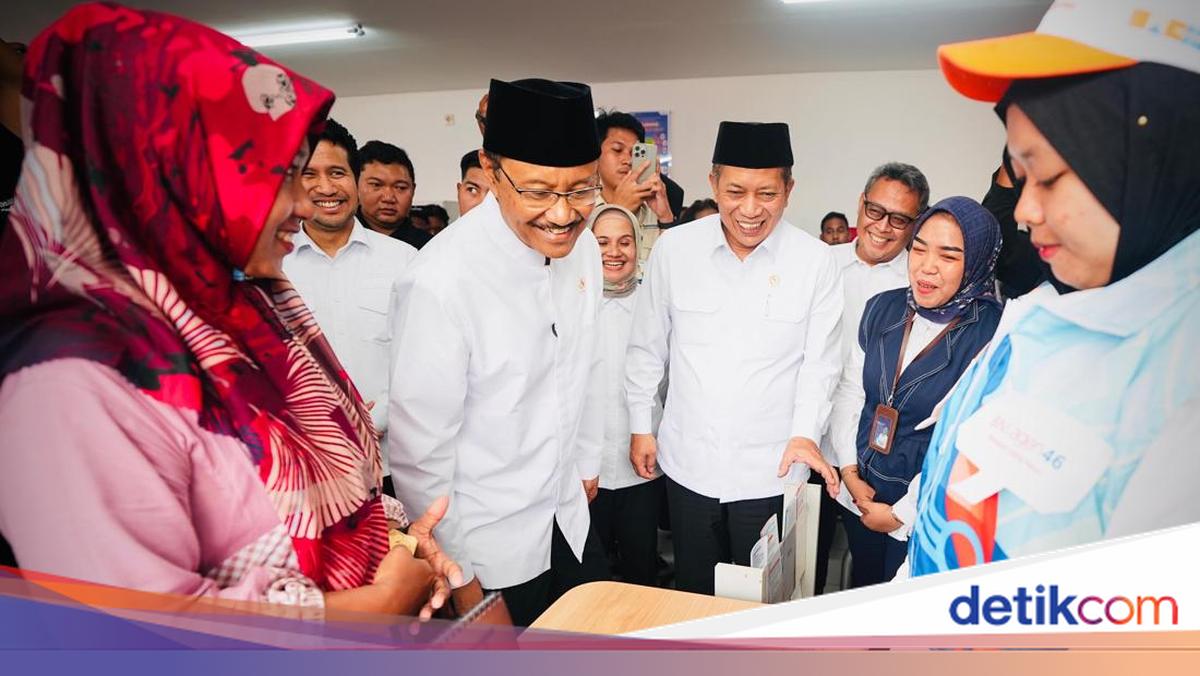
Social Affairs Minister Saifullah Yusuf, commonly known as Gus Ipul, has pledged to encourage 5 million Keluarga Penerima Manfaat (KPM) beneficiaries of the Family Hope Programme (PKH) in East Java to become members of the Red and White Village Cooperative (KDMP) so that they can participate in productive economic activities.
Gus Ipul made this statement whilst attending a collaboration event between the KDMP and PKH at KDMP Gejugjati Village, Lekok District, Pasuruan Regency, East Java, on Tuesday, 10 March.
“There are 229,000 KPM in Pasuruan, and a total of 5 million KPM in East Java will be encouraged to become members of the Red and White Village Cooperative,” said Gus Ipul in a written statement on Tuesday, 10 March 2026.
According to him, by becoming KDMP members, KPM would not only serve as consumers but also as owners who could obtain economic benefits from cooperative activities. Gus Ipul explained that collaboration between social protection programmes and village cooperatives formed part of empowerment efforts.
“The government wants beneficiaries not only to rely on receiving assistance every three months, but to ensure their families become increasingly self-reliant,” he said.
During the occasion, Gus Ipul also emphasised the importance of accurate data in poverty management, in accordance with guidance from President Prabowo Subianto. “Many people around us do not show obvious signs of suffering. The President has asked us to start with data. If the data is correct, government intervention will be correct,” he added.
He also encouraged the public to actively report conditions in their communities through formal channels or participation using various channels provided by the Ministry of Social Affairs. Gus Ipul reiterated that all poverty alleviation efforts must be conducted in a targeted, integrated, and sustainable manner in accordance with constitutional mandate. Meanwhile, social assistance recipients are expected to have the spirit to continue improving their families’ economic self-sufficiency.
“After receiving assistance, families must have the spirit to become more self-reliant. As our slogan says, social assistance is temporary, but empowerment is forever,” he emphasised.
At the same event, Gus Ipul, together with Cooperative Minister Ferry Juliantono and Deputy Cooperative Minister Farida Farichah, not only delivered remarks but also symbolically handed over Membership Identity Cards and savings books to PKH beneficiaries-Basic Food Assistance recipients and social pillars in Gejugjati Village.
Additionally, basic food assistance packages were distributed to beneficiaries, and a direct inspection of cooperative activities was conducted at the location. Several forms of assistance were also distributed during this event. The Cooperative Minister symbolically handed over assistance from BNI in the form of principal savings and compulsory savings for 400 KDMP Gejugjati members with a total value of Rp20,000,000.
Support from various parties was also provided to strengthen cooperative operations and community empowerment, including fertiliser assistance from PT Pupuk Indonesia, one computer set from Perum Bulog for cooperative operations, a printer and basic food assistance for business capital from ID Food, and tablets from PT Pertamina.
Specifically, Gus Ipul also handed over social empowerment assistance to a community group led by Zubaidah consisting of 100 laying hen packages with a total value of Rp570 million.
Meanwhile, East Java Deputy Governor Emil Elestianto Dardak stated that collaboration between village cooperatives and PKH could serve as a forum for strengthening the economy at village level. “The collaboration between village cooperatives and PKH will serve as a forum for many positive developments at village scale,” said Emil.
At the same occasion, Cooperative Minister Ferry Juliantono stated that approximately 2,200 warehouse buildings and outlets managed by KDMP are currently available. The government is also constructing approximately 32,000 similar units in various regions.
“These buildings are not merely physical structures, but will be managed by KDMP to support economic activities of rural communities,” explained Ferry.