
Soaring Fuel Prices Benefit China's Electric Vehicle Industry
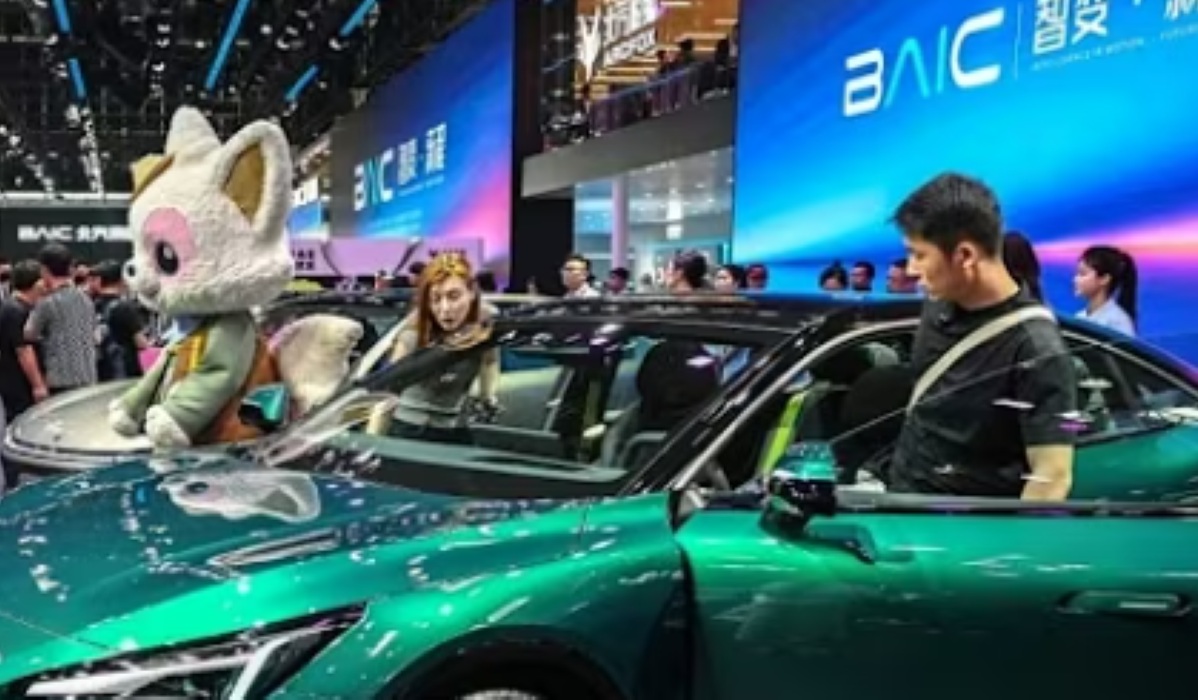
The armed conflict between the United States and Iran, which has sparked a surge in global fuel prices, is instead acting as a catalyst for the electric vehicle (EV) industry in China. China’s two-decade investment in green technology is now yielding significant rewards, protecting the country’s economy from the full impact of the energy crisis.
In the city of Changsha, Liu Zhou, a DiDi ride-hailing driver, is feeling the effects firsthand. “Petrol prices have risen dramatically now. If you drive frequently, an electric vehicle is the best choice,” he said. This phenomenon reflects a massive shift among Chinese consumers from internal combustion engine (ICE) vehicles to new energy ones.
According to data from the China Passenger Car Association cited by Cnevpost, the penetration rate of new energy vehicles in China reached a record 62.8% of total sales in April 2026. This figure starkly contrasts with the United States, where EV sales remain below 10% of the total market.
This surge is driven by increases in petrol and diesel prices at Chinese pumps, which once jumped nearly 20%. Currently, petrol prices in China are around US$5 per gallon, while diesel is about US$4.50 per gallon.
The blockade in the Strait of Hormuz has disrupted one-fifth of global oil and gas exports. However, China’s transition to renewable energy is seen as giving it a stronger bargaining position compared to other major economies.
“China has shifted away from fossil fuels. The impact of this crisis will not be as severe as people expected,” said Manuel C. Menendez, a US entrepreneur based in Beijing. He predicts that China will emerge from this energy crisis with a stronger economy than other advanced nations.
Although growing rapidly, China’s EV industry faces internal challenges in the form of hyper-competition that squeezes profit margins. Excess production capacity is forcing manufacturers like BYD and Geely to aggressively expand into international markets.
Li Shuo, Director of the China Climate Hub at the Asia Society Policy Institute, explained that the difficult domestic phase is actually strengthening the image of Chinese companies in global markets. “They are very successful technologically and able to deliver the most cost-competitive products in the global market,” he said.
The issues of the energy crisis and the EV transition are expected to be a main agenda item at the summit meeting between US President Donald Trump and Chinese President Xi Jinping in Beijing this month. The two leaders will discuss the economic impacts of the ongoing Iran conflict. (Newsweek/I-2)