
Smoother Flow of Goods Strengthens Indonesia's Export Position through AAMRA Agreement
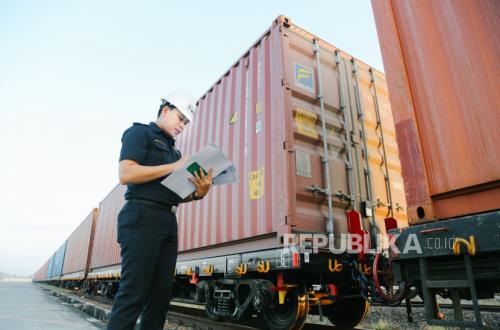
Indonesia continues to strengthen its position in the regional trade chain through the implementation of the ASEAN Authorized Economic Operator Mutual Recognition Arrangement (AAMRA), an agreement among ASEAN countries’ customs authorities to mutually recognise Authorised Economic Operator (AEO) status. This agreement represents a strategic step towards creating a more secure, efficient, and competitive regional trade system.
The Head of the Subdirectorate of Public Relations and Outreach at Customs, Budi Prasetiyo, explained that AAMRA is a form of regional customs cooperation based on the international standards of the World Customs Organization SAFE Framework of Standards (WCO SAFE FoS). This standard emphasises the importance of security alongside the smooth flow of the global supply chain.
“Through AAMRA, ASEAN countries mutually recognise trusted business operators, allowing trade processes to proceed more quickly and reliably,” he stated.
The AEO programme itself is a partnership between customs authorities and the business world. Companies that meet standards of compliance, security, and good governance are entitled to various customs facilities. Through AAMRA, these benefits extend beyond domestic application and can be utilised in other ASEAN countries that have implemented similar schemes.
Long Process of AAMRA Implementation
The implementation of AAMRA has undergone a lengthy process, from feasibility studies and discussions in various ASEAN forums, joint site validations, to the official signing by all 10 ASEAN member countries on 19 September 2023. Its rollout began gradually through a pathfinder scheme from 2024. By February 2026, nine out of eleven ASEAN members had implemented the agreement.
Indonesia is among the countries actively involved in the initial phase alongside Malaysia, Singapore, Thailand, and Brunei Darussalam. According to Budi, Indonesia’s participation demonstrates the readiness of the national customs system and its commitment to enhancing export competitiveness.
“When the flow of goods becomes smoother, logistics costs can be reduced and business certainty increased,” he said.
In its implementation, Indonesian AEO exporters trading with partner countries will receive various facilities, such as accelerated customs clearance processes, priority inspections, and simplified administrative procedures. Similar facilities can also be utilised by importers in Indonesia, whether AEO or non-AEO companies, when importing goods from AEO companies in partner countries.
The mechanism for utilising these facilities is outlined in the Guideline for the Submission of Import or Export Declarations for the Implementation of AAMRA. Thus, Indonesian AEO exporters simply need to provide their trader identification number (TIN) or AEO codes and other required information to importers (particularly non-AEO) under the AAMRA scheme in accordance with the guidelines of the respective destination countries.
Meanwhile, importers (particularly non-AEO) in Indonesia must ensure that their exporters are AEO companies in partner countries by submitting the TIN or AEO codes and the authorisation date of their trading partner during import customs notification in CEISA 4.0 using facility code 451.
According to Budi, these conveniences must be utilised by all parties, as the AEO programme is not exclusively for large companies. For him, all business actors committed to compliance, supply chain security, and good business governance have equal opportunities.
“AEO is open to all business actors who meet the criteria, so it is not an exclusive programme for large companies. All business actors, including growing ones, can leverage this programme to enhance business credibility and expand access to international trade,” he said.
As of 30 April 2026, Indonesia has 207 companies with AEO status. This number reflects the increasing trust of the business world in the benefits of the customs partnership programme.
“The more Indonesian companies join the AEO programme, the stronger our national competitiveness in global trade,” said Budi.
The benefits of AEO extend beyond accelerated customs services to building a company’s reputation as a trusted trading partner. In the long term, this will strengthen the national logistics ecosystem while supporting Indonesia’s export growth in the ASEAN region.
“Therefore, we encourage all Indonesian companies that have obtained AEO status to optimally utilise AAMRA facilities in their international trade activities, particularly in the ASEAN region,” Budi concluded.
Through the implementation of AAMRA, Indonesia not only accelerates the flow of goods between ASEAN countries but also affirms its role in strengthening regional economic integration. Amid growing needs for secure and efficient supply chains, collaboration between the government and business actors through the AEO programme becomes a crucial foundation for national trade.