
Small-Scale Gold Mining a Major Source of Mercury Emissions in Indonesia
Headline
The postponement of outstanding dues should be implemented first while considering economic conditions.
The postponement of outstanding dues should be implemented first while considering economic conditions.
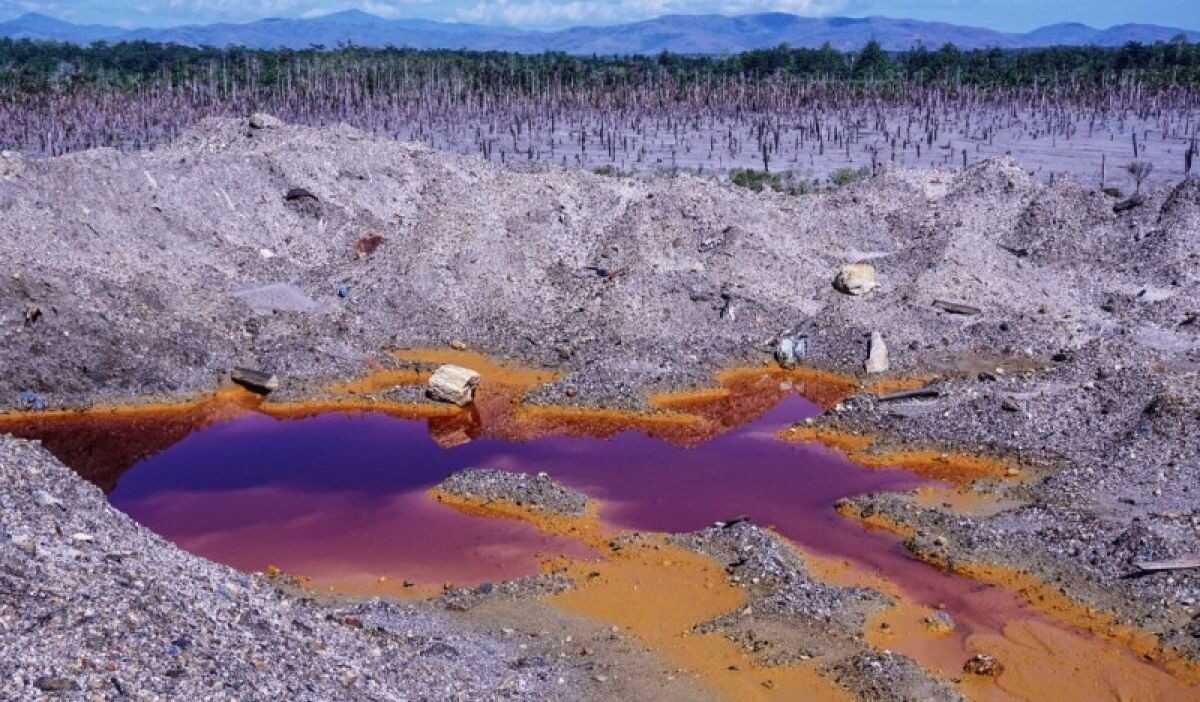
The National Research and Innovation Agency (BRIN) revealed that small-scale and traditional gold mining (PESK) is the largest anthropogenic source of mercury emissions in Indonesia. This activity is considered to contribute significantly to environmental pollution and increase health risks for communities around mining areas.
Senior Expert Engineer at the Center for Research on Environmental Technology and Clean Technology (PRTLTB) of BRIN, Tia Agustiani, said that the gold amalgamation process in artisanal mines is the main contributor to mercury release into the environment.
“The largest source of mercury emissions in Indonesia comes from Small-Scale Gold Mining (PESK) and traditional mining, with the gold amalgamation process being the largest anthropogenic source,” said Tia in an official statement, Thursday (26/2).
In her research, Tia studied mercury contamination and assessed human health risks in small-scale gold mining areas in Gunung Pongkor, Bogor, and Waluran, Sukabumi.
“The research location in Gunung Pongkor is in the upstream, middle, and downstream areas as PESK areas, and it is more common in the upstream area. Meanwhile, the study area in Waluran Sukabumi consists of two areas, namely the PESK area, and a reference area in Mekarmukti which does not have PESK,” she explained.
The results of the study show that PESK activity is the main source of mercury pollution. Mercury concentrations were found in soil, sediment, fish, and even cassava leaves consumed by the community.
“In the upstream area of Gunung Pongkor, the source of mercury exposure was found in cassava leaves as much as 46%, followed by fish as much as 29%. Meanwhile, in Waluran Sukabumi, in the PESK area, the main contributor to mercury exposure comes from fish as much as 39%, followed by cassava leaves as much as 35%. This pattern shows that the food chain is the main route of mercury exposure for local communities,” said Tia.
The findings also show that vulnerable groups such as children face higher health risks due to exposure to mercury through the food chain in areas around mines.
Another researcher from PRTLTB BRIN, Fuzi Suciati Sastraatmaja, highlighted the presence of mercury in leachate from domestic waste landfills. Samples were taken from several landfills, including the Cipeucang landfill, the Galuga landfill, the Bantar Gebang landfill, and the Rawa Kucing landfill, with sediment analysis using the USEPA Method 7473.
“From the research results, mercury was found in the leachate of domestic waste landfills, but the water concentration did not exceed the quality standards, while for adsorbent materials or green aggregates, it was dominated by silicon, aluminum, calcium, and iron,” said Fuzi.
The research offers a circular economy approach by utilizing fly ash, bottom ash, and biomass waste as green aggregates to adsorb mercury from leachate.
Meanwhile, a junior expert researcher from PRTLTB BRIN, Fitri Yola Amandita, explained the technology for recovering mercury-contaminated land through physicochemical methods to environmentally friendly approaches such as bioremediation and phytoremediation.
“We conducted bioremediation research on mercury by taking soil samples in Sukabumi and successfully isolated about 27 isolates of mercury-resistant bacteria. Of these, five isolates of bacteria were obtained which showed high levels of resistance, even able to survive in exposure to HgCl₂ with concentrations up to 100 ppm,” she said.
In further research, rice husks inoculated with mercury-resistant bacteria were applied to rice plants to reduce mercury accumulation in the grains.
“Rice husks with the addition of bacteria succeeded in reducing mercury absorption into rice grains. Mercury is more absorbed by the roots, so even though mercury is still detected in rice grains, the levels are lower compared to rice plants without rice husk and bacterial treatment,” said Fitri.
She emphasized that the biggest challenge at this time is to encourage the implementation of technology from the laboratory scale to a more applicable and affordable field scale.
“I hope that in the future, collaboration can be established between research institutions, industry, and the government. So that the research results can produce solutions that are cheap, applicable, and easy to implement by the community,” she concluded. (E-3)
Officers take samples of surface water, water from the middle and bottom, and fish, then take them to the laboratory
POLLUTION of mercury compounds was found in the Cirata Reservoir, West Java. Mercury content was found from the bodies of fish taken from the Cirata Reservoir.
The controversy surrounding skincare products containing harmful substances is a matter of concern for various parties. For the medical community, this is a public responsibility to carry out education.
The Ministry of Environment and Forestry (KLHK) withdrew more than 2 tons of mercury-containing medical devices from health facilities in Bali.
As many as 26 PETI rafts used for gold mining in the area were destroyed by being burned.
Copyright @ 2026 Media Group - mediaindonesia. All Rights Reserved