
Small Grocery Stores and Traditional Markets in Indonesia Declining, What's Behind It?
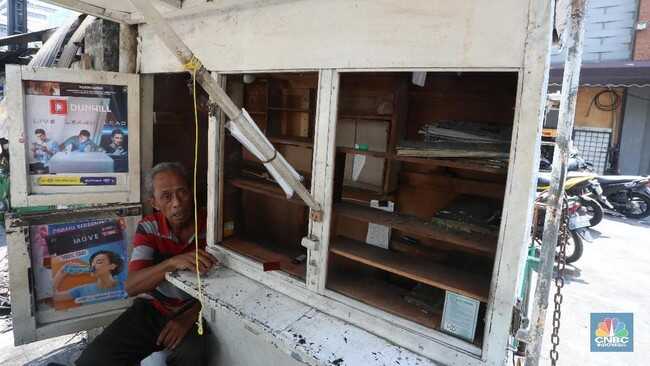
Jakarta — The head of the Association of Indonesian Street Vendors has raised concerns about the worsening conditions of small grocery stores and traditional markets in Indonesia, as their numbers continue to dwindle.
Ali Mahsun, Chairman of the Association of Indonesian Street Vendors (APKLI), stated that the number of small grocery stores and traditional market traders has fallen dramatically. He detailed that in 2007, there were 6.1 million small grocery stores. However, following the introduction of a Presidential Regulation and related policies, the number had fallen to 5.1 million by 2015. From 2007 to 2025, the decline accelerated, with the number dropping to 3.9 million—a decrease of 2.2 million stores.
Similarly, the number of traditional markets has suffered, with 3,500 having closed by 2025.
“The number of small grocery stores has fallen sharply, from 6.1 million previously to 5.1 million in 2015. Between 2007 and 2025, the number dropped dramatically by 2.2 million, falling to 3.9 million in 2025,” Ali Mahsun said at a press conference at the Ministry of Cooperatives office on Thursday 26 February 2026.
According to Mahsun, the steep decline in small grocery stores is largely due to massive expansion by modern retail chains, which have even penetrated rural villages, threatening the survival of small grocery stores and micro, small and medium enterprises. This aggressive modern retail expansion has occurred following deregulation introduced by Presidential Regulation (Perpres) No. 112 of 2007.
“The sharp decline in small grocery stores is a result of Presidential Regulation No. 112 of 2007 and the Economic Policy Package of September 2015,” he added.
As a result, he called on the Minister of Cooperatives to review Presidential Regulation No. 112 of 2007 in order to reinvigorate grassroots economic activity, particularly in rural areas.
“We are calling on the Minister to reconsider Presidential Regulation No. 112 of 2007 and the September 2015 policy package. We do not wish to be at odds with modern retail, but we want the grassroots economy to thrive, for economic sovereignty to return to ordinary people, so that village economies can grow within villages and not be siphoned to cities,” he emphasised.