
Six Government Strategies to Secure Mudik for Lebaran 2026
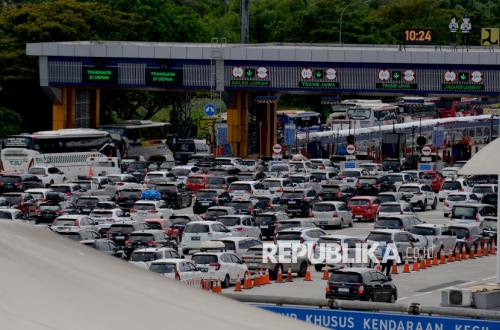
Jakarta — The Ministry of Public Works (PU) has prepared six main strategies to ensure smooth Mudik and balik flows for Lebaran 2026. The measures cover road infrastructure readiness, handling disaster-prone points, and providing real-time travel information to the public.
Roy Rizali Anwar, Director General of Bina Marga at the Ministry of PU, said that infrastructure readiness is the government0s top priority in facing the mobility surge during the Idul Fitri holiday. ‘To support Mudik Lebaran 2026, we are preparing six main strategies, namely ensuring that all toll roads and national roads are safe and stationing rapid-response units at disaster-prone points,’ Roy said in a statement on Friday (6 March 2026).
Strategy one focuses on readiness of national roads across Indonesia. The government targets all national roads to be in solid condition without potholes and with road-side structures functioning well ahead of the peak mudik period.
Currently, the length of non-tolled national roads is 47,603 kilometres with a readiness rate of 93.5 percent. Meanwhile the national toll network has reached 3,115 kilometres across various regions, forming the backbone of mobility and logistics distribution.
Roy said special attention would be given to strategic corridors that are the main mudik routes, such as the Pantai Utara (Pantura) of Java, the Central Java–East Java cross, and the central corridor of Java Island.
Moreover, access to ferry ports is a focus. Road sections leading to Merak, Ciwandan, BPJ, and Bakauheni ports are targeted to function optimally ten days before Lebaran to ensure smooth traffic flow from Java to Sumatra or vice versa.
The government also ensures that road networks in disaster-affected areas remain passable for mudik travellers. In Aceh, North Sumatra, and West Sumatra, all national road sections are targeted to be functional again before the mudik period begins.
Roy gave examples of several pieces of infrastructure previously affected by disasters that have now been repaired, such as Kruing Tengkeme and Kruing Meredu Bridges in Aceh that had been severed by disaster.
Other infrastructure damages have also been addressed, such as floods on the access to Ciwandan Port, landslides on the Trenggalek–Ponorogo route, tornado along the Sambong–Batang Kendal route, and the subsidence of the Soleh Iskandar national road in Bogor.
Strategy two is to identify disaster-prone locations along the mudik route and to prepare emergency response equipment. According to BMKG, the Lebaran period this year is still expected to be dominated by moderate to heavy rainfall.
The government has identified more than 807 flood-prone points, 1,641 landslide-prone points, and 15 coastal-inundation-prone points on the non-tolled national road network. To anticipate potential disruptions, PU has prepared 1,461 heavy equipment units, such as excavators, loaders, dump trucks, and motor graders.
In addition to heavy equipment, the government is also ready with emergency repair materials, such as Bailey bridges, gabions, and quick-setting asphalt mixtures to rapidly repair road damage on the ground.