
Singing Samrah Amidst the Tide of Modernisation in Maluku
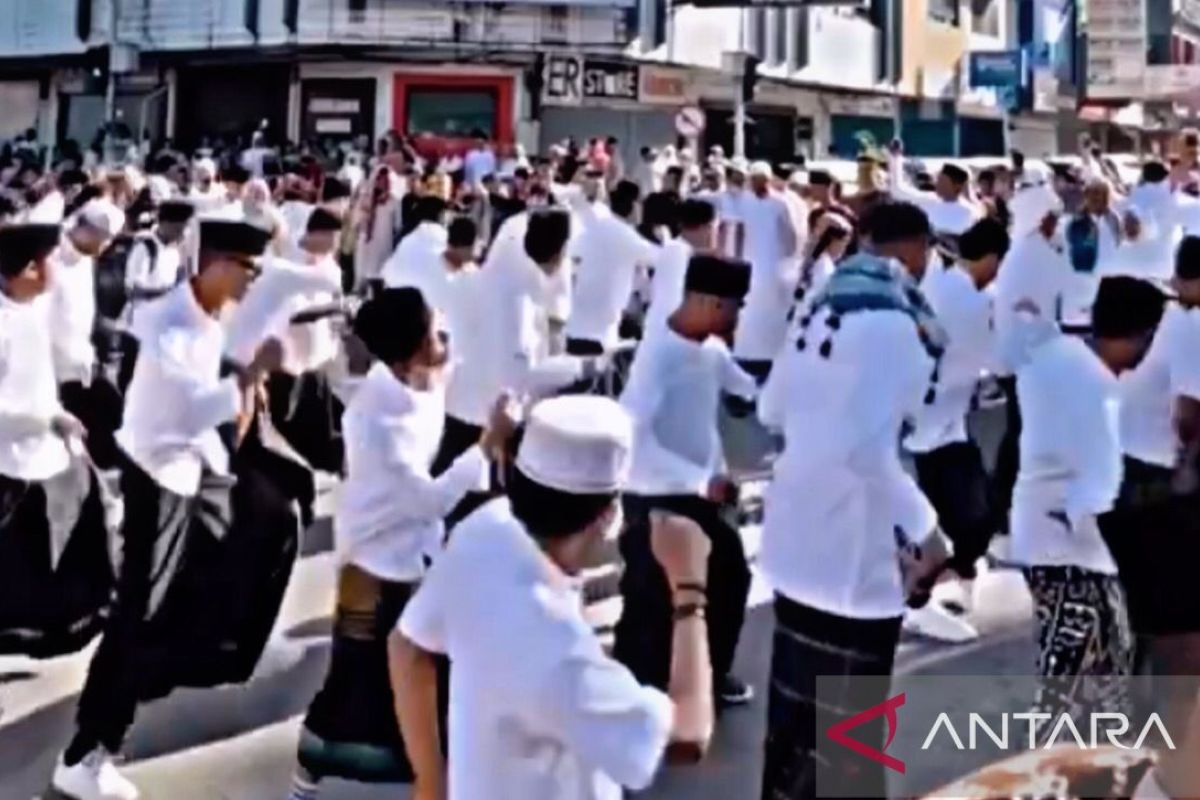
Amidst the surge of popular culture influences and changing times, the Samrah tradition continues to find its place in the hearts of young people. In the courtyard of Masjid Raya Alfatah in Ambon, the rhythmic beating of rebana drums echoes amongst takbir calls and the recitation of shalawat, piercing the twilight of Ramadan as sunset approaches.
As the sky gradually darkens towards Maghrib, dozens of youths stand in neat formation. Their footsteps move in unison, bodies swaying to the rhythm of the rebana, whilst Samrah songs flow rhythmically, as though marking time as the moment of breaking the fast slowly draws near.
Around the courtyard, residents cluster together in circles. Children, elderly people, and teenagers watch with gleaming eyes. Occasionally, small cheers burst from the crowd as the dancers’ movements grow more spirited.
Several spectators step forward, slipping banknotes of 50,000 to 100,000 rupiah into the hands of the dancers who continue moving to the rhythm. This contribution is not merely a gift, but a form of appreciation for the young people who keep this tradition alive.
Amidst the intensifying tide of modernisation and changing lifestyles of young people, various local traditions in Maluku continue to struggle to survive. Samrah—a dance with Islamic overtones accompanied by rebana and Middle Eastern melodies—is one such tradition. More than mere entertainment, this art form, performed collectively, has long served as a space for youth expression and a symbol of unity amongst Maluku’s Muslim community.
Each Ramadan, approaching Eid al-Fitr, and during various other religious celebrations, Samrah reappears in mosque courtyards and public spaces. There, young people dance, sing, and preserve the pulse of tradition; allowing the resonance of rebana drums to echo from one generation to the next.
The roots of Samrah in Maluku are believed to originate from Middle Eastern traditions brought by Arab traders and scholars in the past. Over time, the art form blended with local culture and developed into a distinctive form of performance art.
In Maluku, Samrah is typically performed collectively by dozens of youths wearing white shirts, sarongs, and shoes. They dance to the rhythm of rebana and religiously-tinged songs, with compact and enthusiastic movements.
The tradition has become visible once again during Ramadan festivities on Ambon’s streets and in the courtyard of Masjid Raya Alfatah, as dozens to hundreds of youths stage mass Samrah performances for residents to watch.
Maluku’s Deputy Governor, Abdullah Vanath, considers such activities to be a platform for young people to express themselves through positive engagement.
He also regards filling the Ramadan momentum with mass Samrah dancing as part of efforts to preserve tradition whilst steering young people away from activities potentially causing public disorder, such as vehicle convoys or illegal street racing on thoroughfares.
Looking ahead, the regional government plans to expand the scale of the activity so that more young people can participate. Vanath hopes that similar activities can serve as an alternative for young people who typically celebrate Takbir night with street convoys, steering them instead towards more beneficial cultural activities.
Additionally, the regional government also plans to engage schools under the Ministry of Religious Affairs in Maluku so that students can prepare Samrah dance groups. With a larger number of participants, the performances are expected to be held on main streets as a form of motivation and healthy competition amongst students.
He also hopes that during the forthcoming Eid al-Fitr celebrations, the Samrah tradition can further strengthen brotherhood and fellowship amongst Maluku’s diverse communities.
“Although the regional government is implementing budgetary efficiency, the commitment to enliven major religious celebrations remains steadfast,” he said.
According to him, should religious leaders successfully mobilise their congregations to compete in goodness, the regional government would be greatly assisted in development efforts, particularly in strengthening human resource quality.