
Singapore Officially Designated as "Blue Zone 2.0" – What Does It Mean?
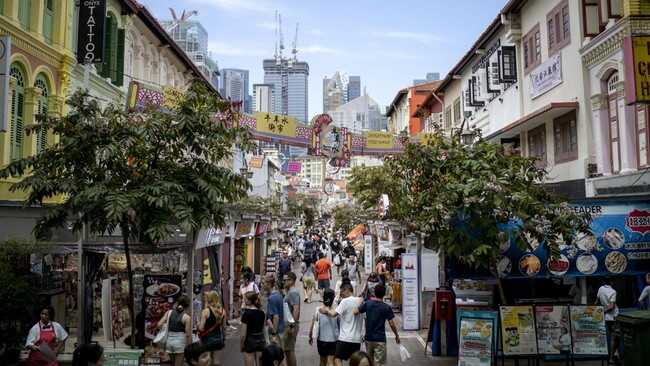
Singapore has officially received the designation of the world’s newest “Blue Zone,” according to Dan Buettner, the originator of the Blue Zones concept, in an interview with CNBC Make It published on Sunday, 1 March 2026.
Blue Zones refer to regions where the population of people aged 100 years or older is 10 times higher per capita than in the United States.
Before Singapore, there were five original Blue Zones in the world: Ikaria (Greece), Okinawa (Japan), Nicoya Peninsula (Costa Rica), Sardinia (Italy), and Loma Linda (United States).
According to Buettner, Singapore now falls into the category of “Blue Zone 2.0.”
“Singapore has the highest health-adjusted life expectancy in the world. So whatever Singapore is doing, they are striving to produce the longest and healthiest lives on the planet,” said Buettner.
Whilst original Blue Zones emerged due to natural circumstances, Blue Zone 2.0 is man-made. This is what has happened with Singapore.
“Old blue zones disappeared because they became Americanised,” added Buettner. “Mechanisation has replaced physical activity and technology has severed human relationships with face-to-face interaction.”
In his research, Buettner and his team identified core factors representing the habits of the world’s healthiest and longest-living people. He calls them the Power 9.
The nine principles are: moving naturally in daily life, having a sense of purpose, maintaining routines to eliminate stress, stopping eating when 80% full, eating more plant-based foods, consuming alcohol in moderate and regular amounts, being part of a community, keeping loved ones close, and being surrounded by people with healthy habits.
Below are some of the health drivers incorporated into Singapore’s policies:
- Walking
Whilst people in various parts of the world drive from one place to another, most Singaporeans walk. However, this is usually done out of necessity rather than for exercise purposes.
“Singapore, in my view, has brilliantly taxed cars, taxed petrol, taxed through road usage… and then invested massively in walkability, bikeability, and public transport,” Buettner told CNBC.
It is known that to buy a car in Singapore, you must first obtain a Certificate of Entitlement (COE), or vehicle ownership permit, which can cost more than the car itself.
“That is not just coincidence, it is very good planning… as a result, you get people out from behind the steering wheel and standing,” he added.
- Keeping loved ones close
Research shows that people in Blue Zones tend to prioritise those they love and keep them close.
This is evident in Singapore’s policy known as the Proximity Housing Grant, which provides financial incentives to people to live together or close to their parents and children.
“Rather than placing the elderly in nursing homes, as we do in the United States, the elderly there remain connected to their families. Often, they receive better care from family, so this supports the life expectancy of older people,” explained Buettner.
- Sense of belonging
Being part of a religious community can correlate with longer life expectancy, according to the research findings.
Almost 80% of Singaporean adults are affiliated with a religion, according to the Pew Research Center. Additionally, a 2014 Pew Research study ranked this city-state as the most religiously diverse country in the world.
“All but five of the 263 people aged one hundred that we interviewed came from religious communities,” according to Buettner. “Research shows that attending religious services four times a month adds 4-14 years to life expectancy.”
- Healthy habits
Singapore has successfully made healthy food cheaper and more accessible than junk food. The country has created incentives for food companies to provide healthier options.
Healthier options such as brown rice and grains are being promoted by the Health Promotion Board. The Ministry of Health has also created a labelling system that informs residents which food stalls have healthier options.
“Smoking has been made difficult, unattractive and expensive,” said Buettner.
“Singapore has done well with cigarette packaging, with images of mouth cancer… they were among the first countries to impose cigarette taxes.”
- Accessible healthcare
Singapore’s residents enjoy universal healthcare, which means the population has access to quality medical services, including preventive care, treatment, rehabilitation, and palliative care. The government has worked to create policies that subsidise healthcare costs.
“In America, healthcare is very expensive and inefficient at producing health because the priority governing policy is economic,” said Buettner.
“The agenda of Lee Kuan Yew and his colleagues was different. They actually tried to ensure that people remained healthy, not to make money from them,” he added, referring to Singapore’s founding father and first Prime Minister.
- Law enforcement
Singapore is renowned for its strict laws. Bans on chewing gum or eating on public transport are popular examples.
However, the country is also known to be very strict on weapons and drugs. Violations of either can result in imprisonment, caning, or capital punishment.
“The fact that firearms are illegal in Singapore… when it comes to numbers…”