
Silent Diplomacy Amid the Roar of War
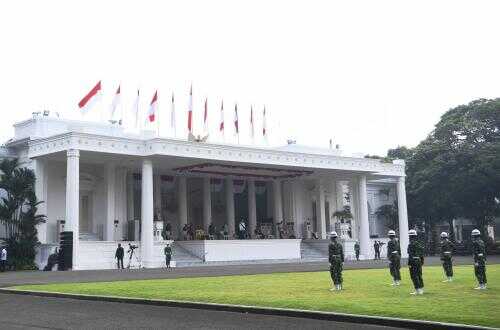
There was a subtle tremor creeping through the halls of the state palace last week. Not an earthquake, not the clatter of domestic politics. The tremor came from afar, from the desert that burned, from the Tehran sky which suddenly roared with siren sounds and the roar of warplanes.
When the United States and Israel launched a military strike on Iran on 28 February 2026, the world held its breath. In Jakarta, President Prabowo Subianto did not allow himself to be swallowed by silence.
Imagine the scene in the presidential office. On the desk, intelligence reports and geopolitical analyses piled up. On the phone screen, the names of world leaders flashed in succession. From talks with Pakistan Prime Minister Shehbaz Sharif, to warm discussions with Emir Sheikh Tamim bin Hamad Al Thani of Qatar, and Crown Prince Mohammed bin Salman of Saudi Arabia, it was not casual diplomatic chatter. It was fine threads woven in the midst of a storm, efforts to stitch back dialogue nearly broken by the sound of bullets.
Indonesia, an archipelagic nation far from the battlefield, suddenly felt the heat of the conflict wave. The Middle East is the nerve of world oil, and when that nerve throbs due to tension, energy prices can spike wildly. For Indonesia, which still relies on energy imports, this is not merely international news, but a real threat at home and for factories.
Not to mention the strategic sea lanes that connect Asia, Europe, and Africa, the lifeblood of global trade, now prone to disruption. Logistics costs swell, supply chains risk breaking. The conflict in the Middle East, quietly, knocks on Indonesia’s economic door.
Here lies the distinctiveness of Indonesia’s attitude. In a world that is increasingly polarised, where countries tend to pick sides, Jakarta chooses the quiet path of diplomacy. Not a path glittering with hard rhetoric, but a winding path taken with careful steps. This is a tangible realisation of independent and active foreign policy, a heritage of the founders of the nation that stands the test of time: independence meaning not being tied to any power bloc, active meaning present contributing to world peace.
This approach is not only about talking to friends. Indonesia also maintains diplomatic ties with Iran. The country has room to convey diplomatic messages openly, urging all parties to show restraint and avoid retaliation that would only fan the flames further. In diplomacy, restraining military reactions is often harder than provoking war. And there is where Indonesia tries to place its influence.
In international forums, Indonesia’s voice is never absent. At the ASEAN level, the member states together call for restraint and respect for international law. Malaysia and Brunei loudly condemned the attacks, while Singapore, Vietnam, the Philippines, and Thailand joined Indonesia in emphasising the protection of civilians and de‑escalation. In the developing-nations circle of D-8, whose members stretch from Bangladesh to Nigeria, from Turkey to Iran, concerns were voiced collectively. The pressure is not to corner anyone, but to build global consensus that open war is a disaster no one wants.
What is interesting is that Indonesia’s diplomacy wears no war vest. No confrontational rhetoric, no cutting words. Instead, what is offered is a constructive approach, firm in principle yet warm in delivery. This quiet diplomacy is like water seeping slowly, reminding that in the Middle East’s conflict, the most effective pressure sometimes does not come from the threat of weapons, but from a clear invitation back to the negotiating table.
President Prabowo has reiterated Indonesia’s readiness to act as a facilitator if needed. Formal mediation may not yet have materialised, but the door to dialogue has been flung wide open. In a world busy counting missiles and aircraft carriers, Indonesia is busy counting words, weaving them into a bridge, and convincing that peace remains achievable.
Because, in the end, for Indonesia, keeping the door to negotiations open is not merely a diplomatic option. It is a moral obligation, a heritage of civilisation, and perhaps the only way that the thunder of war does not wreck our shared home.