
Signs of the Apocalypse Growing Clearer in the Rice Fields
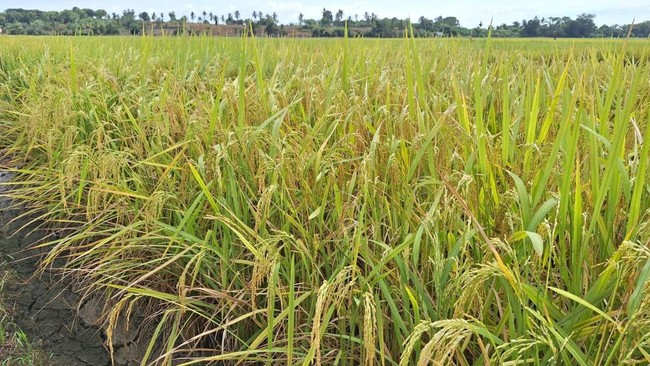
Jakarta, CNBC Indonesia - Climate change, which is warming the Earth, is apparently affecting rice crops. A study found that rice may not survive due to rising temperatures.
The research found that air temperatures have exceeded the limits for rice cultivation in the last 9,000 years. Global warming is also said to be 5,000 times faster than the rice plant’s capacity to evolve.
The study’s lead author, Nicolas Gauthier, explained that this situation could mean rice has possibly reached its thermal limit. This term refers to the point at which rice cannot easily adapt to rising temperatures.
Moreover, Gauthier said that future global warming could disrupt billions of people who depend on rice cultivation.
Historically, rice plants have thrived in regions with average annual temperatures below 28°C and up to 33°C.
Colder locations may become warmer due to climate change. Gauthier explained that there could be a geographic shift in cultivation.
Gauthier said the challenge is that paddies built over centuries are not easy to move. Ultimately, this disruption would have a major impact on the economy and food security.
“You could maintain global rice production, but it’s like moving the cultivation land. But this does not solve the problem for people in South Asia whose consumption relies on rice,” said Gauthier, an Anthropologist and Geographer at the Florida Museum of Natural History, cited from Live Science, Thursday (21 May 2026).
For information, rice photosynthesis stops at around 40°C. Although the plant likes heat, excessively high temperatures can affect pollen viability and seed growth.
Another issue is that rice requires a lot of water. Changes in the monsoon and dry seasons pose a problem, as does rising sea levels that can cause saline water to inundate low-lying rice fields.