
Signs of Plastic Supply Chain Disruption Emerge, Will Indonesian Cement Industry Feel the Impact?
Signs of Plastic Supply Chain Disruption Emerge, Will Indonesian Cement Industry Feel the Impact?
Jakarta, CNBC Indonesia - Pressures on the cement industry are not only coming from energy and logistics but are also beginning to extend to packaging and supporting production materials. This situation has become a concern for the government and industry players as it has the potential to drive up costs across the board.
Head of the Agency for Standardization and Industrial Services Policy (BSKJI), Emmy Suryandari, highlighted indications of supply disruptions for plastic-based packaging materials that are starting to be felt in the market.
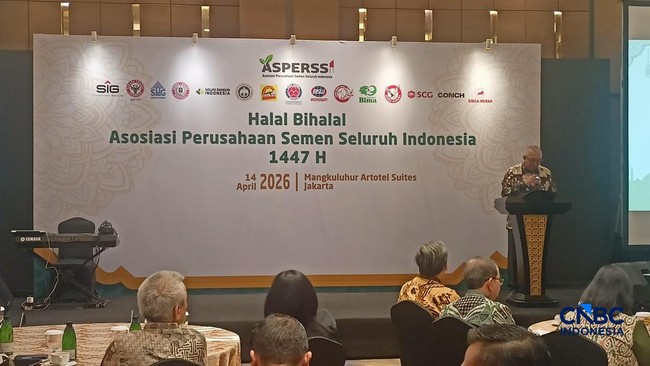
“Cement bags use plastic materials, right? Some of them do, and that will definitely experience price increases as well. As a housewife myself, I’ve started to notice that some items are becoming hard to obtain in the market,” said Emmy during the Halalbihalal of the All-Indonesia Cement Companies Association (Asperssi) in Jakarta on Tuesday (14/4/2026).
This phenomenon indicates that supply pressures are not only occurring in the industrial sector but are also beginning to be felt by the public at large. The availability of plastic-based materials has become an issue that needs to be anticipated early.
In the global context, this situation is not unique to Indonesia. Dynamics in the international supply chain are also affecting the stability of raw materials in various countries.
“So, the main point is that this is actually a challenge for us on how we can face all these challenges, because it’s not just faced by Indonesia, it’s faced by all countries,” she said.
On the industry side, packaging issues are part of a long chain of dependence on imported materials. General Chairman of Asperssi, Lilik Unggul Raharjo, explained that certain components in cement production still heavily rely on foreign supplies.
“So, the imports mentioned earlier are not direct but the raw materials from imports, namely plastic pellets,” said Lilik.
This dependence is not only on plastic but also on other packaging materials like kraft paper used for cement bags. Fluctuations in supply and prices from supplying countries are the main factors affecting production costs.
“Yes, the bagging. The bags have two types: one is kraft paper, the other is plastic,” said Lilik.
Geopolitical disruptions in major supplying regions are exacerbating the situation. Distribution of raw materials has become unstable, while logistics costs are also rising.
“Now, the kraft one is also affected by imports leading to shortages and supply transport costs. Because most of this kraft paper can be produced from Eastern Europe, Russia, Ukraine, and so on.”
Besides packaging, other supporting materials like gypsum still rely on imports, although some can now be substituted from alternative sources in Asia.
This condition shows that, although the main cement materials come from domestic sources, its production chain remains closely linked to global dynamics.
“Shortages thus driving increases like that. That’s the impact related to imports,” said Lilik.