
Should Lectures Fill or Excavate Knowledge? Competing Educational Philosophies in Indonesian Higher Education
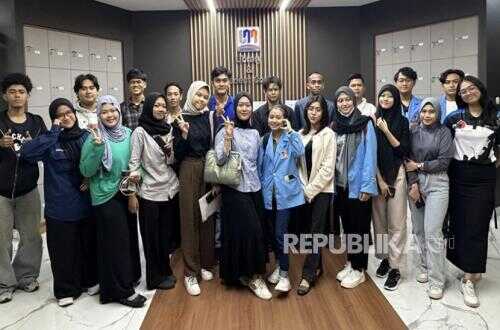
By: Andi Saryoko, Head of LPPM, Nusa Mandiri University
REPUBLIKA.CO.ID, JAKARTA – The fundamental direction of higher education often lies at the crossroads of two classic concepts: educare and educere. Educare views education as a process of transferring knowledge and competencies from the outside to the students.
Conversely, educere emphasizes the process of exploring internal potential through dialogue, reflection, and active cognitive engagement. These two concepts are not merely pedagogical terms, but rather determinants of the face and future of higher education.
Various recent studies show that the dominance of educare is still strong in many universities. Learning is centred on the delivery of material, examinations, and the achievement of grades.
Students are placed as recipients of knowledge, not as subjects who build understanding. This pattern, as criticised by a number of academics, risks reducing higher education to a factory that produces workers, rather than a space for intellectual development.
On the other hand, the educere approach is becoming increasingly relevant to the needs of the times. Today’s world demands graduates who are able to think critically, analyse complex problems, and make rational decisions.
Various studies show that students’ active involvement in constructing knowledge, engaging in dialogue, and reflecting on learning experiences is directly correlated with improved learning quality and the emergence of new ideas.
Higher education should not only teach “what”, but also train “how to think”.
However, educere will not work if the academic system is not ready. A curriculum that is too dense, hierarchical lecturer-student relationships, and an academic culture that is value-oriented often stifle students’ intellectual courage.
In such a situation, problem-based learning also risks becoming a formality. Students learn to guess the lecturer’s wishes, rather than honing their own reasoning skills.
As a Digital Business Campus, Nusa Mandiri University (UNM) realises that educational transformation is not enough in the classroom. The academic environment must be designed as an educere ecosystem, a space that provides opportunities for exploration, dialogue, and reflection.
The curriculum needs to provide space for interdisciplinary projects, real-world case studies, and experience-based learning. Theory must meet practice, and practice must be tested through critical reasoning.
The academic culture also needs to shift. The process of thinking must be valued equally, or even more importantly, than just the numbers on a transcript. Students must feel safe to argue, disagree, and take intellectual risks.
In this context, the role of the lecturer shifts from being the centre of truth to being a facilitator of discussion and a thinking partner. The assessment system must also transform.
Portfolio-based assessment, collaborative projects, and reflective processes are more in line with the spirit of educere than rote memorisation exams. What is assessed is not only the final result, but also how students construct arguments, analyse problems, and make intellectual decisions.
As Head of LPPM, I see research and community service as strategic vehicles for educere. When students are involved in research and solving real problems in the community, they learn to think holistically, connecting theory, data, context, and values. This is higher education that liberates and empowers.
Ultimately, the fundamental question for higher education is this: do we want students who are full of content, or students who are able to explore and develop their own potential? At UNM, the answer is clear.
Education must dare to side with educere because the future is not built on memorisation, but on the way of thinking. It is time for campuses to stop simply filling students’ heads. Let’s start exploring their thinking abilities.