
Should Humanities Departments Be Abolished in the AI Era?
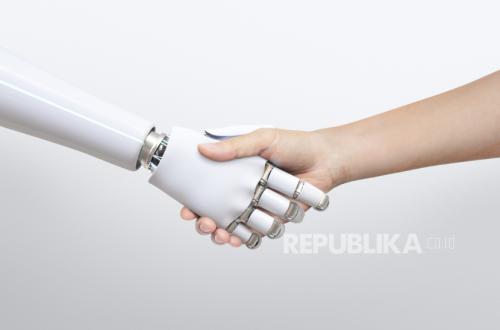
Currently, almost everyone agrees: the future belongs to technology. Manufacturing industries, the internet, and AI are cited as determinants of civilisation’s direction and measures of national progress. Technocrats and economists play dominant roles as the vanguard.
However, few people know that at Google DeepMind, there is Henry Shevlin, PhD, Philosopher and AI Ethicist, a graduate of the University of Cambridge, working full-time on highly substantive tasks: pondering whether machines can become conscious, how humans relate to AI, and how human civilisation should prepare for the rapid pace of AI development.
Questions like these touch on all layers of philosophy: ontology, epistemology, axiology. Not only DeepMind, but Anthropic, OpenAI, and Microsoft are all now running multidisciplinary projects that seriously involve humanities experts: philosophers, ethicists, sociologists to examine the social impacts and governance of the AI systems they build.
Even Google once had Damon Horowitz as Director of Engineering, informally known as the In-House Philosopher, to review the ethics of technology products in the language of Kant and John Stuart Mill. At Slack, the CEO position is held by Stewart Butterfield, who holds a master’s in philosophy and claims that it is his philosophical abilities that enable him to lead a business amid complexities for which there is no manual.
This proves that at the heart of even the most technological industries, among many technical talents, there remains a need for people who can navigate moral complexities. Machines can be programmed, but values cannot. This is where the humanities are not merely relevant, but remain necessary and irreplaceable.
This is what is happening at the world’s centres of technological civilisation. What about Indonesia? The Secretary General of the Indonesian Ministry of Education, Culture, Research, and Technology recently announced plans to close several study programmes deemed oversupplied and irrelevant to the job market. The administrative logic makes sense. However, this plan ignores one fundamental question: what is the purpose of a university?
Universities Are Not Workforce Factories
In the great tradition of thought, from Kant to John Henry Newman, universities were not designed to produce workers. They were designed to form humans capable of independent thinking, weighing values, and living with others in dignity. Not merely humans who know what to do, but humans who know why something is worth doing. When campuses are reduced to factories and their relevance is measured solely by job market absorption, we are not modernising education; we are betraying the deepest function of the university institution.
In the era of artificial intelligence that is revolutionising human civilisation, the question “what is a university for” is a matter of life and death. For the answer to this question determines the fate of an entire branch of knowledge that has long been the heart of the university’s existential mission: the humanities.
Since the 1970s, when market ideology began to dominate global education policy and international institutions pushed campuses to prove their return on investment, the humanities have not been officially abolished, but systematically impoverished. Budgets have been cut, students directed to “productive” majors, and their social prestige has plummeted. Philosophy, history, literature, sociology, and anthropology have been marginalised to the edges of the curriculum. The centre of development has been handed entirely to the exact and technical sciences that are “measurable.” The success of education has been reduced to one shallow question: what percentage of graduates are immediately absorbed into employment?
Yet in the tradition of liberal education (liberal arts), humanities graduates ideally can read the world, read contexts, read power, read what is unsaid. They become humans resilient to uncertainty, humans who can ask the right questions, and humans with a moral compass who not only know what can be done, but always ask whether it should be and for whom.
With such high-level competencies, the practical question remains valid: how do humanities graduates find their place in the AI-era job world? There is a fundamental difference between humans used by the system and humans who direct the system. The former are executors who can be replaced, including by machines. The latter are direction-setters who are becoming increasingly scarce and valuable.
Humanities competencies are not absent from the job world; they appear under different names. The ability to read contexts and power is called strategic thinking. Resilience to ambiguity is called adaptive leadership. The ability to ask the right questions is called design thinking. The moral compass is called ethics and governance. The global industry has long sought this profile. It’s just that humanities campuses have not been bold enough to train their students to translate themselves into market-understood language, while equipping them with a layer of technical skills as a bridge.
What is needed is not choosing between humanities and industry. What is needed is graduates who are capable, competent, and critically able to question the system, while being empowered to change it from within.
Humanities as the Heart
If there are indeed many programmes to be closed under the pretext of oversupply and irrelevance to the job market, then this is a policy that is not only misguided but dangerous. When campuses are turned into production lines and graduates into commodities, we are not modernising education. We are eliminating its most important function: forming humans who know what they live for, not merely what they work for.
The AI era strips bare the limitations of that logic. Machines can now write reports, analyse data, translate languages, even construct legal arguments. Jobs once considered “safe” technically, but now