
Should Homebound Travellers Be Vigilant Against Measles During Eid 2026? Check Data and Risks
Based on analysis of public health data and behavioural patterns of homebound travellers ahead of Eid 2026 (1447 H), there is a significant gap between the level of medical risk and the level of public vigilance in practice. Despite data showing rising case numbers, mass psychology during Eid tends to lower safety standards in favour of the silaturahmi tradition of family visits.
The gap between medical data and social behaviour represents the greatest challenge for the Ministry of Health in reducing the incidence of measles outbreaks this year. The silaturahmi tradition involving close physical contact provides a rapid transmission pathway for the virus amid low immunisation coverage in certain key travel destination areas.
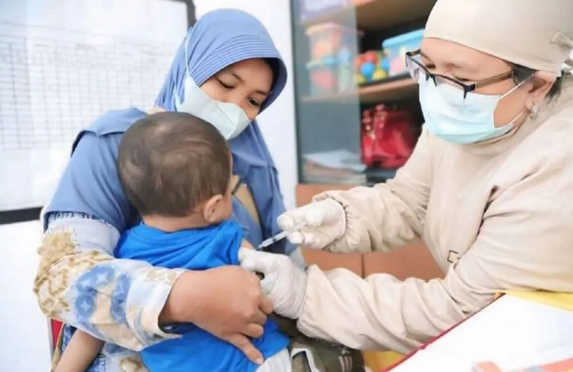
The Government urges homebound travellers to continue wearing masks in crowded areas and to ensure children have received the full MR (measles-rubella) immunisation course at least 14 days before departure to develop optimal antibody levels.
With projected movement of 143.9 million people, the public’s main focus is gathering with family. Invisible diseases such as measles are often regarded as a secondary risk compared to longing for one’s hometown.
Many people are unaware that measles is contagious 4 days before the red rash appears. During the fever phase, homebound travellers maintain close contact, kiss babies, and share enclosed spaces, which becomes a major driver of mass virus transmission.
Following the pandemic of recent years, there is a phenomenon of “caution fatigue”, where the public tends to disregard public health warnings unless significant deaths occur in their immediate community.
If vigilance is not strengthened from the start of homebound travel (18–19 March 2026), a surge in measles cases of 35–50% is predicted in the two weeks following Eid (early April 2026) in major travel destination regions such as Central Java and East Java.