
Should Defence Spending Be Reviewed?
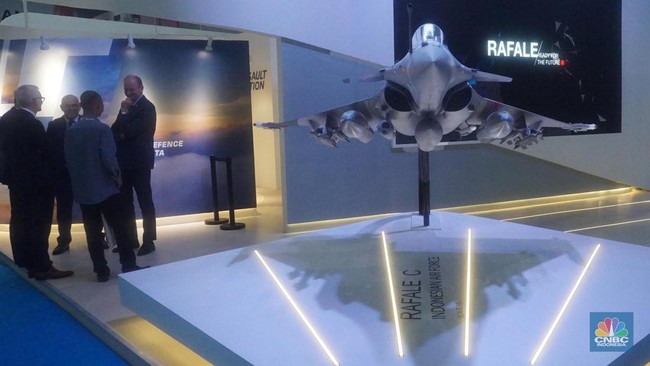
Following rating downgrades by Moody’s and Fitch Ratings from stable to negative outlooks on Indonesia’s sovereign debt, fiscal risks have emerged from the Iran-versus-US-and-Israel conflict, now in its third week. These fiscal risks stem from rising global oil prices and the weakening of the rupiah against the US dollar.
The combination of these developments has prompted many to question the sustainability of the 2026 state budget, with the main threat being a budget deficit exceeding the threshold set by Law No. 17 of 2003.
Should the government decide to widen the budget deficit, market confidence in the government’s fiscal management capability will inevitably erode, raising the possibility of Indonesia’s credit rating being downgraded to non-investment grade by the three major global rating agencies.
Indonesia’s significant fiscal challenge stems largely from overly ambitious government spending plans coupled with weak fiscal discipline. Priority programmes such as free nutritious meals and village red-and-white cooperatives consume substantial budgets, forcing the reallocation of funds from other ministries and central transfers to regions to support these initiatives.
Defence spending presents a similar concern. Beyond the Defence Ministry’s budget allocation of Rp187.1 trillion, an additional Rp150.5 trillion in special state budget reserves (BA BUN) designated for defence is officially categorised as contingency funds. Meanwhile, government revenue realisation in the 2025 state budget reached only 91.7 per cent, resulting in a deficit of 2.92 per cent, approaching the three per cent legal threshold.
In addition to Rp337.6 trillion in direct budget allocations, defence spending will be augmented by foreign loans (PLN) and domestic loans (PDN) for 2025-2029. The Defence Ministry’s foreign loan quota is US$28 billion, though this figure may change at any time according to policymakers’ discretion.
The list of expenditures in the 2025-2029 medium-term foreign loan list remains provisional and subject to revision. The domestic loan allocation figure remains unknown, though it is estimated to reach approximately Rp50 trillion if the government wishes to increase the PDN share compared to the 2020-2024 period.
Facing the threat of exceeding the legally mandated deficit ceiling, the government has at least two policy options. First, it can raise the budget deficit limit through legislative amendment. Second, it can implement substantial budget cuts, euphemistically termed “efficiency”. To date, it remains unclear which policy approach the government will adopt as the market awaits clarity on its fiscal direction.
Since Law No. 17 of 2003 came into effect, defence spending related to weapons systems has drawn from three financing sources: direct budget allocation, foreign loans, and domestic loans. The use of funds outside the Defence Ministry’s regular budget represents an exception applicable to specific cases and periods rather than an annually available allocation. Such off-budget defence funding, known as BA BUN, constitutes a special budget managed by the Finance Minister.
Confronted with the threat of a widening budget deficit, the question arises whether defence spending warrants reconsideration. If defence spending should be reviewed as the sector’s contribution to deficit control, which defence activities should be cut?
These questions are posed on the assumption that the government retains the rational capacity to manage its finances amid the strong temptation to sustain undisciplined spending. Conversely, these questions would be moot should the government decide to widen the deficit and pursue spending without fiscal restraint.
Defence spending utilising direct budgets, foreign loans, and domestic loans programmes merit reassessment. For direct budget allocations, programmes funded through BA BUN—including both weapons system acquisitions and the formation of Territorial Development Infantry Battalions (Yonif TP)—warrant review.
Currently, certain war equipment imports utilise BA BUN financing because no creditor is willing to lend to Indonesia given its commercial dealings with entities subject to Western sanctions. An example is the purchase of Ilyushin Il-28 tanker aircraft through Belarus, marketed as an MRTT programme, despite MRTT being Airbus’s trademark for the A330 MRTT tanker/transport aircraft.
The time has come to shift weapons system acquisition funding—particularly for advanced technological platforms—back to foreign loan schemes and cease relying on BA BUN. Moreover, in conventional military equipment, virtually no platform is produced by a single nation globally, offering Indonesia choices regarding debt financing with attractive interest and risk terms.
The target of forming 750 Yonif TP units by 2029 warrants reassessment given the absence of urgency whilst non-Yonif TP units of the Army still struggle to meet their authorised tables of organisation and equipment.
A moderate alternative regarding Yonif TP would be reducing the target to 400 battalions by 2029, resulting in a total personnel strength of 476,000 compared to the current plan of 892,500.