
Short-Term Needs Solar + BSS, Long-Term Requires Geothermal-Nuclear
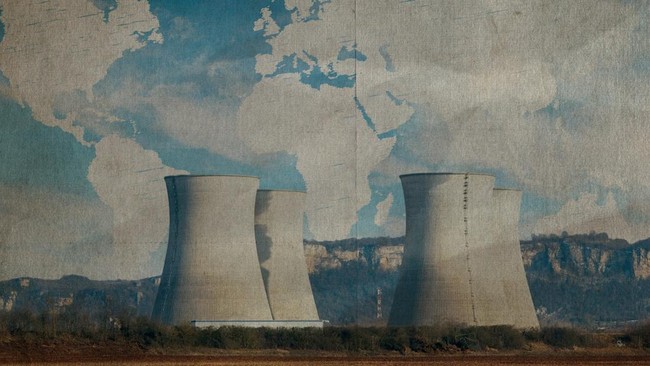
Not only I am concerned about the rise in energy prices. Amid the surge in oil prices over the past month, many of my friends have been asking about alternatives. Perhaps because I am one of the players in the renewable energy sector. I have received several messages from friends and family: “Is EV worth it? How much savings does it offer?” “Roughly how much does it cost to install solar panels on my house? Can it save energy?” “Where can I buy an electric stove?” I am sure the above discourse has also been a topic of recent conversations among the public. In our daily lives, we always take it for granted. However, when an energy crisis occurs, our lives are certainly affected. Whether it is oil scarcity, power outages, or soaring prices. The energy system is one of the foundational pillars of Indonesia’s economy. With the issue of disruption in the Strait of Hormuz, we are reminded to “upgrade” our energy system, which can still be improved. The Common Thread for Solving the Energy Crisis: Electrification Fuel oil (BBM) is highly volatile to unstable geopolitical conditions. Naturally, the public analyses and concludes that the solution is to replace BBM usage with electricity; or what can be called electrification. Electricity, compared to heat, motion, chemistry, or sound, is the most versatile form of energy. Electricity can power car wheels, produce sound vibrations from speakers, or heat food in an oven. Moreover, electricity can be generated in various ways, including environmentally friendly methods that do not emit exhaust gases like when burning BBM. The government is also prioritising the acceleration of national electrification through plans to convert to electric vehicles to reduce BBM imports and avoid the burden of BBM price volatility on the state’s fiscal load. As an observer and business player in the energy industry, I too know that electrification is the solution. Electrification means Indonesia’s electricity system must be higher quality, stable, affordable, and most importantly, sustainable. This upgrade needs to be done while Indonesia’s economy is in a phase of rapid growth. First, electrification must consider the “cleanliness” of its energy sources. Currently, Indonesia generates electricity from coal resources with a share of >60%. The majority of the rest is from gas resources. We already know that greenhouse gas emissions from burning coal and gas cause climate change and air pollution that is bad for health. Second, electrification must consider the “reliability” of electricity production. Ideally, electricity is generated whenever we want, in the right location, in sufficient quantities, even when the sky is cloudy for days, demand surges at night, or industrial areas operate 24 hours. Third, electrification must consider economics. As a rapidly developing country, we need energy resources as cheaply as possible. Fourth, electrification must ensure the sustainability of its energy sources. Of course, we do not want to produce energy from raw materials that we have to painstakingly buy from abroad. It should be “renewable” or at least Indonesia has sufficient supply of its resources. Fifth, electrification must ensure coverage of electricity access. Of course, as an archipelagic country, Indonesia needs hard work to create an equitable yet efficient and integrated electricity network. There is no single magic primary energy source that can meet all five criteria above. However, a combination, in different geographical locations. Every expert, government, and energy agency has many possible technology scenarios. For me, the answer is: solar power plants with batteries in the next five to ten years and geothermal and nuclear power plants beyond ten years. Short-Term Solution: Solar PV and Battery Energy Storage Solutions (BESS) Solar Power Plants (PLTS) convert electron collisions in solar panels due to exposure to sunlight. Thus, its energy source is renewable and available when there is sunlight. Moreover, Indonesia’s solar irradiation strength is quite good as a country on the equator, so Indonesia’s solar energy potential is quite large. Its weakness is that when there is no sunlight, PLTS independently cannot generate electricity. For systems connected to other electricity sources, demand can be met from other sources. However, when the system is independent (not connected to other electricity sources), this becomes a problem. Then, there is battery technology or commonly called BESS, to capture excess electricity production during the day and store it. Although it adds cost, this addresses the intermittency problem of PLTS technology. Battery costs have also been declining recently, as a result of technological maturity that comes with scale. However, the most important thing: PLTS is quick to build. The system is modular, so it can be installed relatively easily anywhere, from Sabang to Merauke. The modularity of PLTS and battery technology that can store energy means this technology can reach remote places (off-grid and independent) that are not reachable by PLN’s electricity transmission. Usually, in locations like this, electricity is generated using diesel fuel with genset technology (because it can be independent) which is notably expensive, especially during the recent BBM scarcity. My experience in the industry concludes that the implementation of PLTS and batteries (10-30 US cents per kWh) can cut electricity costs by more than half compared to