
Ships Cannot Pass Through the Persian Gulf as Kuwait Cuts Oil Production
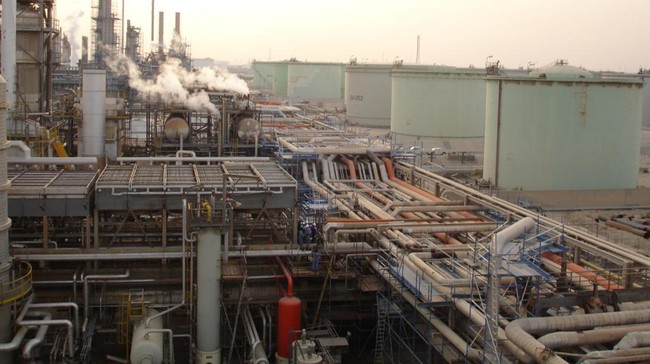
Kuwait has decided to cut oil production and refinery output after tanker traffic could no longer traverse the Persian Gulf due to increasing threats from Iran. The Kuwaiti government described the move as a precaution amid escalating tensions in the region. However, authorities did not disclose the magnitude of the production cut, describing it as a precautionary step that will be reviewed as the situation develops. The national oil company, Kuwait Petroleum Corporation, said it stood ready to restore production levels if security conditions permit again. Kuwait is the fifth-largest oil producer in OPEC, producing around 2.6 million barrels per day in January. The geopolitical tensions in the Gulf region have led tanker traffic to halt passage through the Strait of Hormuz, a strategic chokepoint and the main exit route for Gulf oil exports, with about 20% of global oil consumption passing through the narrow waterway. Consequently, oil supplies are piling up in the Middle East as tankers cease operations. Oil-producing countries in the region have been forced to reduce output as storage capacity fills. Iraq has even cut production to 1.5 million barrels per day after storage space ran out, according to government officials cited by Reuters. Natasha Kaneva, Global Head of Commodities Research at JPMorgan, said the market now faces not only geopolitical risk but also real operational disruptions to the global energy supply chain. ‘The market is no longer merely pricing in geopolitical risk, but is also starting to face real operational disruptions,’ Kaneva said, quoted by Reuters, on Sunday (8 March 2026). If the US–Iran conflict lasts more than three weeks, Gulf states are expected to exhaust storage capacity and be forced to halt oil production. This could push world oil prices above US$100 per barrel. JPMorgan estimates global oil production cuts could exceed 4 million barrels per day if the Strait of Hormuz remains closed into next week. A spike in prices is already evident in the energy markets. On Friday trading, oil posted the largest weekly gain in the history of futures trading. Brent settled at US$92.69 per barrel, while West Texas Intermediate reached US$90.90 per barrel. In addition to oil, the conflict is disrupting global natural gas supplies. Qatar halted LNG production after Iran’s attack, even though the country accounts for around 20% of global LNG exports.