
Ships Allowed to Pass Through the Strait of Hormuz Charged Rp 33.8 Billion Fee
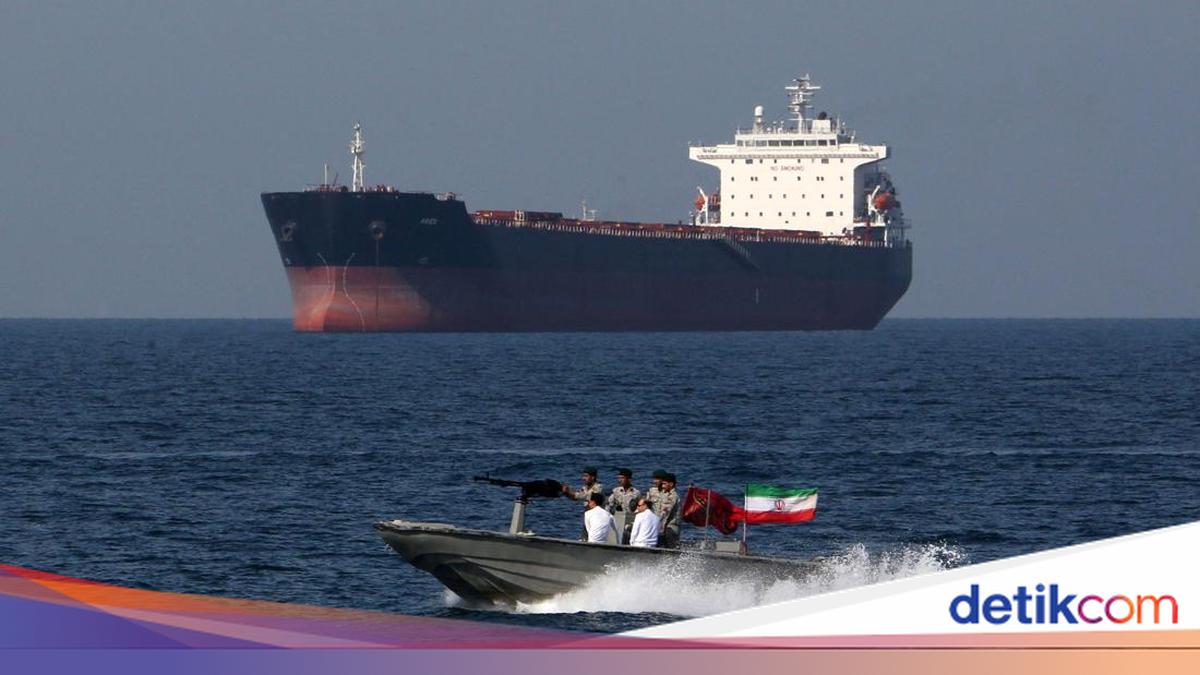
As of now, Iran is still enforcing a de facto blockade of the Strait of Hormuz as a retaliatory measure against attacks carried out by the United States and Israel. However, the Strait of Hormuz is a vital maritime route through which approximately 20% of global oil and gas supplies pass.
This action has drawn worldwide attention, as Iran is perceived to be using the route as a geopolitical bargaining tool in the conflict. Records show nearly 2,000 ships stranded near the Strait of Hormuz.
Cited from Al-Jazeera, as quoted by detikFinance on Sunday (29/3/2026), Iranian media reported last Thursday the formation of legislation to collect fees from ships wishing to pass through the Strait of Hormuz.
Reports from the Tasnim and Fars news agencies, sources from the Parliament’s Civil Affairs Committee, stated that the draft law has been prepared and will soon be finalised by the Islamic Consultative Assembly’s legal team.
“According to this plan, Iran must collect fees to ensure the security of ships passing through the Strait of Hormuz,” said an official as quoted.
“This is entirely reasonable. Just like in other corridors, when goods pass through a country, import duties are paid. The Strait of Hormuz is also a corridor. We ensure its security, and it is fair for ships and tankers to pay import duties to us,” the official added.
Although the bill is yet to be discussed in parliament, the shipping journal Lloyd’s List reported on Wednesday (25/3) that the Islamic Revolutionary Guard Corps (IRGC) has been implementing a toll booth system to control ship traffic through the strait for some time.
At least 26 ships that crossed the strait have followed pre-approved routes under the IRGC’s ‘toll booth’ system, which requires ship operators to adhere to a verification scheme. These ships did not activate their AIS signalling systems.
An Iranian parliament member, Alaeddin Boroujerdi, also stated to Iran International television channel that his country plans to impose fees on certain ships amounting to US$2 million or approximately Rp 33.8 billion (exchange rate Rp 16,900) to pass through the strait.
As is known, Iran has declared the Strait of Hormuz open to all parties except the US and its allies. Iran states that non-hostile ships benefit from a safe passage through the Strait of Hormuz by coordinating with the relevant Iranian authorities.
The non-hostile ships in question are those owned or associated with countries other than the US and its allies; they also do not participate in or support aggressive actions against Iran and fully comply with the stated safety and security regulations.
So far, several ships owned by Malaysia, China, Egypt, South Korea, and India have been permitted to pass through the strait.
Based on Lloyd’s reports, at least two ships that crossed the strait paid toll fees in yuan, China’s currency. It was also reported that each transit was mediated by Chinese maritime service companies acting as intermediaries, which also handled payments to Iranian authorities.
On the other hand, the Indian government claims it has not made any payments to Iran to secure safe passage for Indian ships through the strait.
“No permission is required to sail through the strait. There is freedom of navigation through the strait. Because the strait is narrow, only marked entry and exit lanes must be followed by shipping companies. The decision to sail or not to sail is entirely in the hands of the ship charterers and shipping companies,” said Rajesh Kumar Sinha, Special Secretary of India’s Ministry of Ports, Shipping, and Waterways, on Tuesday, according to Indian media reports.
Sinha also added that two ships carrying more than 92,600 tonnes of liquefied petroleum gas flying the Indian flag have transited and are scheduled to arrive in the subcontinent between Thursday and Saturday.